
Call Anytime
512-508-8373- ClearedDirect > Blog > Operations Management Guides > Outsourcing Airline Services – Enhancing Operations and Passenger Experience
Blog Details

Outsourcing Airline Services – Enhancing Operations and Passenger Experience
Ever wonder how airlines manage to keep flights on schedule, ensure aircraft cleanliness, and provide top-notch passenger experiences—all while keeping costs down? In today’s fast-paced aviation industry, these challenges are more pressing than ever.
- How do airlines maintain operational efficiency without compromising service quality?
- What strategies are in place to handle the intricate logistics of ground operations?
- How does outsourcing play a role in enhancing both efficiency and passenger satisfaction?
These are pivotal questions that airline operators grapple with daily.
To tackle these challenges, many airlines have turned to outsourcing key operational services as a strategic solution. By partnering with specialized service providers for tasks such as ground handling coordination, passenger support, lounge services, and facility upkeep, operators can focus on ensuring a seamless flow of operations from curb to gate.
This approach enables airlines to streamline day-to-day logistics, reduce overhead costs, and improve overall passenger satisfaction—without compromising on safety, compliance, or service quality. By leveraging third-party expertise, terminal operators can deliver a consistently high standard of service that enhances the traveler experience and supports airline partners in maintaining efficient turnarounds.
In this blog, we’ll explore the essential outsourced airline services that are transforming how modern terminals operate. From fast, coordinated ground handling to meticulous aircraft cabin cleaning, discover how these services help terminals run smarter—and create a better journey for everyone who passes through.
Efficient Ground Handling: Streamlining Airline Operations
Ever wonder what keeps your flight running on time, your baggage arriving at the right time, and the aircraft prepped and ready for the next departure?
Behind the scenes, specialized ground handling teams carry out a coordinated set of services that play a critical role in supporting smooth and efficient airline operations. When an aircraft lands, these teams take over—guiding the plane to its gate, unloading luggage, refueling, and preparing the cabin for the next group of passengers.
They do ALL this within certain time limits.
These airline-side ground services are vital for quick aircraft turnarounds. This speed is key for keeping airline schedules on track and making the most of gate use. The airline focuses on flight readiness. But it’s often specialized service providers that ensure ground logistics run smoothly.
Passengers may not see this coordination up close, but its effects are obvious: fewer delays, smoother transitions, and a better travel experience. In many high-performing terminals, efficient ground handling isn’t just a background process—it’s a cornerstone of operational excellence.
Key Insights into Ground Handling Efficiency
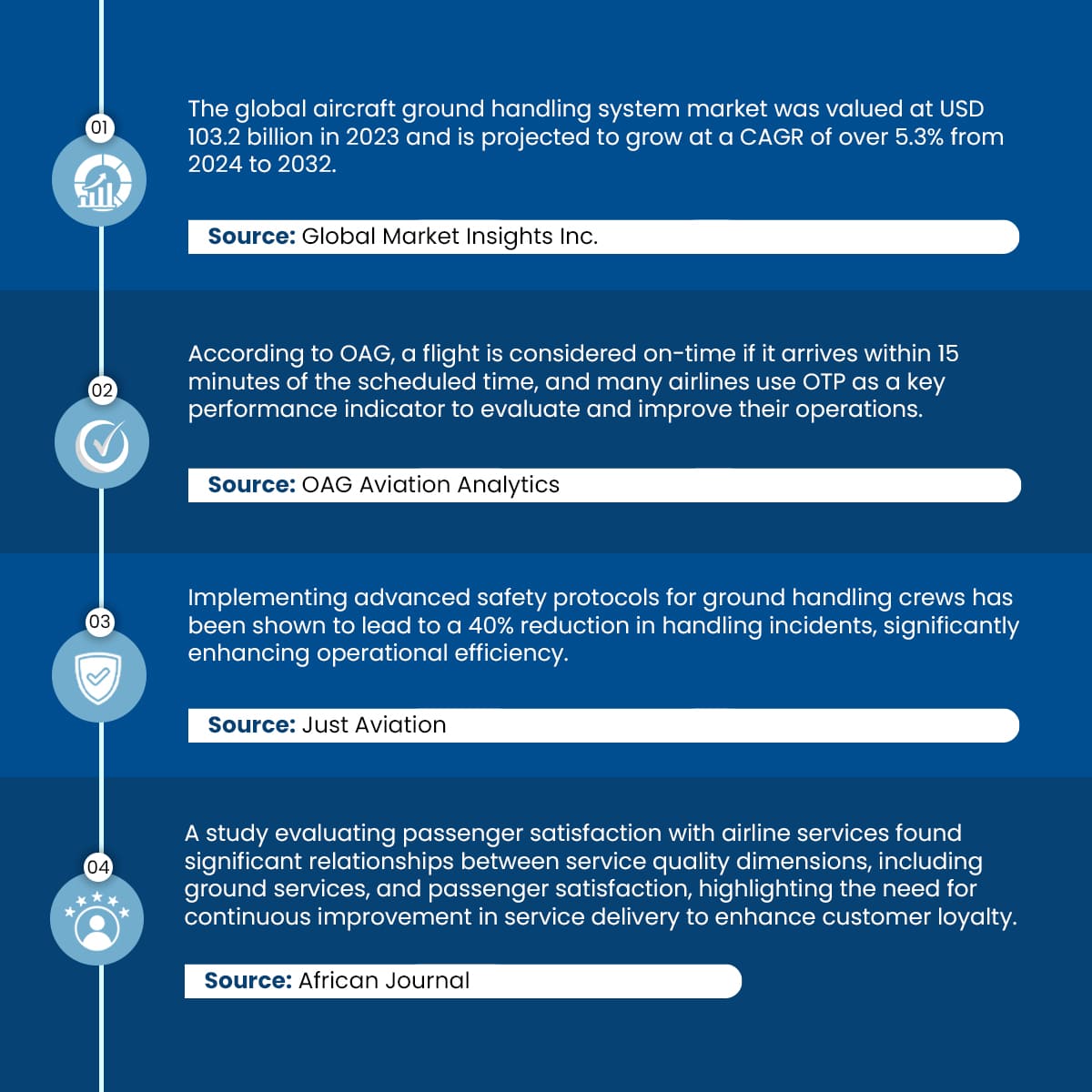
Market Growth: The aircraft ground handling system market is growing. This rise is driven by the need for efficient and safe ground operations.
On-Time Performance (OTP): Efficient ground handling is directly linked to improved OTP, a critical metric for airlines. Delays in ground operations can cascade into flight delays, affecting the airline’s reputation and operational costs.
Safety and Compliance: Proper ground handling ensures adherence to safety protocols, reducing the risk of accidents and enhancing overall operational safety.
Passenger Satisfaction: Timely and efficient ground services contribute to a positive passenger experience, influencing customer loyalty and airline preference.
Reliable Ground Service Equipment (GSE)
While passengers often marvel at the marvels of flight, it’s the ground operations supporting airlines that set the stage for a successful journey. At the heart of these airport operations lies Ground Service Equipment (GSE) — the unsung heroes ensuring aircraft are serviced, maintained, and ready for their next flight.
What Constitutes GSE?
GSE encompasses a diverse range of machinery and tools designed to support airline operations on the ground. This includes equipment for aircraft handling, cargo and baggage management, and passenger services. Each piece of equipment plays a crucial role in minimizing turnaround times, ensuring safety, and enhancing the overall efficiency of airline ground services.
Typical Areas Covered in GSE:
- Aircraft Handling: Tugs and tractors for moving aircraft, pushback tractors, and ground power units (GPUs).
- Cargo and Baggage Management: Baggage carts, conveyor belt loaders, and cargo loaders.
- Passenger Services: Passenger boarding bridges, stair trucks, and passenger buses.
The Importance of GSE
The reliability of GSE directly impacts the operational efficiency and safety standards of airline terminals. Lacking in GSE operation can cause service delays, escalate operational costs, and compromise safety on the apron. For airline service providers, investing in high-quality, well-maintained GSE isn’t just a necessity—it’s a strategic imperative to support airline schedules and ensure a seamless passenger experience.
Aircraft Cleaning Services
Have you ever boarded a plane, looked around, and immediately felt a sense of calm because everything was spotless? That feeling isn’t a coincidence. A dedicated team works hard behind the scenes. They clean every surface, restock essentials, and ensure the space feels fresh and safe for the next travelers.
Many airlines maintain this level of cleanliness and efficiency by outsourcing aircraft cleaning services to specialized providers. These experts ensure that each cabin meets rigorous hygiene and presentation standards before passengers step on board.
Why Cleanliness Matters More Than Ever
Passengers want to know the space they’re sitting in is hygienic and safe. Airlines understand that. That’s why they’re investing in more thorough cleaning practices than ever before. A clean cabin sends a message:
“You’re in good hands.”
It shows passengers that their comfort and well-being genuinely matter.
What’s Involved in Aircraft Cleaning?
Cleaning a plane goes way beyond a quick tidy-up. It’s a full process, covering everything from visible surfaces to hidden corners:
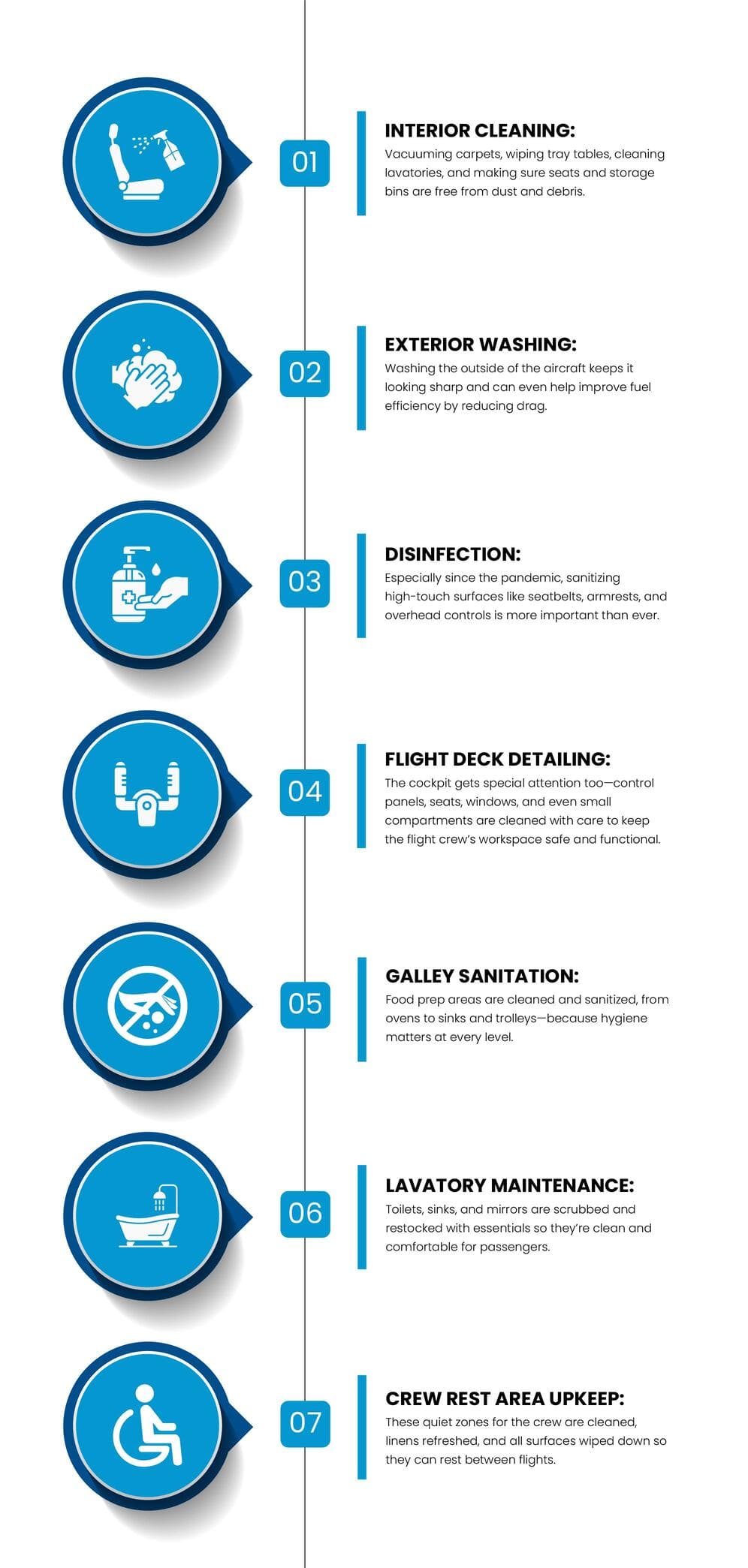
Every one of these steps helps protect the people on board and makes the flying experience more pleasant.
The Impact on Passenger Experience
Let’s be honest—a clean cabin sets the tone.
When things look and feel fresh, passengers relax. It’s easier to enjoy the journey when you’re not distracted by clutter or concerned about cleanliness.
Beyond the immediate passenger experience, consistent and thorough cleaning routines help airlines protect their long-term investments—from seating and carpets to tray tables and onboard equipment. Well-maintained interiors don’t just look better—they last longer and reduce costly repairs or replacements.
At the end of the day, passengers remember how an airline made them feel. And cleanliness plays a major role in shaping that memory.
Learn more about our comprehensive Aviation Services.
Terminal Readiness & Emergency Preparedness: Staying One Step Ahead
Airlines operate in dynamic environments, and unexpected disruptions—like equipment malfunctions, staffing shortages, weather impacts, or delays—can happen at any moment. That’s why airlines must be prepared to respond quickly, maintain operational readiness, and minimize impacts on flight schedules and passenger experiences.
Why It Matters: A study analyzing airline customer reviews found that flight irregularities, including delays and cancellations, accounted for 36% of all reviews, highlighting the critical need for effective emergency preparedness and real-time coordination in terminal operations.
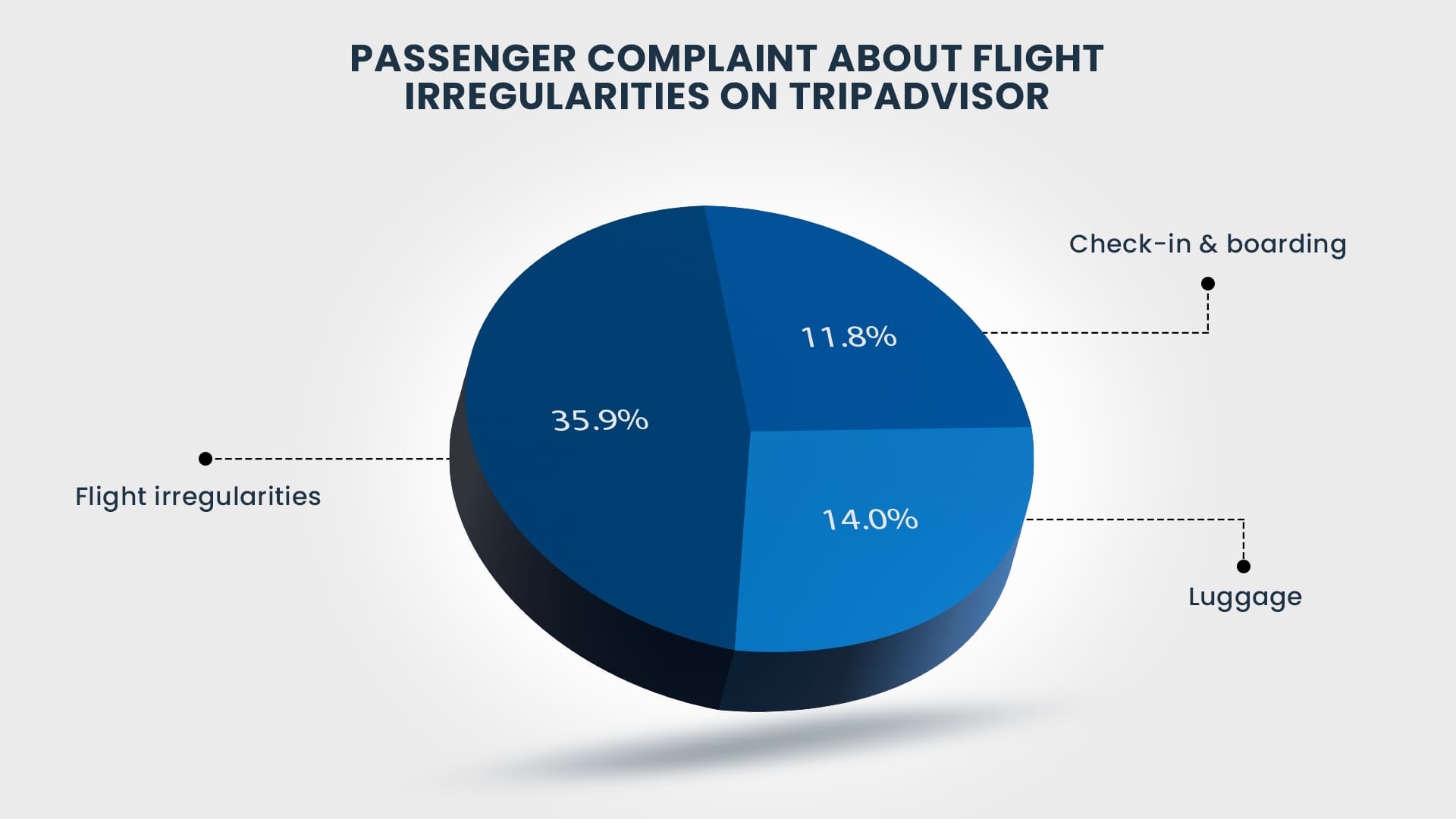
Flight irregularities are the most frequently mentioned topic in airline reviews, accounting for 35.9% of complaints—followed by check-in/boarding at 11.8% and luggage issues at 14.0%.
The graph and insights are sourced from Tripadvisor data, compiled and analyzed by Lufthansa Innovation Hub, Quid Discover, and TNMT to highlight key trends in passenger complaints.
Key Components of Preparedness
- Real-Time Communication: Clear protocols between guest services, maintenance, and airport security ensure quick, coordinated responses. Everyone knows who to contact, how to escalate issues, and when to act.
- Backup Systems: Redundant power, HVAC, and lighting systems ensure essential services continue even when technical failures occur.
- Crowd Management: Scalable plans help redirect foot traffic, reduce bottlenecks, and ensure passenger safety during surges caused by delays, diversions, or flight cancellations.
- Staff Training: Routine scenario drills and clear role assignments help staff stay calm and effective in high-pressure situations.
- Coordination with External Agencies: Strong relationships with TSA, local emergency responders, and airport police are crucial for fast, seamless responses when larger incidents or emergencies occur.
Passenger Lounge Services
Air travel often involves long waits, crowded terminals, and limited comfort, making the journey stressful for many passengers. This discomfort can lead to fatigue and a less enjoyable travel experience.
To address this, airlines—and in some cases airports—have introduced dedicated passenger lounge services, offering travelers a comfortable, tranquil environment away from the main terminal bustle.
These lounges provide amenities such as comfortable seating, complimentary refreshments, high-speed Wi-Fi, and dedicated workspaces. Some even offer spa services, entertainment options, and family-friendly areas. Access to these lounges is no longer limited to first-class passengers; programs like Priority Pass grant entry to over 1,300 lounges worldwide, regardless of ticket class.
The impact of lounge access is significant. According to a study by Airport Dimensions, 57% of frequent travelers visit a lounge during their journeys, reporting reduced stress levels and a more enjoyable airport experience. By providing a calm and well-equipped space, airline-operated lounges enhance overall traveler satisfaction—and can significantly influence customer loyalty and airline preference.
See why passenger lounge service is key—let’s dive into steps to build a better experience environment for passengers.
- Maintain Cleanliness Across All Areas: Ensure restrooms, seating areas, and high-touch surfaces are regularly cleaned and sanitized to uphold hygiene standards.
- Provide Clear Signage and Information: Use multilingual signs and digital displays to guide passengers efficiently throughout the terminal.
- Offer Comfortable Seating Options: Equip waiting areas with ergonomic seating and charging stations to enhance passenger comfort.
- Implement Efficient Waste Management: Place ample trash and recycling bins throughout the terminal and ensure timely disposal to maintain cleanliness.
- Train Staff for Exceptional Service: Equip custodial and guest service teams with customer service training to assist passengers courteously and effectively.
How Outsourcing Airline Services Enhances Operational Efficiency
Wrapping up, outsourcing airline services significantly improves efficiency while enhancing the travel experience for passengers.
BECAUSE…
Running an airline operation is no easy task—tight schedules, regulatory complexity, and rising passenger expectations create nonstop pressure. Outsourcing services like ground handling coordination, aircraft cleaning, passenger lounge management, and facility support helps airlines streamline critical operations. It allows them to focus on their core mission—moving passengers and cargo safely and efficiently—while specialized providers handle day-to-day operational details with precision.
The results are clear: aircraft spend less time waiting at gates and more time in the air. Cabin cleaning is completed faster and more thoroughly. Passenger lounge experiences become stress-free havens rather than simple waiting areas—thanks to professional management focused on service quality and speed.
ClearedDirect has spent years perfecting this model. Our deep expertise in supporting airline operations means we know how to coordinate every aspect that impacts turnaround times, passenger satisfaction, and operational reliability.
Airlines that partner with us see smoother operations, higher traveler satisfaction, and fewer operational headaches.
That’s the real value of outsourcing airline services: it’s not about cutting corners—it’s about raising the standard for every journey, from check-in to takeoff.
Tags:

Kevin Milewski
Kevin Milewski is the Chief Operating Officer at ClearedDirect, where he oversees operational strategy, technology implementation, and service delivery for aviation and commercial drone (UAV) projects. With a strong background in aviation services and facility management, Kevin focuses on improving safety, efficiency, and regulatory compliance across complex airport and industrial environments. At ClearedDirect, Kevin leads initiatives integrating drone surveillance, LiDAR imaging, and AI-driven facility inspection systems that help clients achieve higher safety and performance standards. His leadership contributes to the company’s commitment to precision, reliability, and data-driven decision-making in critical infrastructure operations. Kevin regularly contributes insights to ClearedDirect’s knowledge hub, covering UAV surveillance, aviation operations, and facility optimization topics. His work reflects practical industry experience and a dedication to advancing innovation in aviation and technology management. Connect with Kevin on LinkedIn to learn more about his work.
RECENT POSTS


Recent Comments
CATEGORIES
- Aviation Facility Management
- Commercial Cleaning
- Construction
- Digital Mapping & Analytics
- Drone & LiDAR Inspections
- Drone And LiDAR Guides
- Facility Cleaning Resources
- Facility Management Guides
- Facility Management Risk
- Facility Management Technology
- Facility Operations
- Facility Security Management
- Identifying & Eliminating Inefficiencies
- Operations Management Guides
- Process Optimization
- Security Management Guides
- Staffing Augmentation Guides
- Surveillance UAV Drone Guides
- UAV Drone Mapping
- Uncategorized
TAGS
2025 facility trends aerial surveillance aircraft cleaning airline operations airport compliance management airport operational risk management airport personnel airport terminal operations Aviation Operations Aviation Risk Management aviation security risk assessment aviation services AviationStaffing aviation staffing Commercial Cleaning Services Commercial Drone Surveillance Commercial Facility Security Drone Surveying Emergency Response Planning Facility Hygiene Compliance facility maintenance facility management Facility Risk Assessment Facility risk management facility services Green Cleaning for Facilities ground handling services integrated facility management services Operational Efficiency Strategies operations management outsource facility management outsourcing airline services outsourcing airport services passenger experience enhancement Physical Security Best Practices proactive maintenance Scaling janitorial operations seasonal peaks staff augmentation Staffing Augmentation Staffing Challenges Aviation terminal facility security TSA FAA risk mitigation uav infrastructure inspection uav lidar technology
Leave a Comment