
Call Anytime
512-508-8373- ClearedDirect > Blog > Operations Management Guides > Process Optimization > Process Optimization in Aviation: From Check-in to Boarding
Blog Details

Process Optimization in Aviation: From Check-in to Boarding
For passengers, the journey from arriving at the airport to taking their seat on the aircraft can be either smooth and predictable or slow and frustrating.
For airport operators, those same few hours represent a complex sequence of coordinated tasks involving multiple teams, systems, and compliance requirements. Every delay in parking flow, check-in, security screening, or boarding not only affects the passenger experience but also disrupts the overall aviation operation.
At its core, process optimization is about identifying inefficiencies and streamlining workflows so that every step, from guiding vehicles in the parking lot to managing the boarding gate, happens with maximum efficiency and minimum friction. A clear process optimization definition in this context means creating systems that keep passengers moving while maintaining safety, compliance, and operational control.
In this blog, we will look at how a well-designed process optimization strategy can improve each stage of the passenger journey, from check-in to boarding. We will explore the operational touchpoints where time is often lost, the changes that have the greatest impact, and how integrated airport operations can turn a series of separate tasks into a seamless experience.
Mapping the Passenger Journey in Airport Operations
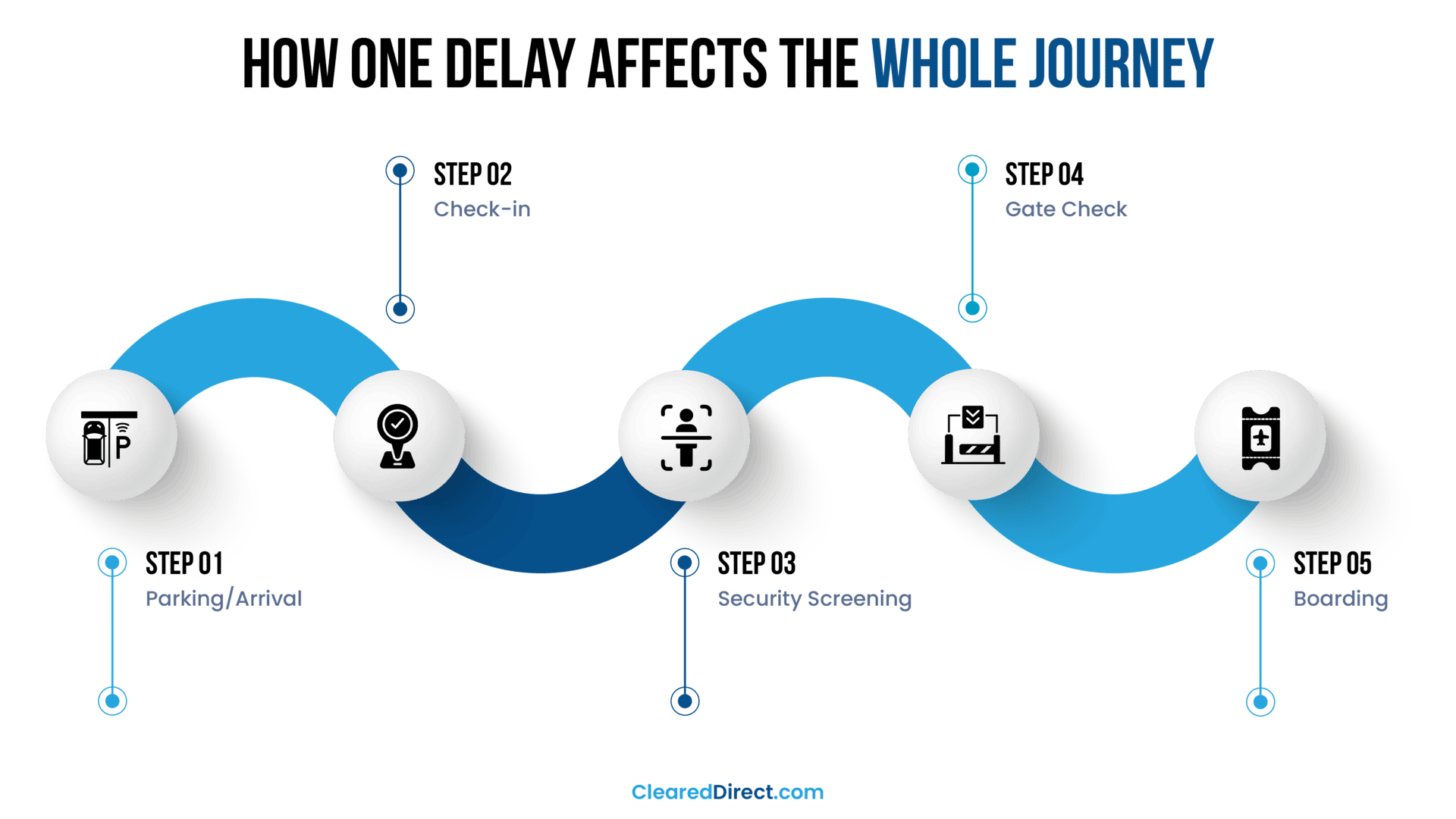
Every passenger journey is made up of multiple operational touchpoints that must work together for the experience to be smooth. In an airport setting, these touchpoints include parking and arrival, check-in, security screening, gate checks, and boarding.
Each is a process in its own right, but they are interconnected parts of the same aviation operation. If one stage experiences a delay, the effects cause the others, creating bottlenecks for the rest of the journey.
Parking and Arrival
The first interaction passengers have with the airport is often the parking lot or drop-off zone. Poor signage, congested traffic flow, and lack of staff direction here can start the journey on the wrong note. Optimizing this stage with clear entry routes, traffic marshals, and real-time space availability displays helps set the right tone.
Check-in
Whether passengers are using self-service kiosks or staffed counters, efficiency at this stage depends on smart queue management and well-trained staff. Reducing wait times here keeps the flow moving toward security without backlogs.
Security Screening
This is one of the most critical and regulated stages of any aviation operation. Bottlenecks can form quickly if staff deployment does not align with peak passenger volume. Pre-screening measures and real-time monitoring can reduce congestion while maintaining compliance.
Gate Checks and Boarding
The final stages before passengers step onto the aircraft rely on coordination between gate staff, ground handling teams, and security personnel. Delays here can undo earlier gains in efficiency.
For a deeper look at how all these areas interact in a terminal environment, see our Running a Commercial Airport Terminal guide. It covers how integrated management ensures each stage supports the next, leading to smoother overall operations.
Process Optimization Strategy for Check-in & Parking Operations
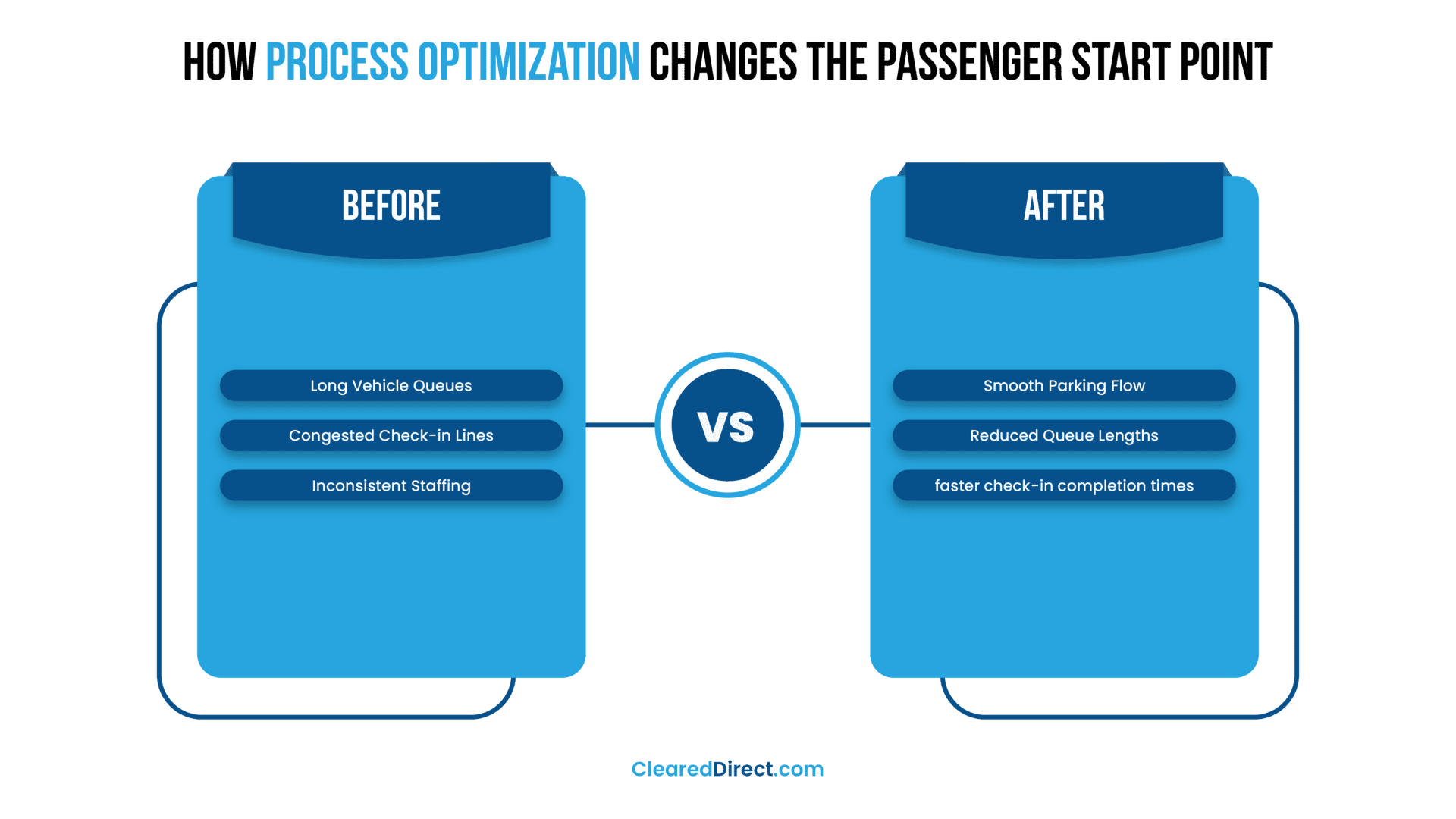
Now let’s dive deeper on check-in and parking operations. Parking and check-in are the first operational stages of an aviation operation, and they set the tone for the entire journey.
Parking Operations: Reducing Congestion from the Start
Parking lots and drop-off zones are often the first points of contact for passengers. Poor layout, unclear signage, or insufficient staff presence here can create delays that affect the rest of the process. Effective process optimization at this stage might include:
- Clear directional signage that guides drivers to available spaces.
- Real-time parking availability displays.
- Traffic marshals positioned during peak hours to manage vehicle flow.
- Pre-booking systems that allow passengers to secure parking before arrival.
These measures ensure that vehicles move smoothly, reducing the risk of congestion spilling over into check-in areas.
Check-in: Speed Without Sacrificing Accuracy
At the check-in counter, time is of the essence. Every additional minute per passenger can multiply into long queues and missed boarding times. Applying a process optimization strategy here can involve:
- Self-service kiosks and mobile check-in options to reduce reliance on staffed counters.
- Queue management systems that distribute passengers evenly across available counters.
- Cross-trained staff capable of handling multiple tasks during peak hours.
- Biometric verification tools to streamline identity checks.
By combining technology with skilled staffing, airports can significantly shorten wait times without compromising on accuracy or compliance.
Process Optimization Strategy for Security Screening
Security screening is often the most time-sensitive and high-pressure point in any aviation operation, and you can’t disagree with that right?
Passengers expect safety, but they also expect efficiency. A well-implemented process optimization strategy here not only improves throughput but also enhances the perception of the airport as organized and traveler-friendly.
Balancing Speed and Security
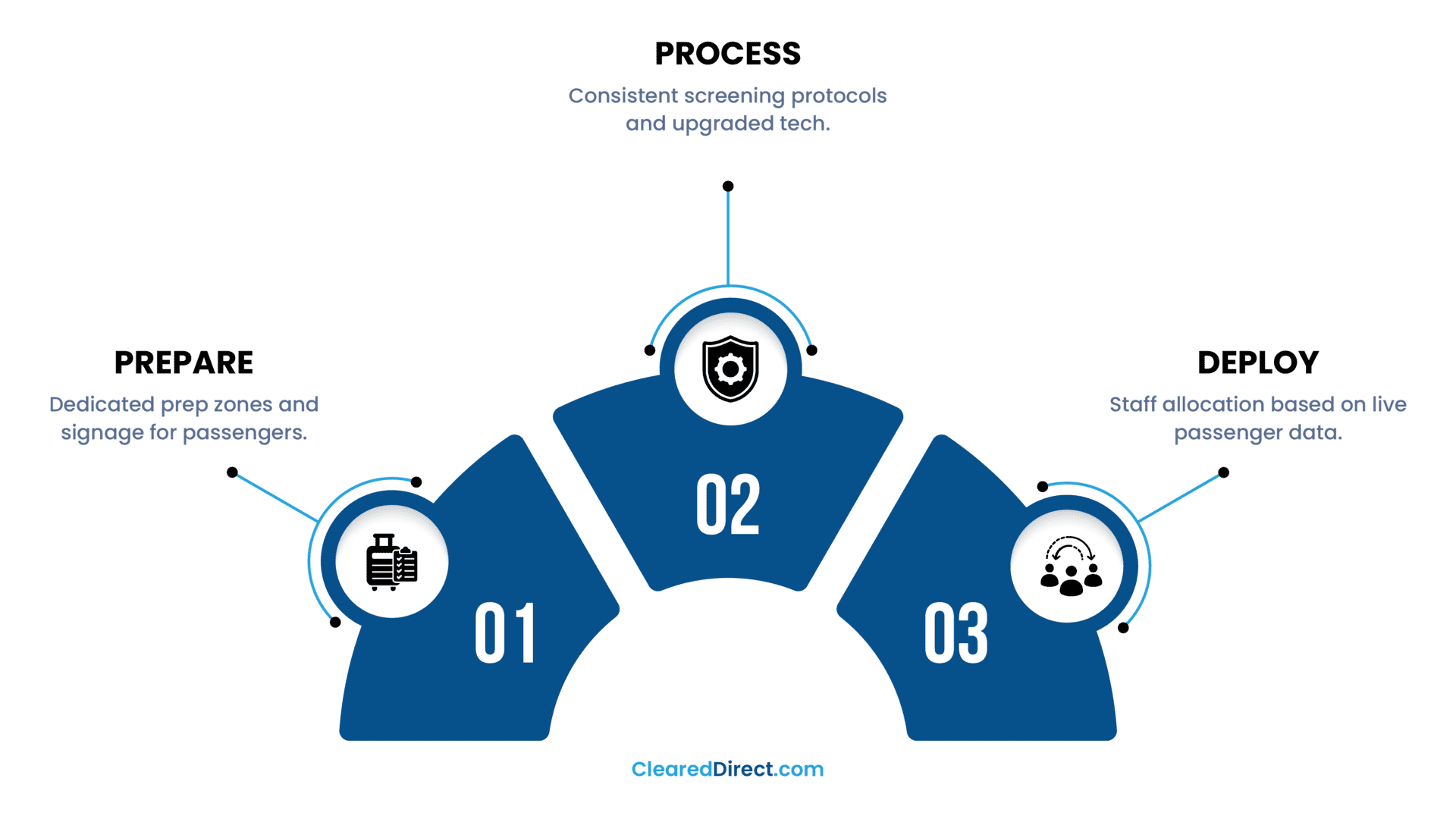
The goal is not to rush passengers through, but to remove inefficiencies without compromising compliance. Effective process optimization measures can include:
- Real-time queue monitoring with digital displays showing estimated wait times.
- Clearly marked preparation zones where passengers can ready their documents and belongings.
- Standardized staff protocols to ensure consistent handling of passengers and luggage.
- Deployment of advanced screening technologies such as CT scanners or automated tray return systems.
Each of these steps reduces idle time while keeping regulatory standards intact.
Staff Training and Allocation
Security is only as effective as the people running it.
By training staff to handle peak-hour surges and deploying additional personnel based on live passenger flow data, airports can prevent backlogs before they start. Integrated communication systems between security, gate staff, and ground operations further improve responsiveness.
For a deeper look at cost and efficiency in operational planning, review our Strategic Guide to Cost Optimization in Operations Management. This approach aligns budget priorities with efficiency goals, ensuring security operations remain sustainable over time.
Process Optimization in Gate Checks & Boarding
Let’s move onto the boarding part, the boarding remains one of the most visible points of aviation operations, and delays here ripple across the entire flight schedule.
Boarding Group Strategies That Work
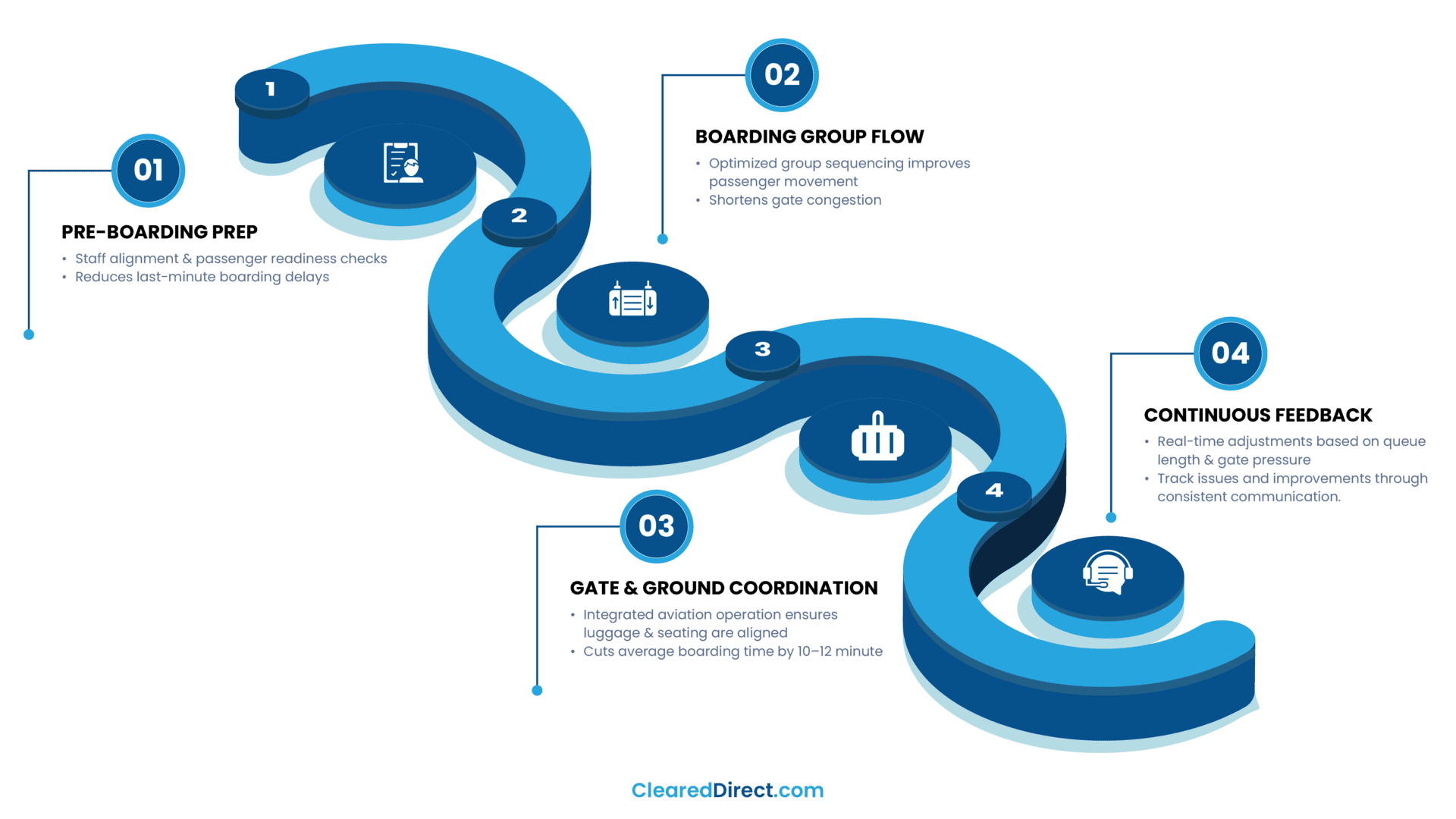
Not all boarding methods are equal. Traditional “back-to-front” boarding often looks organized but in practice creates aisle congestion. Airlines that apply process optimization through structured boarding groups, such as window-middle-aisle sequences or priority boarding by readiness, see measurable gains in turnaround time.
A clear process optimization definition here is the systematic arrangement of passengers into groups that reduce interference and speed movement.
Coordinating Gate Staff and Ground Handling
Boarding efficiency depends on coordination.
When gate staff, cabin crew, and ground handlers communicate in real time, they can adjust boarding group flow, manage carry-on distribution, and clear special service requests without stopping the entire line. This type of cross-functional alignment is one of the most overlooked aspects of process optimization in aviation operations.
Preventing Last-Minute Delays
Last-minute wheelchair requests, seat changes, or overhead bin shortages often pause the process.
A process optimization strategy to address this is pre-boarding readiness checks: confirming special assistance early, reminding passengers of carry-on limits, and pre-staging equipment before the first group is called. With these steps, airlines move from reactive fixes to proactive control.
End-to-End Process Optimization Through Integrated Airport Operations
Now let’s talk about integrated airport operations and why they matter for a smoother passenger journey and a more resilient aviation operation.
Linking Core Services Together
Airports run on a chain of interdependent processes: parking, check‑in, security screening, gate checks, baggage, and ground handling as discussed earlier.
Delays typically appear at handoffs. Integrating schedules, data, and responsibilities across these services reduces friction and helps teams act in sync rather than in sequence.
A coordinated process optimization approach turns separate tasks into one continuous flow.
The Role of Process Optimization
A structured process optimization strategy maps how information and tasks travel between teams, then removes duplication and unclear ownership. Examples include sharing real‑time queue data from security with gate teams, or feeding gate changes to ground handlers instantly so staffing and equipment adjust without guesswork.
This raises throughput and reduces unplanned holds.
Technology That Enables Integration
Digital collaboration frameworks like Airport Collaborative Decision Making (A‑CDM) give all stakeholders a common operating picture.
When airports share live milestones and constraints, they cut delays and improve predictability across turnarounds, a proven outcome in A‑CDM guidance and toolkits from IATA.
Why Integration Is the Future
Integrated operations are more adaptable during peak periods and disruptions. They support better resource use, faster aircraft turns, and a more consistent passenger experience. European studies on Airport Operations Centres show that unified decision making improves information flow and aligns resources across the airport, replacing fragmented choices with coordinated action.
Measuring the Impact of Process Optimization Efforts
Now comes the crucial part: measuring the impact of process optimization.
There are different variables to count, but let’s focus on the most common and important ones that provide real visibility into airport operations.
Key Performance Metrics
Passenger Throughput
An increase in passenger throughput is one of the most visible signs of successful process optimization. By moving more travelers through check-in, security, and boarding in less time, airports can accommodate rising demand without proportionally increasing resources.
This not only reduces bottlenecks but also strengthens the airport’s ability to handle peak travel seasons smoothly.
Wait Times
Average wait times at key checkpoints such as check-in counters, baggage drop, security lanes, and boarding gates, are direct indicators of efficiency. Sharp reductions in wait times prove that workflows are faster and more seamless.
Conversely, if throughput rises but wait times remain long, it may reveal hidden bottlenecks that need further attention.
Operational Cost Savings
Cost reduction is another powerful measure of success. When processes are streamlined, airports can lower overtime expenses, cut back on excess staffing during off-peak hours, and minimize resource waste such as unnecessary use of equipment or supplies.
Savings here directly improve financial sustainability while freeing funds for reinvestment in passenger-facing improvements.
Passenger Satisfaction Ratings
Passenger experience remains the ultimate benchmark. Monitoring satisfaction surveys, feedback forms, and even online reviews provides insight into whether process changes are creating real value for travelers.
Improvements like shorter queues, smoother boarding, and fewer delays translate directly into higher satisfaction scores, which in turn strengthen an airport’s reputation and competitiveness.
On-Time Performance
Another key metric often overlooked is flight punctuality. Efficient processes upstream like faster check-in and security clearance reduce late passenger arrivals at the gate, which helps airlines maintain tighter departure schedules.
This boosts overall on-time performance, benefiting both airports and carriers.
Employee Productivity and Morale
Staff should also be considered part of the measurement process.
Reduced stress levels, smoother task management, and fewer operational errors are strong signs that optimizations are working. Higher staff morale often translates into better customer service, completing the loop between internal efficiency and passenger experience.
Safety and Compliance Indicators
While efficiency is important, safety and compliance must never be compromised. Monitoring error rates in baggage handling, adherence to security protocols, and incident reports ensures that optimizations are enhancing—not undermining regulatory and safety requirements.
The Continuous Improvement Loop
Process optimization should never be treated as a one-time project. Passenger volumes, airline partnerships, and regulatory standards evolve constantly, which means even the best processes can become outdated.
A structured cycle of measure → analyze → refine → reapply ensures long-term success.
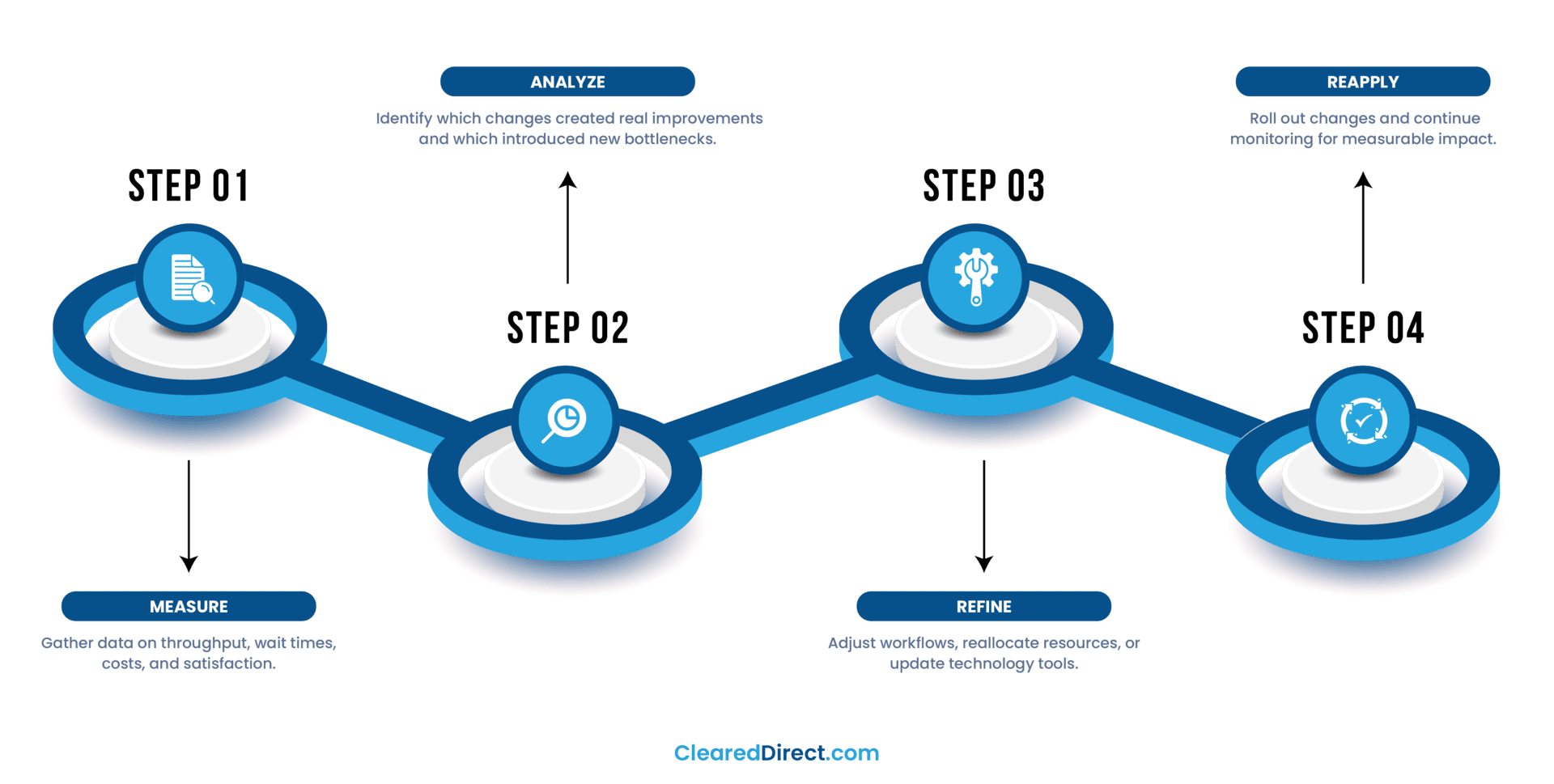
This loop creates resilience against creeping inefficiencies. It allows airports to adapt quickly when facing seasonal surges, new security protocols, or shifts in passenger expectations.
Closing Words
The fact of the matter is, process optimization is not just about speed.
It is about creating an operation that can adapt to rising passenger expectations, stricter compliance demands, and unpredictable travel volumes. Airports that treat optimization as an ongoing discipline, rather than a one-off project, will consistently see stronger performance in both efficiency and passenger trust.
At the same time, optimization requires visibility. Without reliable data, it is impossible to know whether improvements are truly making an impact or whether hidden inefficiencies are slipping back into daily routines. This is why measurement, feedback, and refinement must be built into the foundation of every process.
If you are looking for support in taking this step further, ClearedDirect is here for you. From enhancing passenger throughput to improving compliance oversight, ClearedDirect helps airports implement solutions that are not only efficient but also verifiable. The result is a smarter, more resilient operation that benefits both your bottom line and the travelers who depend on you.
Frequently Asked Questions
Process optimization is often referred to as workflow improvement, process streamlining, or operational efficiency. In aviation, these terms highlight the same goal: removing bottlenecks, reducing wait times, and aligning staff, systems, and passengers so that every stage of the airport journey runs smoothly.
The process typically follows a continuous improvement loop:
- Measure – Track performance metrics like wait times, passenger throughput, or staff utilization.
- Analyze – Identify where delays or inefficiencies occur, such as long queues at security or boarding gates.
- Refine – Apply targeted strategies, like self-service kiosks or real-time data sharing.
- Reapply – Test, monitor, and update regularly to ensure long-term success.
In airports, this cycle ensures operations remain adaptable during peak seasons and evolving compliance demands.
In aviation, process optimization means designing airport operations so that passengers move efficiently from arrival to boarding without unnecessary delays. It covers areas such as parking management, check-in, security screening, gate checks, and boarding. For example, airports that implement biometric check-in and structured boarding groups often report faster turnaround times and higher passenger satisfaction.
Airport Collaborative Decision Making (A-CDM) improves turnaround by strengthening communication and data sharing among stakeholders such as airlines, ground handlers, air traffic control, and airport operators. With real-time updates on aircraft status, resource availability, and process milestones, delays can be identified earlier, resources allocated more efficiently, and tasks synchronized more effectively. This reduces idle time, minimizes disruptions, and shortens aircraft turnaround times while improving predictability.
Tags:

Kevin Milewski
Kevin Milewski is the Chief Operating Officer at ClearedDirect, where he oversees operational strategy, technology implementation, and service delivery for aviation and commercial drone (UAV) projects. With a strong background in aviation services and facility management, Kevin focuses on improving safety, efficiency, and regulatory compliance across complex airport and industrial environments. At ClearedDirect, Kevin leads initiatives integrating drone surveillance, LiDAR imaging, and AI-driven facility inspection systems that help clients achieve higher safety and performance standards. His leadership contributes to the company’s commitment to precision, reliability, and data-driven decision-making in critical infrastructure operations. Kevin regularly contributes insights to ClearedDirect’s knowledge hub, covering UAV surveillance, aviation operations, and facility optimization topics. His work reflects practical industry experience and a dedication to advancing innovation in aviation and technology management. Connect with Kevin on LinkedIn to learn more about his work.
RECENT POSTS


Recent Comments
CATEGORIES
- Aviation Facility Management
- Commercial Cleaning
- Construction
- Digital Mapping & Analytics
- Drone & LiDAR Inspections
- Drone And LiDAR Guides
- Facility Cleaning Resources
- Facility Management Guides
- Facility Management Risk
- Facility Management Technology
- Facility Operations
- Facility Security Management
- Identifying & Eliminating Inefficiencies
- Operations Management Guides
- Process Optimization
- Security Management Guides
- Staffing Augmentation Guides
- Surveillance UAV Drone Guides
- UAV Drone Mapping
- Uncategorized
TAGS
2025 facility trends aerial surveillance aircraft cleaning airline operations airport compliance management airport operational risk management airport personnel airport terminal operations Aviation Operations Aviation Risk Management aviation security risk assessment aviation services AviationStaffing aviation staffing Commercial Cleaning Services Commercial Drone Surveillance Commercial Facility Security Drone Surveying Emergency Response Planning Facility Hygiene Compliance facility maintenance facility management Facility Risk Assessment Facility risk management facility services Green Cleaning for Facilities ground handling services integrated facility management services Operational Efficiency Strategies operations management outsource facility management outsourcing airline services outsourcing airport services passenger experience enhancement Physical Security Best Practices proactive maintenance Scaling janitorial operations seasonal peaks staff augmentation Staffing Augmentation Staffing Challenges Aviation terminal facility security TSA FAA risk mitigation uav infrastructure inspection uav lidar technology
Leave a Comment