
Call Anytime
512-508-8373- ClearedDirect > Blog > Staffing Augmentation Guides > Solving the Labor Gap: How Integrated Staffing Builds Facility Resilience
Blog Details

Solving the Labor Gap: How Integrated Staffing Builds Facility Resilience
If you’re struggling to find and retain reliable staff across your facility — you’re not alone.
Whether it’s for facility security, maintenance crews, front desk teams, or floor supervisors, labor shortages are hitting every corner of facility operations. And while the symptoms vary, the root problem is the same: the old ways of filling roles just aren’t keeping up with today’s demands.
To cope, many organizations turn to temp staffing, shift juggling, or last-minute outsourcing. These quick fixes might fill a gap for the week, but they don’t solve the deeper issue. Instead, you end up with inconsistent service, burned-out staff, and a revolving door of new hires who never fully settle into the job.
Integrated staffing is a long-term approach that embeds workforce management into the core of your facility operations. Instead of relying on scattered third-party help, it connects hiring, training, supervision, and scheduling into a single, aligned system. This creates a flexible labor workforce structure that’s built around your needs — ready to scale, adjust, and keep services running smoothly, even when the market shifts.
In this blog, we’ll explore what’s really causing the labor gap in facility environments, how integrated staffing works differently from traditional models, and what it takes to build operational resilience from the inside out.
Understanding the Labor Gap in Facility Operations
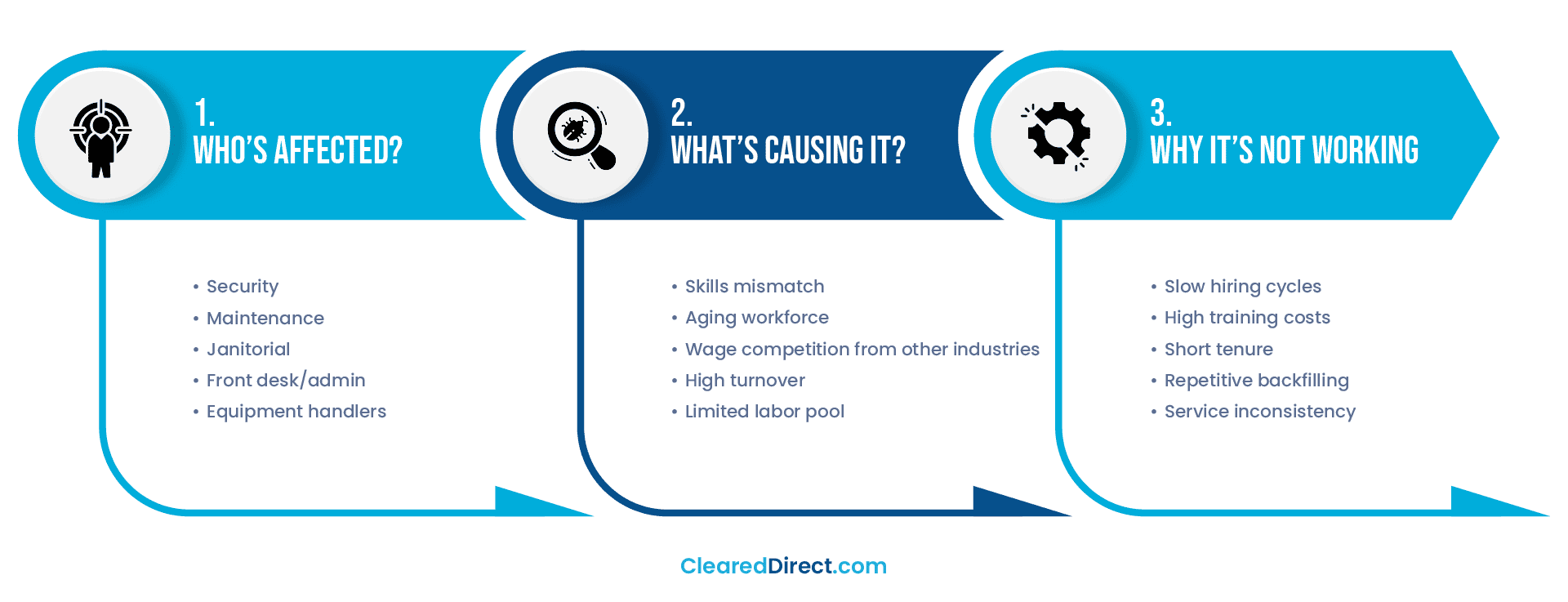
Labor shortages today go beyond one or two job titles. Security officers, maintenance crews, janitorial teams, front desk support — all are becoming harder to staff consistently. Facilities across industries are feeling the strain, especially when they need 24/7 coverage or specialized skill sets. Even with internal staff in place, gaps appear quickly when someone calls out, quits unexpectedly, or can’t keep up with the demand.
What’s Causing the Breakdown?
Several long-term trends are converging at once. Skilled tradespeople are aging out of the workforce. Many younger workers prioritize flexibility, remote work, or gig-based roles. At the same time, facilities are being asked to do more — faster service, stricter compliance, and more complex equipment — all with fewer hands on deck. It’s a mismatch between what today’s roles require and what the labor market is ready to deliver.
Why Traditional Hiring Isn’t Keeping Up
The default approach to staffing — post a job, onboard quickly, and hope they stick — just doesn’t hold up anymore. Recruiting takes longer. New hires often need more training. And without a structured retention plan, you end up right back where you started: short-staffed, overworked, and behind schedule. For facilities with essential roles to fill, this reactive cycle creates constant disruption.
What Is Integrated Staffing?
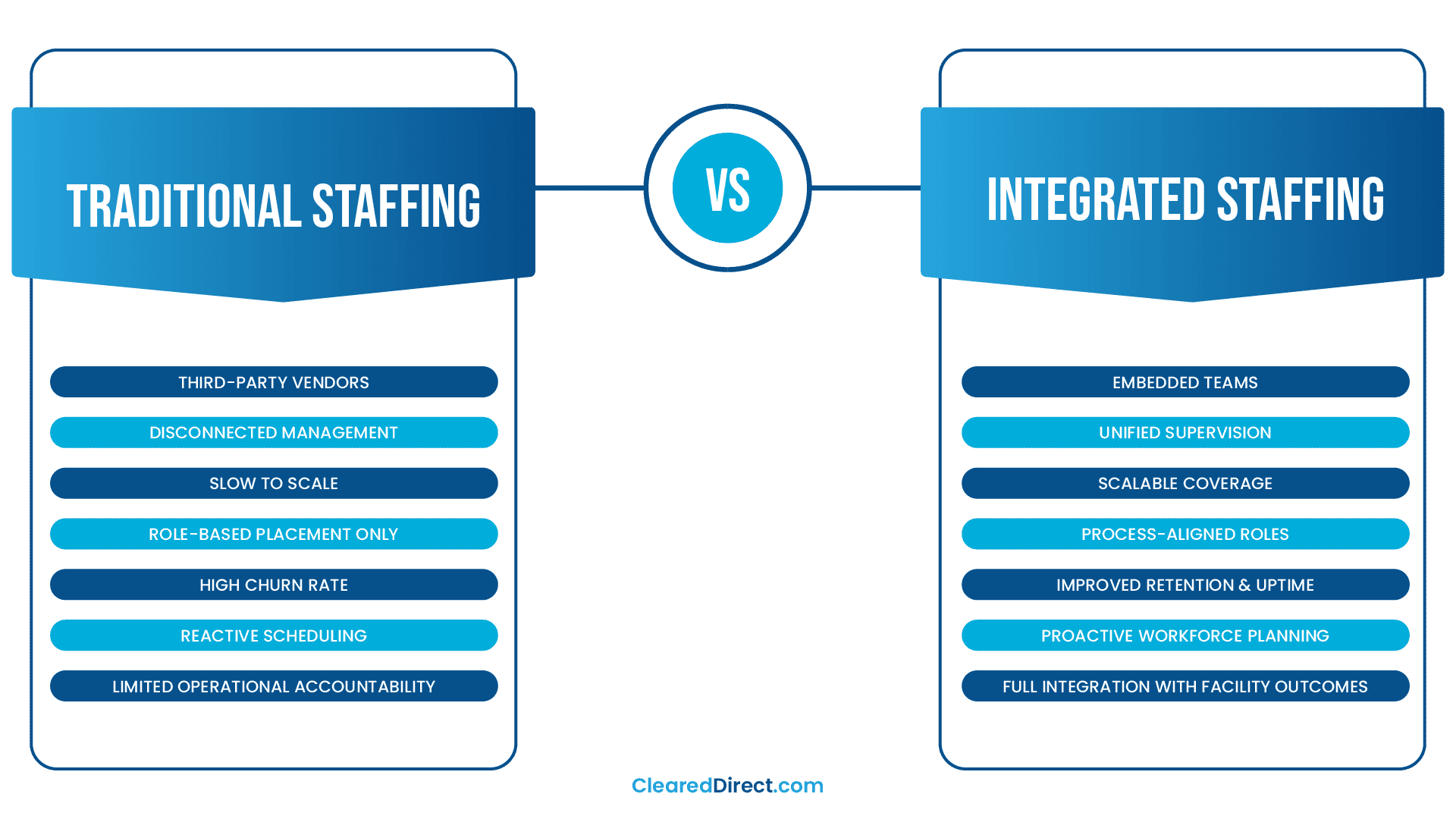
Integrated staffing is a workforce model where staffing is embedded directly into your facility’s day-to-day operations — not handled as a separate, outsourced service. Instead of hiring through multiple vendors or reacting to sudden shortages, you have a dedicated workforce that’s aligned with your processes, schedules, and service goals from day one.
This approach centralizes recruitment, onboarding, supervision, and scheduling under one system. You’re not just filling shifts — you’re building a flexible, well-managed team that understands the unique needs of your site. Whether it’s a hospital, airport terminal, manufacturing plant, or commercial complex, integrated staffing creates consistency across every role, from floor operations to front desk to security.
This model fits naturally within the broader shift toward facility-wide service integration, where labor, tools, and oversight are unified to drive reliability and scale. You can find a more detailed breakdown of this approach in The Business Guide to Facility Services: Management, Maintenance & More.
What makes integrated staffing different is the level of control it gives back to operations teams. You’re no longer relying on disconnected vendors or one-off hires. Instead, you have a team that’s built into your structure — trained on your systems, aligned with your goals, and managed in a way that supports long-term performance.
How Integrated Staffing Builds Resilience
In today’s facility landscape, resilience means more than just getting by during a labor shortage. It means having systems in place that allow you to keep operations running smoothly — even when the unexpected hits. That level of stability doesn’t come from hiring faster. It comes from rethinking how your teams are structured and supported from the ground up.
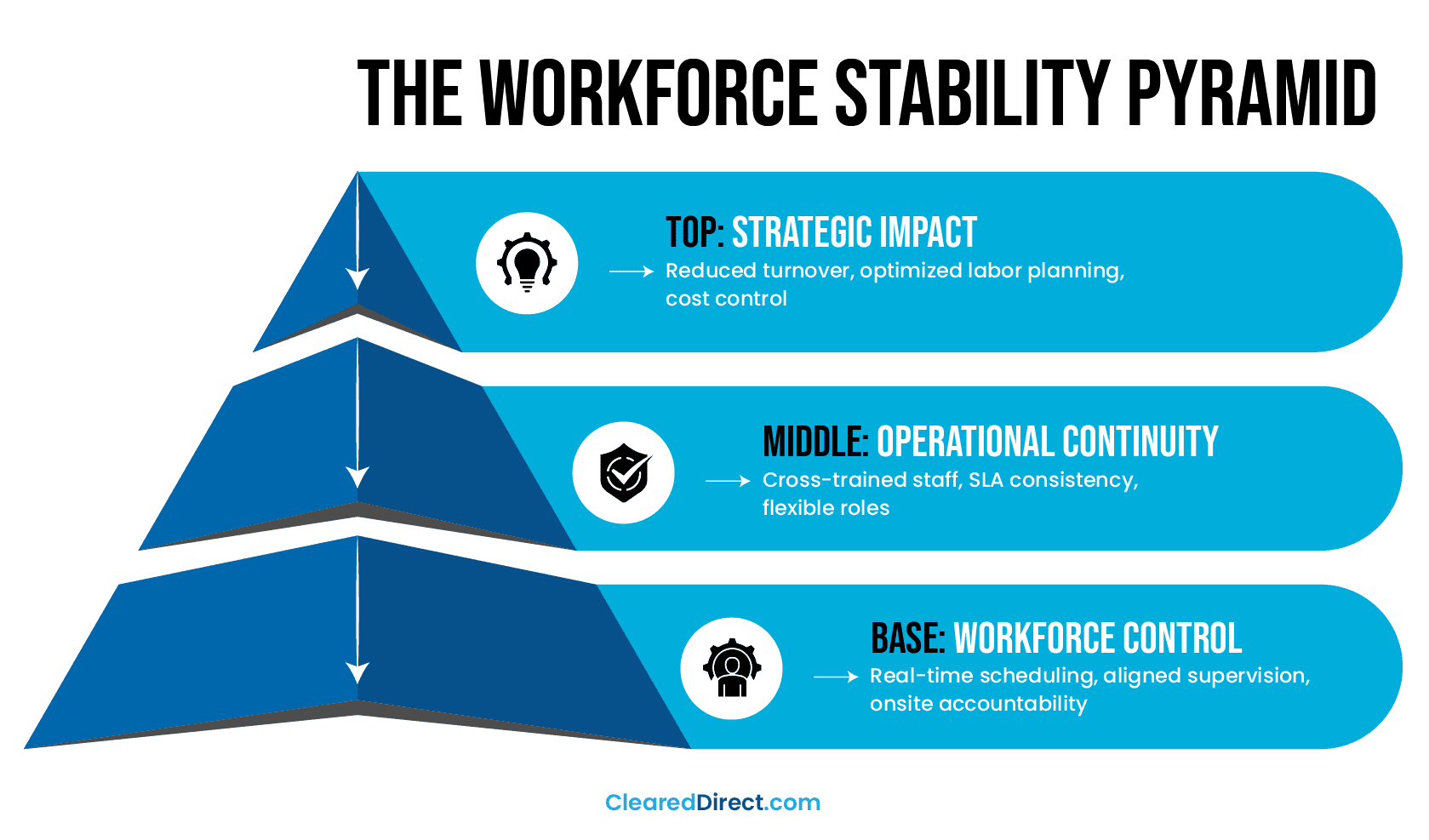
With integrated staffing, resilience is built into your operation. Instead of relying on last-minute fixes or multiple outside vendors, you have a flexible workforce that’s already embedded, trained, and aligned with how your facility runs. Teams can shift roles when needed. Schedules adjust without scrambling. Supervision stays consistent. The result is fewer disruptions and more control when demand fluctuates or gaps appear.
This model also improves visibility. When staffing is part of your operational core — not managed at arm’s length — you gain real-time insight into coverage, performance, and availability. That clarity allows for better planning, faster response, and smarter decisions across every layer of workforce management. It’s one of the most effective ways to reduce labor waste, control overtime, and protect service levels over time. To see how integrated staffing ties directly into cost control and operational efficiency, take a look at The Strategic Guide to Cost Optimization.
And beyond the systems, it improves retention. When employees are treated as part of the operation — not as short-term help — they stay longer, perform better, and take more ownership in their role. That’s the kind of workforce management that can’t be outsourced or improvised.
A Simple Framework for Building Resilient Staffing Models
Building a resilient staffing model doesn’t mean starting from scratch — it means shifting from patchwork hiring to a system that’s stable, flexible, and built around your operation’s actual needs.
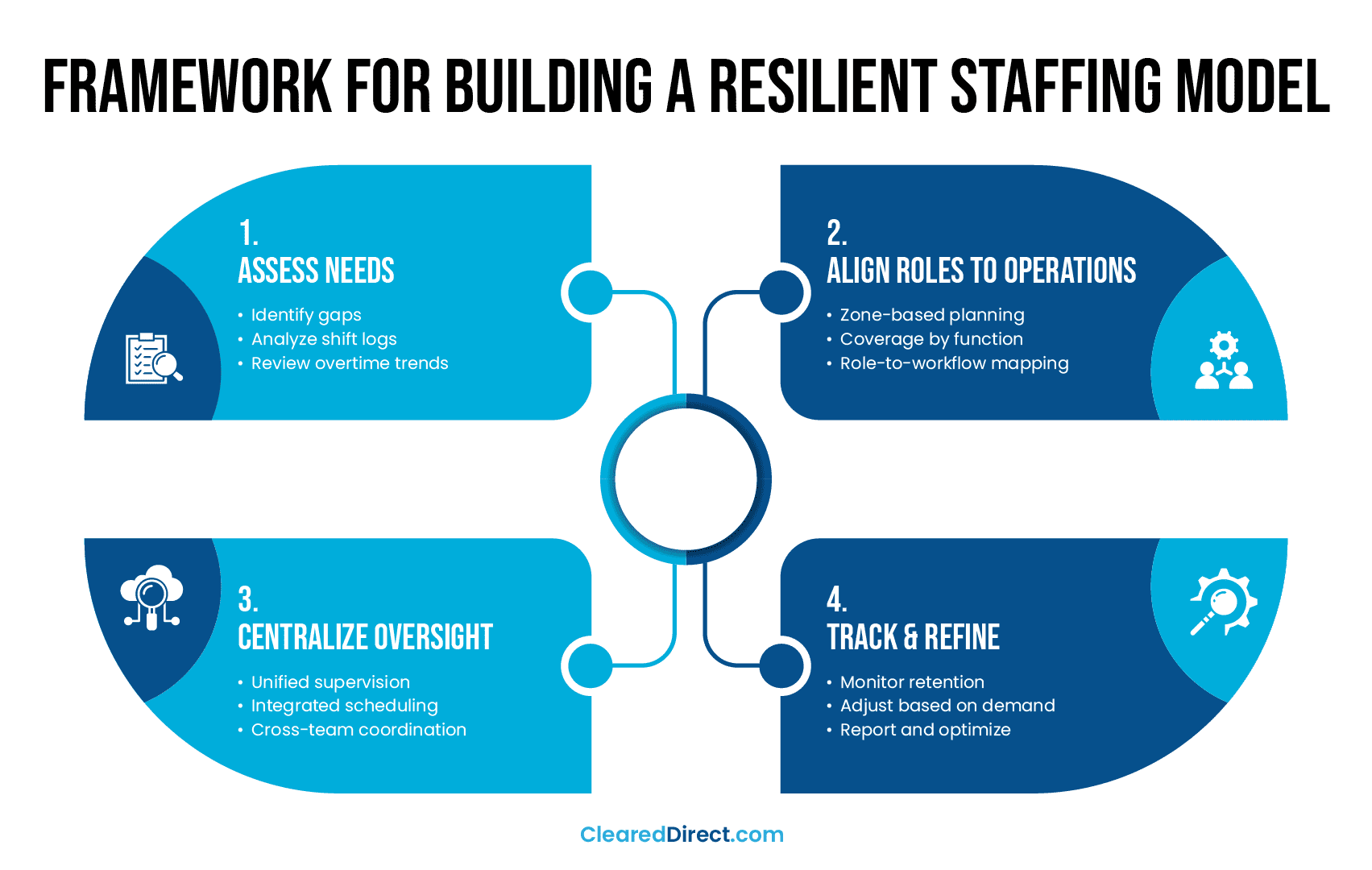
Below is a four-part framework to guide the transition to integrated staffing in a way that’s both practical and scalable.
Assess Your Operational Gaps
Before making any changes, take stock of where your current staffing model is falling short. Where do gaps appear most often? Which departments rely on overtime just to get through the week?
Review shift logs, absentee records, turnover data, and service disruptions. These insights will help you spot patterns that surface during peak times or around certain roles. Resilience starts with visibility — and that means knowing exactly where the pressure is building.
Align Staffing With Core Workflows
It’s not enough to hire by job title — you need to match labor to how your facility actually runs. Look at your daily workflows: which areas require continuous coverage? Which tasks are time-sensitive or compliance-driven?
From floor coverage in a large terminal to back-end equipment checks, map your staffing around functions and zones, not just shifts. Integrated staffing allows for this kind of alignment, building teams that are positioned where they have the most impact.
Embed Oversight and Scheduling
One of the most overlooked components of staffing resilience is control. Who’s managing coverage? Who steps in when someone calls out? If multiple departments or third-party vendors are handling their own schedules, it’s hard to keep things consistent.
Resilient staffing models rely on centralized workforce management, where supervision, scheduling, and communication are unified under one system. This eliminates guesswork and keeps everyone accountable — especially during busy or short-staffed periods.
Measure and Adjust
Once the new structure is in place, keep tracking what matters. Monitor KPIs like shift coverage rates, response times, retention levels, and cost per role. Over time, this data will help you fine-tune the model and respond proactively to changes in volume or scope.
The strength of a resilient staffing system isn’t just in how it’s built — it’s in how well it adapts.
Measurable Benefits of Integrated Staffing
A well-aligned staffing model does more than fill shifts — it reinforces the entire operational backbone of your facility. By embedding people into your workflow, instead of plugging gaps on the fly, you unlock long-term value across efficiency, cost, and team performance. Here’s how this plays out in measurable outcomes.
Reduced Turnover & Higher Retention
Constant churn is expensive. When staff feel disconnected or disposable, they leave — and every new hire resets the learning curve. A flexible workforce that’s built into your day-to-day operations reduces this risk. Employees are trained with continuity in mind, included in team communications, and managed with a focus on fit and long-term development. This shift helps stabilize headcount and creates a stronger sense of ownership across roles — essential in environments with recurring service needs.
Consistent Coverage & SLA Compliance
Coverage breakdowns don’t just hurt performance — they hurt your reputation. Whether it’s a missed clean, an unmanned desk, or an unattended maintenance issue, the ripple effects are immediate. A unified staffing model ensures that roles are cross-trained, supervisors have visibility across schedules, and backups are already in place. This level of control helps facilities meet their SLAs reliably and gives clients confidence that standards won’t slip, even when the unexpected happens.
Smarter Cost Control
Every hour of reactive staffing — whether it’s last-minute overtime or temporary hires — erodes margins. When labor is aligned with actual operational needs, you’re no longer playing catch-up. Through better workforce management, you can forecast staffing demand, track utilization rates, and deploy resources strategically. This data-driven approach helps reduce waste, improve ROI, and strengthen your case for budget planning. It’s one of the most reliable labor shortage solutions for today’s cost-conscious operations teams.
Stronger Team Engagement & Productivity
Teams that are well-integrated perform better. When people know their role, have consistent direction, and feel like they’re part of something functional — not fragmented — motivation climbs. A proactive staffing approach improves accountability, promotes safety, and builds trust between departments. With the right support systems in place, productivity isn’t something you have to push — it becomes the standard.
You Shouldn’t Miss This:
Organizations using integrated staffing reports improved operational stability and cost outcomes. According to Forbes , companies that implement total workforce management strategies—combining planning, flexibility, and supervision—gain productivity and reduce waste, all while enhancing employee retention and satisfaction
Bringing It All Together
The labor gap in facility operations isn’t going away on its own. But with the right staffing model, you don’t have to settle for constant disruption or short-term fixes. Integrated workforce solutions offer a more stable, strategic path—one that balances people, processes, and performance in a way traditional hiring simply can’t match.
By aligning staffing with real operational needs, you build a foundation for long-term resilience. You reduce costs, minimize turnover, and create a more reliable work environment. Most importantly, you give your team the structure they need to succeed—and your clients the consistency they expect.
If you found this guide helpful and want to explore how ClearedDirect supports smarter, more scalable staffing for facilities, we’re here to help. Whether you’re rethinking your approach or just looking for extra support, feel free to reach out—our team will walk you through it and guide you on what you need, or help you structure things in a better way.
Tags:

Kevin Milewski
Kevin Milewski is the Chief Operating Officer at ClearedDirect, where he oversees operational strategy, technology implementation, and service delivery for aviation and commercial drone (UAV) projects. With a strong background in aviation services and facility management, Kevin focuses on improving safety, efficiency, and regulatory compliance across complex airport and industrial environments. At ClearedDirect, Kevin leads initiatives integrating drone surveillance, LiDAR imaging, and AI-driven facility inspection systems that help clients achieve higher safety and performance standards. His leadership contributes to the company’s commitment to precision, reliability, and data-driven decision-making in critical infrastructure operations. Kevin regularly contributes insights to ClearedDirect’s knowledge hub, covering UAV surveillance, aviation operations, and facility optimization topics. His work reflects practical industry experience and a dedication to advancing innovation in aviation and technology management. Connect with Kevin on LinkedIn to learn more about his work.
RECENT POSTS


Recent Comments
CATEGORIES
- Aviation Facility Management
- Commercial Cleaning
- Construction
- Digital Mapping & Analytics
- Drone & LiDAR Inspections
- Drone And LiDAR Guides
- Facility Cleaning Resources
- Facility Management Guides
- Facility Management Risk
- Facility Management Technology
- Facility Operations
- Facility Security Management
- Identifying & Eliminating Inefficiencies
- Operations Management Guides
- Process Optimization
- Security Management Guides
- Staffing Augmentation Guides
- Surveillance UAV Drone Guides
- UAV Drone Mapping
- Uncategorized
TAGS
2025 facility trends aerial surveillance aircraft cleaning airline operations airport compliance management airport operational risk management airport personnel airport terminal operations Aviation Operations Aviation Risk Management aviation security risk assessment aviation services AviationStaffing aviation staffing Commercial Cleaning Services Commercial Drone Surveillance Commercial Facility Security Drone Surveying Emergency Response Planning Facility Hygiene Compliance facility maintenance facility management Facility Risk Assessment Facility risk management facility services Green Cleaning for Facilities ground handling services integrated facility management services Operational Efficiency Strategies operations management outsource facility management outsourcing airline services outsourcing airport services passenger experience enhancement Physical Security Best Practices proactive maintenance Scaling janitorial operations seasonal peaks staff augmentation Staffing Augmentation Staffing Challenges Aviation terminal facility security TSA FAA risk mitigation uav infrastructure inspection uav lidar technology
Leave a Comment