
Call Anytime
512-508-8373- ClearedDirect > Blog > Staffing Augmentation Guides > Leveraging Staff Augmentation for Seasonal Peaks in Aviation
Blog Details

Leveraging Staff Augmentation for Seasonal Peaks in Aviation
Every year, it happens like clockwork.
Passenger volume soars, terminals get crowded, and flight schedules tighten — all while your team scrambles to keep operations running smoothly. Whether it’s summer travel, winter holidays, or spring break, seasonal peaks in aviation put a serious strain on resources.
But here’s the challenge: scaling your workforce quickly — without sacrificing service or compliance — isn’t easy.
Traditional hiring can’t keep up. The onboarding takes too long, costs climb fast, and your full-time team ends up stretched too thin.
That’s where staff augmentation services come into play. By partnering with specialized aviation staffing agencies, operators can swiftly access a pool of pre-vetted, aviation-ready professionals. These experts are trained to seamlessly integrate into existing teams, ensuring that critical roles—from ground handling to customer service—are covered efficiently.
So how exactly does aviation personnel staffing services help you handle the surge without burning out your team or blowing your budget?
Let’s break it down.
Understanding the Seasonal Surge in Aviation
If you’ve ever worked in an airport during peak travel seasons, you know the pressure.
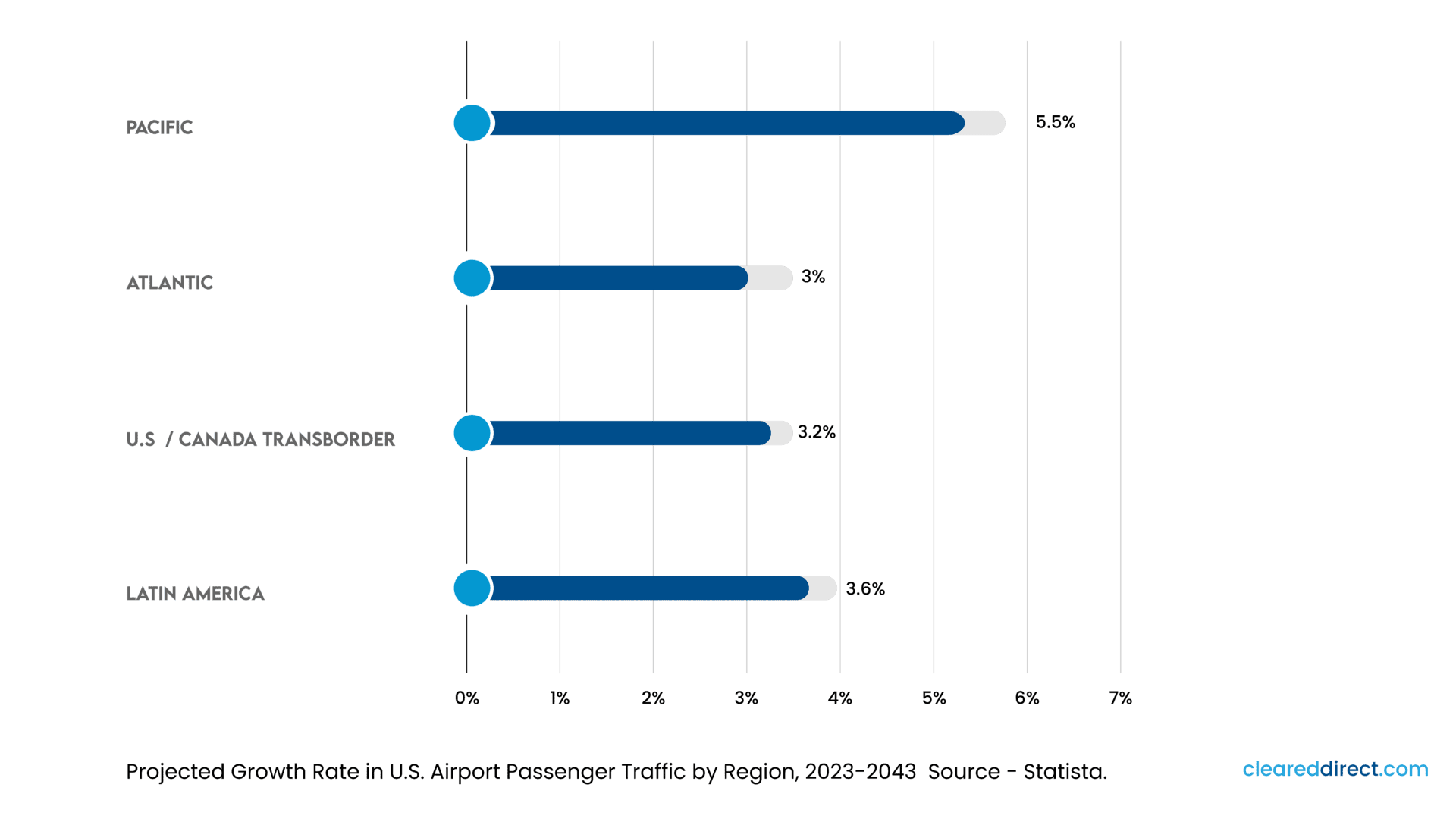
From Thanksgiving to summer vacations, U.S. airports experience significant spikes in passenger volume. Flight schedules tighten, security lines lengthen, baggage demands increase, and the margin for error becomes minimal.
According to the Transportation Security Administration (TSA), on Sunday, December 1, 2024, over 3.09 million passengers were screened at U.S. airports — the highest number ever recorded in a single day. This surpassed the previous record of 3.01 million set in July of the same year. (Source: Spectrum News)
These aren’t anomalies; they’re becoming the new seasonal norm. Yet, many aviation teams continue operating with fixed staff levels year-round, hoping their team can “handle the load” during these surges. This approach often leads to:
- Burned-out employees
- Delayed flights
- Frustrated passengers
- Operational breakdowns
AND more.
In the high-stakes environment of aviation, such outcomes aren’t just inconvenient — they’re business risks.
Why Traditional Hiring Falls Short
Not Built for Urgency or Scale
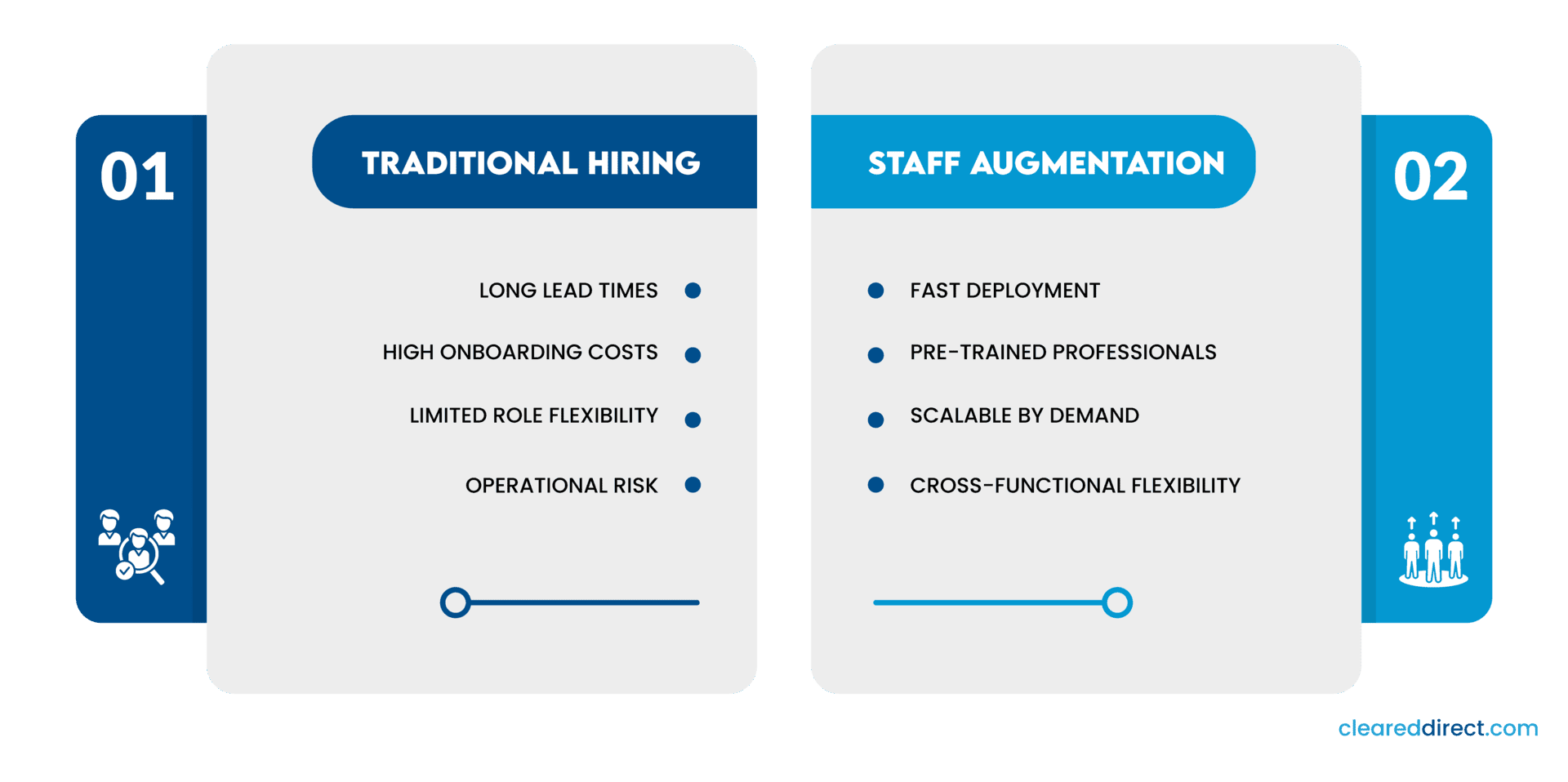
When seasonal peaks hit, most aviation teams turn to the standard hiring process: job postings, interviews, background checks, onboarding. But while that might work for long-term roles, it’s painfully slow when demand spikes overnight.
In a high-pressure environment like the United States, delays in hiring translate directly to delays at the gate, longer lines at security, and mounting passenger complaints. By the time a new hire is trained, the peak window might already be closing.
High Cost, Low Agility
Traditional hiring also comes with high overhead — recruitment fees, onboarding costs, and long-term contracts — all for staffing needs that may only last a few weeks. And if you over-hire? You’re stuck managing unnecessary payroll.
Meanwhile, your full-time staff ends up stretched thin. They’re working overtime, covering shifts, and trying to stay ahead of growing workloads — which can lead to burnout, fatigue, and costly mistakes in time-sensitive areas like baggage handling or customer support.
And then again we landed on the staff augmentation services. They give aviation operators the ability to scale staffing up (or down) with precision — bringing in pre-trained, aviation-cleared personnel exactly when and where they’re needed. No delays.
No long-term commitment. Just the operational coverage you need, when you need it.
How Staff Augmentation Services Solve the Peak Season Puzzle
When aviation operations hit peak season, speed, flexibility, and compliance become non-negotiable. That’s exactly where staff augmentation services shine — helping airports and aviation service providers keep up with demand without sacrificing operational quality.
Rapid Deployment of Skilled Personnel
During peak travel seasons, the aviation industry faces unprecedented surges in passenger numbers. For instance, on July 7, 2024, the Transportation Security Administration (TSA) screened a record 3,013,413 travelers in a single day, marking the highest number in its history. Airlines For America Such spikes demand immediate staffing solutions to maintain operational efficiency and passenger satisfaction.
Staff augmentation solves for speed. Aviation staffing agencies maintain a pool of trained, airport-cleared personnel who can be placed on-site within 24 to 48 hours. Whether for baggage handling, aircraft cleaning, security, or terminal guest services, these professionals are ready to work — and already understand airport protocols.
Flexible Resourcing for Unpredictable Peaks
One of the biggest risks in traditional hiring is being locked into headcount even after demand tapers off. With augmentation, you scale labor in real time — no long-term contracts, no bloated rosters.
Whether it’s a sudden weather disruption, airline expansion, or holiday overflow, this flexibility allows operations to stay nimble and cost-controlled without scrambling for last-minute hires.
Cost Efficiency Without Compromising Standards
Hiring full-time staff for seasonal roles can be financially taxing. According to the Society for Human Resource Management (SHRM), the average cost per hire in the U.S. is approximately $4,700, excluding benefits. For short-term needs, this investment may not yield proportional returns.
Staff augmentation offers a leaner approach — pay only for what you need, when you need it. It’s a smart financial strategy for maintaining service quality while protecting margins.
Compliance-Ready & Built for Aviation
Unlike general temp staffing, aviation-specific augmentation partners ensure their personnel meet FAA Federal Aviation Administration: The national aviation authority of the United States, responsible for regulating and overseeing all aspects of American civil aviation. , TSA Transportation Security Administration: An agency of the U.S. Department of Homeland Security that has authority over the security of the traveling public in the United States. , and OSHA Occupational Safety and Health Administration: A large regulatory agency of the United States Department of Labor that sets and enforces protective workplace safety and health standards. guidelines. This means the staff you receive aren’t just available — they’re aviation-ready.
From ramp safety and ID badging to customer service and regulatory documentation, every aspect is built for seamless integration and minimized onboarding friction.
Real-World Results: Austin South Terminal Operations
When Surge Season Hit Austin, ClearedDirect Delivered
At the height of peak travel season, the Austin South Terminal faced a sharp spike in passenger traffic — far beyond their original forecasts. With flight schedules expanding and service demands rising across the terminal, the in-house team quickly found itself overwhelmed. Delays were imminent, and passenger experience was at risk.
Instead of rushing into full-time hiring — which would take weeks to execute — terminal leadership made a strategic move: they engaged staff augmentation services through ClearedDirect.
In less than 24 hours, ClearedDirect responded by deploying a fully briefed and TSA-cleared team, trained specifically for high-volume airport environments. The augmentation covered a full spectrum of roles, including:
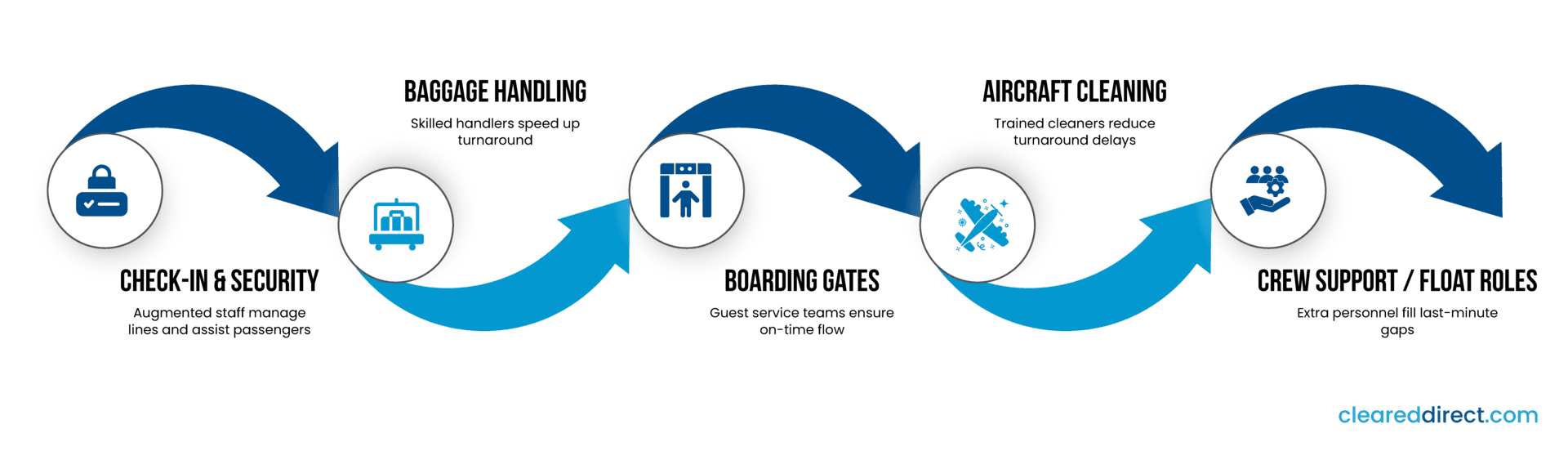
- Passenger service representatives for check-in and boarding
- Baggage handlers to maintain quick turnaround times
- Cleaning and custodial personnel to uphold hygiene standards
- Guest experience attendants to support crowd flow and address passenger needs
- Tarmac and terminal support staff to assist with ramp and gate-side operations
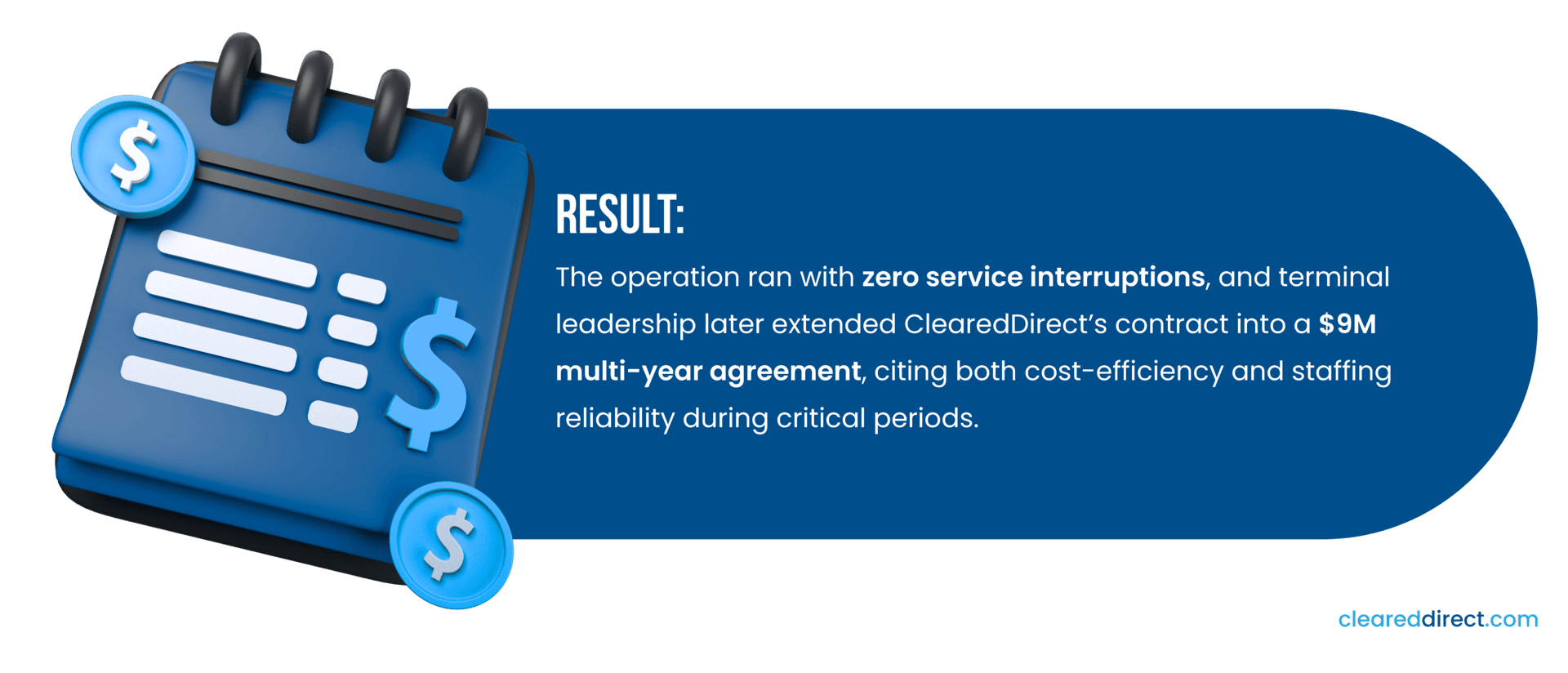
What made the difference? Every individual was pre-vetted, safety-certified, and ready to integrate directly into Austin’s operating rhythm — eliminating the need for lengthy onboarding or service interruptions.
What to Look for in an Aviation Staffing Partner
Staffing during seasonal surges isn’t just about filling shifts — it’s about choosing the right partner who truly understands how high-stress and high-stakes the aviation world can be. In airports, everything moves fast, regulations are strict, and there’s zero room for error. From keeping passengers happy to maintain security standards, the pressure is constant.
That’s why you don’t just need a staffing agency — you need a partner who can think and move like part of your ops team. So, what actually makes one worth trusting with your terminal, your team, and your reputation?
Here’s what you should look for — and the questions to ask before signing on.
Speed & Availability
Time is everything in aviation. From boarding gates to baggage claims, every minute counts — and when staffing falls short, the consequences are immediate. Delays at one touchpoint ripple across the entire operation, slowing check-ins, backing up security lines, delaying departures, and frustrating passengers.
Without quick access to skilled, airport-cleared personnel, it becomes nearly impossible to maintain flow and avoid costly service disruptions — especially during peak travel windows.
Ask yourself:
- Can they deploy skilled staff within 24–48 hours?
- Do they have a live talent pipeline — not just a resume database?
- Are they available for urgent needs like weather delays or flight disruptions?
Aviation-Specific Experience
Not all staffing agencies are built for the realities of airport operations. Aviation isn’t like retail or hospitality — it’s a regulated, high-pressure environment where timing, safety, and coordination are non-negotiable. The roles might seem familiar on paper — customer service, cleaning, logistics — but in practice, they require a very specific understanding of airside protocols, terminal flow, TSA Transportation Security Administration: An agency of the U.S. Department of Homeland Security that has authority over the security of the traveling public in the United States. procedures, and ground support dynamics. Bringing in personnel without that context can slow things down, create compliance risks, or disrupt passenger experience at the exact moment you need things to run smoothly.
Ask:
- Have they worked with commercial airlines, regional airports, or FBOs Fixed-Base Operators: Businesses that provide aeronautical services such as fueling, hangaring, tie-down and parking, aircraft rental, and aircraft maintenance at an airport. ?
- Are their staff familiar with SIDA Security Identification Display Area (SIDA), a highly sensitive area where only authorized people are allowed to access, like aircraft ramps, runway access points, fueling stations, etc. zones, terminal protocols, or TSA support roles?
- Can they provide examples of past aviation staffing deployments?
Regulatory & Safety Compliance
Aviation is one of the most tightly regulated industries in the world — and for good reason. Every person working within an airport environment is part of a larger safety and security system, whether they’re airside on the ramp or inside the terminal. When staffing isn’t properly vetted or trained to meet those regulatory standards, it’s not just a compliance issue — it can slow down operations, trigger audits, or even compromise airport certifications.
From TSA badging to OSHA Occupational Safety and Health Administration: A large regulatory agency of the United States Department of Labor that sets and enforces protective workplace safety and health standards. requirements and airport-specific SOPs Standard Operating Procedures: Detailed, written instructions to achieve uniformity of the performance of a specific function or task. , every role needs to meet strict criteria before they ever step onto the floor. Skipping that step isn’t just risky — it’s costly.
Ask:
- Are all placements background-checked, badged, and compliant with FAA Federal Aviation Administration: The national aviation authority of the United States, responsible for regulating and overseeing all aspects of American civil aviation. /TSA standards?
- Do they provide documentation and certification for every role?
- Do they understand OSHA and airport safety protocol?
Scalable, Flexible Coverage
Staffing needs in aviation aren’t static — they shift constantly. One week you’re managing normal passenger flow, and the next you’re dealing with holiday surges, weather delays, or unexpected airline schedule changes. Rigid staffing models can leave teams either short-handed or overstaffed, both of which come at a cost.
When operations ramp up, you need the ability to scale labor quickly — and just as importantly, scale it back when things return to normal. Without that flexibility, you’re left juggling overtime, burnout, or excess overhead, all while trying to keep service levels intact.
Ask:
- Can they increase headcount for high-traffic days and scale back later?
- Do they offer both part-time and full-time placement models?
- Will they support your team for short-term surges and long-term stability?
Onboarding, Oversight & Accountability
In a fast-paced airport environment, support can’t stop once the shift begins. Coordinating people, managing handoffs, and maintaining consistency across multiple roles requires more than just showing up — it requires real-time oversight. Without ongoing coordination, even well-staffed teams can fall out of sync, miss service cues, or slip on standards.
Effective staffing isn’t just about putting people in place — it’s about making sure those people are aligned, accountable, and supported throughout the day so that the operation runs the way it’s supposed to.
Ask:
- Do they offer shift tracking or on-site team leads?
- Is there a single point of contact for oversight and issue resolution?
- Can they provide reporting, attendance logs, and role-by-role accountability?
Conclusion
Seasonal surges aren’t new — but they’re getting harder to manage. Flight schedules shift, passenger expectations rise, and margins for error get tighter every year. The teams that stay ahead aren’t reacting at the last minute — they’re building staffing strategies that flex with demand and protect core operations.
That’s where a well-aligned staffing partner makes all the difference.
Instead of scrambling to hire or stretching your core team too thin, staff augmentation allows you to fill key roles quickly, maintain service quality, and reduce the operational stress that comes with every peak season.
It’s a model that’s already working across the country — including at places like Austin South Terminal, where ClearedDirect helped keep things running smoothly during a high-traffic window with zero service disruptions.
Whether you need added hands for baggage handling, passenger services, or airside operations, the goal isn’t to replace your team — it’s to support them when it matters most.
Reach out here to explore how flexible staffing can fit into your operation.

Kevin Milewski
Kevin Milewski is the Chief Operating Officer at ClearedDirect, where he oversees operational strategy, technology implementation, and service delivery for aviation and commercial drone (UAV) projects. With a strong background in aviation services and facility management, Kevin focuses on improving safety, efficiency, and regulatory compliance across complex airport and industrial environments. At ClearedDirect, Kevin leads initiatives integrating drone surveillance, LiDAR imaging, and AI-driven facility inspection systems that help clients achieve higher safety and performance standards. His leadership contributes to the company’s commitment to precision, reliability, and data-driven decision-making in critical infrastructure operations. Kevin regularly contributes insights to ClearedDirect’s knowledge hub, covering UAV surveillance, aviation operations, and facility optimization topics. His work reflects practical industry experience and a dedication to advancing innovation in aviation and technology management. Connect with Kevin on LinkedIn to learn more about his work.
RECENT POSTS


Recent Comments
CATEGORIES
- Aviation Facility Management
- Commercial Cleaning
- Construction
- Digital Mapping & Analytics
- Drone & LiDAR Inspections
- Drone And LiDAR Guides
- Facility Cleaning Resources
- Facility Management Guides
- Facility Management Risk
- Facility Management Technology
- Facility Operations
- Facility Security Management
- Identifying & Eliminating Inefficiencies
- Operations Management Guides
- Process Optimization
- Security Management Guides
- Staffing Augmentation Guides
- Surveillance UAV Drone Guides
- UAV Drone Mapping
- Uncategorized
TAGS
2025 facility trends aerial surveillance aircraft cleaning airline operations airport compliance management airport operational risk management airport personnel airport terminal operations Aviation Operations Aviation Risk Management aviation security risk assessment aviation services AviationStaffing aviation staffing Commercial Cleaning Services Commercial Drone Surveillance Commercial Facility Security Drone Surveying Emergency Response Planning Facility Hygiene Compliance facility maintenance facility management Facility Risk Assessment Facility risk management facility services Green Cleaning for Facilities ground handling services integrated facility management services Operational Efficiency Strategies operations management outsource facility management outsourcing airline services outsourcing airport services passenger experience enhancement Physical Security Best Practices proactive maintenance Scaling janitorial operations seasonal peaks staff augmentation Staffing Augmentation Staffing Challenges Aviation terminal facility security TSA FAA risk mitigation uav infrastructure inspection uav lidar technology
Leave a Comment