
Call Anytime
512-508-8373- ClearedDirect > Blog > Staffing Augmentation Guides > The Power of Staffing Augmentation in Aviation Operations
Blog Details

The Power of Staffing Augmentation in Aviation Operations
The aviation industry is growing fast, and it’s only going to keep growing. In fact, airlines will need 25,000 new aircraft (ICAO) over the next 20 years to meet the demand.
But here’s the problem: there aren’t enough people to keep everything running smoothly.
Whether it’s facility maintenance, site security, or cleaning crews, aviation facilities depend on skilled workers to keep things safe and on track. When you can’t find the right people, things don’t just slow down—they can fall apart.
And with rising demand, the pressure to fill roles quickly has never been higher. That’s where staffing augmentation comes in. It gives businesses the flexibility to bring in skilled professionals for specific roles without the complications of full-time hiring. Particularly in aviation operations, where precision and speed are essential, staffing augmentation ensures that you have the right person for the job at the right time—getting things done faster and more efficiently.
In this blog, we’ll explore some of the biggest staffing challenges aviation facilities face and how staffing augmentation helps businesses keep their operations aligned and running smoothly.
The Real Problems Aviation Facilities Face Every Day
So, we’ve talked about the growing need for qualified workers in the aviation industry—and how staffing shortages can lead to costly downtime. But let’s dive a bit deeper into the real problems aviation facilities face on a daily basis.
These challenges aren’t just about finding people; they’re about keeping operations running smoothly without unnecessary delays or disruptions.
Labor Shortages
Whether it’s maintenance workers, aviation operations specialists, or security teams, there simply aren’t enough skilled people to fill these crucial roles. The shortage isn’t just a hassle—it directly impacts aviation operations. When these positions stay empty, tasks get delayed, and that can cause a ripple effect throughout the entire operation. The more specialized the role, the harder it is to find the right fit.
Did you know?
The impact of understaffing is substantial. For instance, AOG (Aircraft on Ground) events can cost airlines between $10,000 to $150,000 per hour. This critical operational challenge highlights the importance of maintaining adequate staffing levels in aviation maintenance operations.
Unpredictable Schedules
Aviation is inherently unpredictable. One minute, everything is running on time; the next, a flight delay or weather event creates chaos. The constant changes in workload make it difficult to plan staff schedules effectively. As an aviation operations specialist, you need a workforce that can scale up or down on a moment’s notice. Otherwise, it’s hard to keep up with passenger flow and operational demands.
Skills Gaps
Even if you manage to hire someone, there’s no guarantee they’ll have the right skills to hit the ground running. Specialized roles like aviation operations specialists require specific training and expertise. If someone isn’t up to speed on maintenance protocols or safety procedures, it leads to mistakes, slowdowns, and even safety issues.
Safety and Compliance Pressure
Aviation facilities are under constant scrutiny to meet safety and regulatory standards. One misstep can lead to compliance failures, delays, or even fines. For aviation operations, this means being prepared for inspections, safety drills, and maintaining high standards without compromising on efficiency.
Rising Labor Costs
Hiring full-time staff for every need isn’t just difficult—it’s expensive. Between recruitment, benefits, and onboarding, maintaining a large workforce is costly. As labor costs continue to rise, many facilities are struggling to keep up with the demand for qualified workers, especially when they need them the most.
Time-Sensitive Operations
Aviation is all about timing. Tight turnaround times, delayed flights, and last-minute repairs can throw everything off course. When roles are understaffed, there’s less room to adjust, and those delays quickly add up. Aviation operations rely on precision, and having the right people in the right place at the right time is crucial to avoid costly disruptions.
How Staffing Augmentation Can Solve Aviation Facility Challenges
In aviation, the focus isn’t just on keeping planes flying—it’s about getting them back in the air quickly when things go wrong. As the industry grows, staffing shortages and unpredictable demand make it more difficult to keep operations running smoothly.
That’s where the ability to quickly bring in skilled workers becomes essential. Whether it’s handling routine maintenance or dealing with sudden disruptions, having the right team in place at the right time keeps things on track.
Flexibility to Scale Quickly
You can’t always predict when you’ll need extra hands. Sometimes, things just come up—whether it’s a sudden increase in passengers or a surprise maintenance task. The key is having the flexibility to bring in workers exactly when you need them, without waiting for weeks to fill a full-time role.
Think of it like having a backup plan that actually works. When things are busy, you just add more workers, and when things slow down, you scale back. Simple, right?
Cost-Effective Labor
Hiring full-time staff can be expensive. On top of recruitment costs, there’s onboarding, benefits, training—the list goes on. By tapping into flexible labor, you only pay for the work that’s actually needed, with no extra overhead.
This way, you avoid wasting money on full-time hires for roles that don’t always have consistent demand. It’s a more cost-effective solution that gives you just what you need, without the financial burden.
Pre-Vetted Talent That Fits the Job
Finding skilled workers for aviation roles isn’t always easy. But with a reliable staffing provider, you don’t waste time sorting through resumes or interviews. They already have pre-vetted professionals, trained and ready to go.
You can skip the long hiring process and get someone who’s qualified and knows the job. Whether it’s aviation operations specialists or maintenance techs, the right people are just a phone call away.
Reliability When You Need It Most
Things don’t always go according to plan. Staff members call in sick, unexpected issues pop up, or you need extra support to handle peak times. Having a flexible workforce ensures you always have the support you need, even during the busiest periods.
With temporary staff in place, you can quickly fill those gaps, ensuring the job gets done without your team missing a beat.
Compliance You Can Count On
Aviation is a highly regulated industry, and compliance can be a headache if you’re not careful. With the right partners in place, you don’t have to worry about staffing challenges. Workers come certified and ready to meet the necessary safety and regulatory standards.
Whether it’s compliance with TSA regulations or maintenance standards, you’ll stay on top of it all—without the added stress.
A recent survey indicates that 64% of aviation professionals plan to switch jobs within the next two years, emphasizing the need for flexible staffing solutions to address workforce volatility.
(Source: Goose Recruitment)
Facility Roles That Benefit Most from Augmentation
Not every role in aviation needs to be filled through staffing augmentation. However, there are specific positions where the flexibility of bringing in trained workers as needed really makes a difference.
These roles tend to be in areas where demand fluctuates, skill sets are highly specialized, or where full-time staffing might not always be necessary.
Ground Crew and Ramp Operations
Ground crew roles are essential but can experience significant peaks and valleys in demand. Flexing staffing for these roles means having the right people on hand when needed, without the need to maintain a large permanent team.
- Baggage handling for peak travel times
- Ramp coordination during high-volume flight schedules
- Runway maintenance during busy periods
Maintenance and Repair Technicians
Aircraft maintenance is critical for safety, compliance, and on-time departures. But the demand for maintenance techs varies depending on aircraft schedules and repairs needed.
- Routine inspections during aircraft downtime
- Emergency repairs to get planes back in service quickly
- Scheduled preventative maintenance during off-peak hours
Facility Maintenance Workers
Airports are large, complex environments that require regular upkeep, but hiring full-time staff for every possible maintenance need doesn’t always make sense.
- HVAC systems maintenance to keep terminals comfortable
- Cleaning and sanitation in high-traffic areas
- Safety checks and inspections of equipment and infrastructure
Security and Compliance Personnel
Aviation facilities need to maintain strict security protocols and ensure regulatory compliance. These roles can fluctuate with travel schedules and peak security periods.
- Passenger screening during busy travel times
- Security monitoring during special events or high-traffic periods
- Compliance officers ensuring safety standards are met across the facility
- Employee Security Screening to comply with recent TSA mandates
Integration Without Disruption
Integrating temporary or augmented staff into your aviation facility doesn’t have to be complicated. With the right approach, you can seamlessly bring in external workers without disrupting existing workflows.
Here’s how it works:
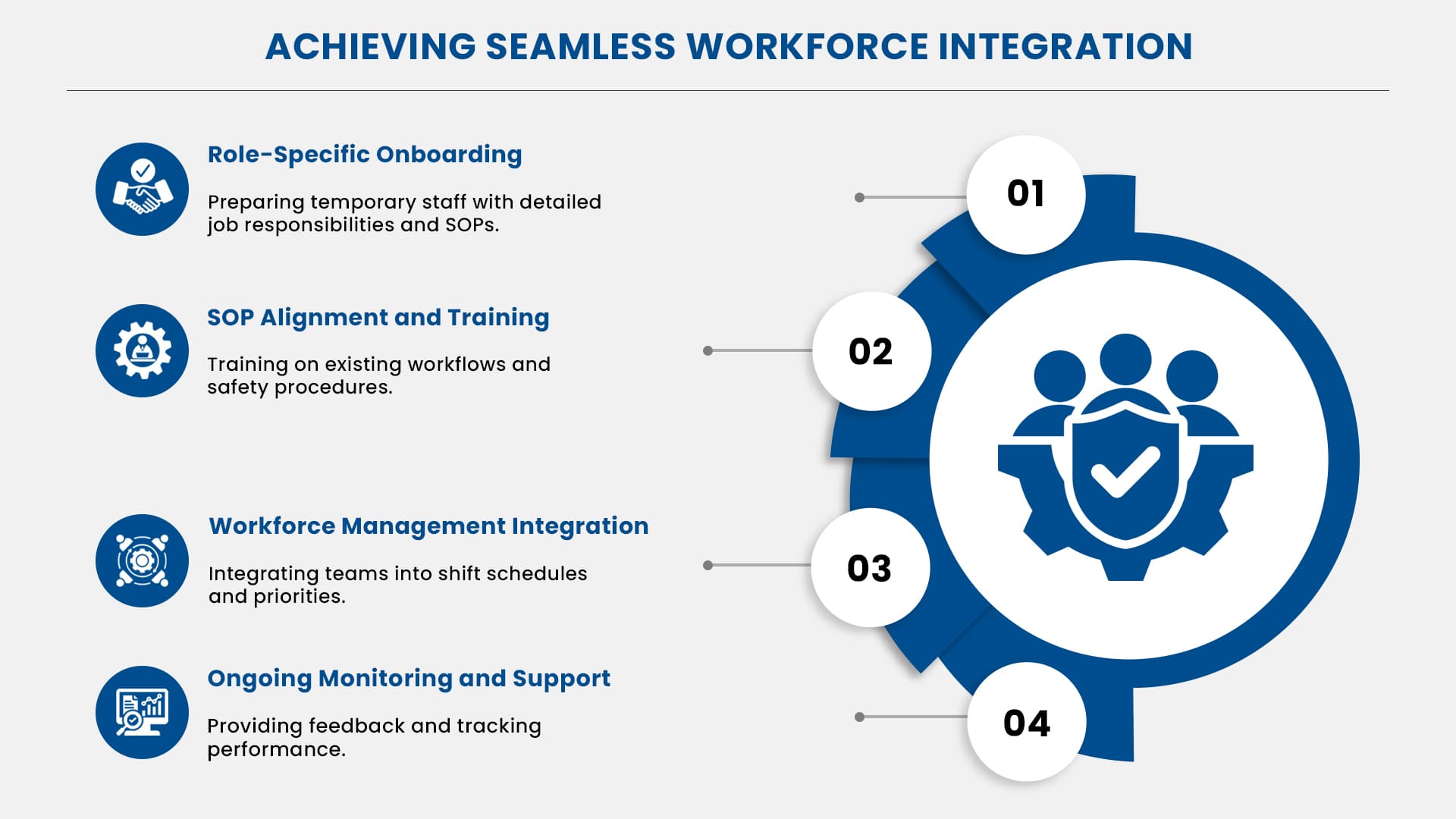
After completing the steps above, you have a well-integrated workforce that supports your existing team while maintaining operational efficiency. This process ensures that staffing flexibility doesn’t come at the cost of quality or safety.
Why It’s a Strategic Decision, Not a Backup Plan
Staffing augmentation is not just a temporary fix—it’s a strategic long-term solution. As the aviation industry grows and evolves, so too does the need for a flexible, scalable workforce. For instance, Delta Air Lines successfully filled over 1,000 contingent roles in its Technical Operations division in 2021, highlighting the industry’s shift towards contingent staffing to meet fluctuating demands.
Long-Term Flexibility for Growing Operations
Aviation operations are dynamic, with demands that can shift quickly. Whether you’re handling seasonal increases, adjusting for new routes, or reacting to unexpected disruptions, staffing needs change constantly. Staffing augmentation gives you the flexibility to scale up or down as needed without the risk of over-staffing or under-performance.
- Seasonal shifts in demand
- New flight routes or expanded operations
- Emergency staffing requirements during peak times
Adapting to New Industry Demands
With increased passenger traffic, new safety regulations, and technological advancements, the aviation industry is always evolving. Staffing augmentation allows you to quickly bring in professionals with the right skills, keeping you ahead of industry changes.
- Adapting to new safety protocols
- Meeting the demand for advanced technology skills
- Handling increased passenger flow smoothly
Global Expansion with Local Expertise
As airlines continue to expand globally, the need for local expertise becomes even more crucial. Staffing augmentation helps you tap into global talent pools without the overhead of setting up offices or training programs in every new region.
- Support in emerging markets
- Local expertise in remote or high-demand areas
- Avoiding the high cost of permanent hires in new regions
Resilience in Times of Crisis
The aviation industry is subject to rapid changes—whether it’s a global crisis, sudden travel surges, or unforeseen challenges. Having a flexible workforce means you can quickly scale up when needed and scale down during slower periods, ensuring business continuity without excessive costs.
- Handling unexpected crises like natural disasters
- Scaling quickly during emergency situations
- Maintaining operational efficiency during market changes
Building a Workforce Strategy for the Future
Staffing augmentation is more than just a way to fill gaps—it’s about building resilience and agility for the future. By continuously adapting and ensuring that the right people are in place at the right time, you can remain competitive and ready for whatever challenges lie ahead.
- Sustained growth without over-committing resources
- A strategic, scalable workforce for the long term
- Agility in the face of new challenges or opportunities
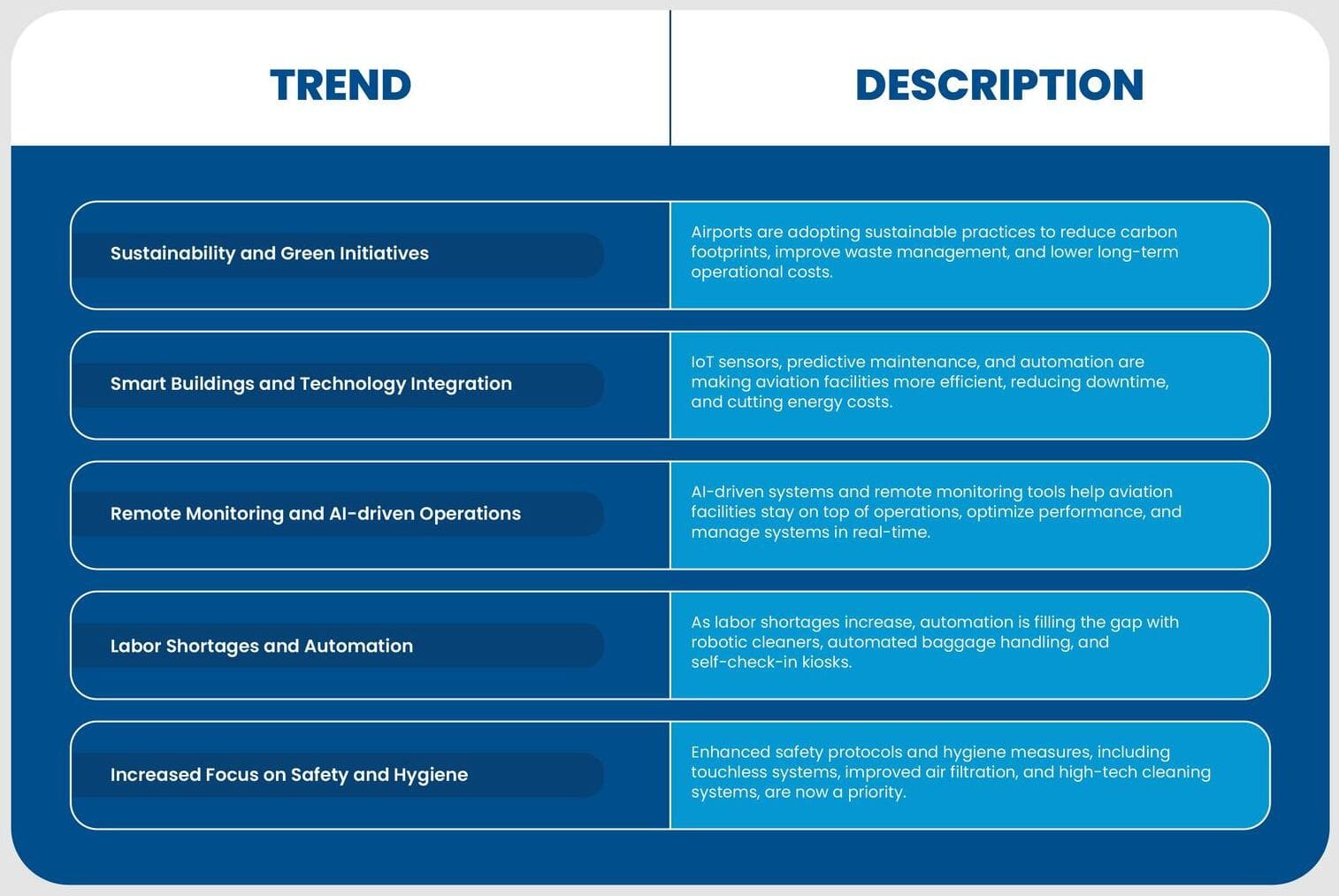
Trends Transforming Facility Management in 2025
The aviation industry is evolving rapidly, and so is facility management. As we head into 2025, aviation facilities must adapt to a new wave of trends that promise to change how we manage airport operations.
From sustainability goals to smart technology integration, here’s what you need to know to stay ahead.
Final Thoughts
As the aviation industry evolves, the way we manage facilities needs to keep up. The trends we’ve seen—whether it’s sustainability, smart technology, or the growing need for staffing flexibility—are all about adapting to constant change. But adapting doesn’t just mean reacting when things get tough. It means building a strong foundation that allows your operations to thrive in the long run.
That’s where ClearedDirect comes in. By offering flexible staffing solutions, they help you stay ahead of demand and ensure your facilities always have the right people, exactly when you need them.
With predictive technologies and sustainability initiatives shaping the future of aviation, it’s crucial to stay on top of these shifts. ClearedDirect ensures you have access to trained professionals who are ready to step in and manage the evolving challenges without the long recruitment delays.
This way, you can focus on staying competitive and efficient while leaving the staffing needs in expert hands. By embracing these changes and creating a scalable, flexible strategy, aviation facilities can remain resilient and ready for the future.
People Also Ask:
Staff augmentation provides temporary, specialized professionals to fill specific skill gaps, while staffing services typically involve hiring employees for permanent or temporary positions to meet general staffing needs. Staff augmentation is more flexible and focused on project-based or short-term expertise.
An augmented workforce basically combines permanent employees and temporary professionals brought in to address specific skill needs or short-term demands, offering businesses flexibility and specialized expertise as required.
Aviation operations refer to the various activities and processes involved in running and managing aviation facilities and services. This includes everything from flight operations (e.g., scheduling, dispatch, flight crew coordination) to maintenance and ground support (e.g., aircraft repair, baggage handling, security) and airport management (e.g., terminal operations, security, and regulatory compliance). Aviation operations aim to ensure safety, efficiency, and smooth functioning of all aspects of air travel, including both on-the-ground and in-flight services.
The staff augmentation process begins with identifying the need for specific skills or roles within the organization. Once the gaps are identified, qualified professionals are selected to fill these temporary positions, ensuring they meet the required expertise. These professionals are then integrated into the existing workforce, working alongside full-time employees. Throughout the engagement, performance is managed, with adjustments made as necessary to ensure alignment with operational goals, delivering the flexibility and expertise the company needs.

Kevin Milewski
Kevin Milewski is the Chief Operating Officer at ClearedDirect, where he oversees operational strategy, technology implementation, and service delivery for aviation and commercial drone (UAV) projects. With a strong background in aviation services and facility management, Kevin focuses on improving safety, efficiency, and regulatory compliance across complex airport and industrial environments. At ClearedDirect, Kevin leads initiatives integrating drone surveillance, LiDAR imaging, and AI-driven facility inspection systems that help clients achieve higher safety and performance standards. His leadership contributes to the company’s commitment to precision, reliability, and data-driven decision-making in critical infrastructure operations. Kevin regularly contributes insights to ClearedDirect’s knowledge hub, covering UAV surveillance, aviation operations, and facility optimization topics. His work reflects practical industry experience and a dedication to advancing innovation in aviation and technology management. Connect with Kevin on LinkedIn to learn more about his work.
RECENT POSTS


Recent Comments
CATEGORIES
- Aviation Facility Management
- Commercial Cleaning
- Construction
- Digital Mapping & Analytics
- Drone & LiDAR Inspections
- Drone And LiDAR Guides
- Facility Cleaning Resources
- Facility Management Guides
- Facility Management Risk
- Facility Management Technology
- Facility Operations
- Facility Security Management
- Identifying & Eliminating Inefficiencies
- Operations Management Guides
- Process Optimization
- Security Management Guides
- Staffing Augmentation Guides
- Surveillance UAV Drone Guides
- UAV Drone Mapping
- Uncategorized
TAGS
2025 facility trends aerial surveillance aircraft cleaning airline operations airport compliance management airport operational risk management airport personnel airport terminal operations Aviation Operations Aviation Risk Management aviation security risk assessment aviation services AviationStaffing aviation staffing Commercial Cleaning Services Commercial Drone Surveillance Commercial Facility Security Drone Surveying Emergency Response Planning Facility Hygiene Compliance facility maintenance facility management Facility Risk Assessment Facility risk management facility services Green Cleaning for Facilities ground handling services integrated facility management services Operational Efficiency Strategies operations management outsource facility management outsourcing airline services outsourcing airport services passenger experience enhancement Physical Security Best Practices proactive maintenance Scaling janitorial operations seasonal peaks staff augmentation Staffing Augmentation Staffing Challenges Aviation terminal facility security TSA FAA risk mitigation uav infrastructure inspection uav lidar technology
Leave a Comment