
Call Anytime
512-508-8373- ClearedDirect > Blog > Facility Management Guides > Security Management Guides > Securing Your Commercial Facility: Best Practices for Risk Management and Safety
Blog Details

Securing Your Commercial Facility: Best Practices for Risk Management and Safety
When you think about security at your commercial facility, what comes to mind? A few cameras? A locked gate? For many businesses, that’s where it stops — until something goes wrong.
The truth is, threats come in many forms — from unauthorized access and vandalism to weather damage or safety oversights. And once something happens, the cost to fix it usually far outweighs what it would’ve taken to prevent it.
That’s where a solid facility risk assessment comes in.
It helps you uncover the weak spots you might be missing and gives you a clear plan to fix them before they turn into bigger problems.
Securing a commercial facility means more than locking the doors — it’s about identifying real risks, having a plan in place, and protecting people, property, and operations through smart, proactive decisions.
Here’s something to think about: the North American physical security market is projected to reach over $61 billion by 2030, with businesses across the U.S. continuing to invest in stronger safety measures (Mordor Intelligence).
In this blog, we’ll walk through simple, effective steps you can take to secure your space — from recognizing the risks to creating safer, more resilient operations.
Understanding the Threat Landscape
Let’s start with the big question: What are you really protecting your facility from?
When it comes to keeping a commercial facility secure, most people think only about theft or vandalism. But the reality is, threats come in many forms — and they’re not always visible from the outside. Security isn’t just about stopping someone from breaking in. It’s about staying one step ahead of any disruption that could harm people, property, or operations.
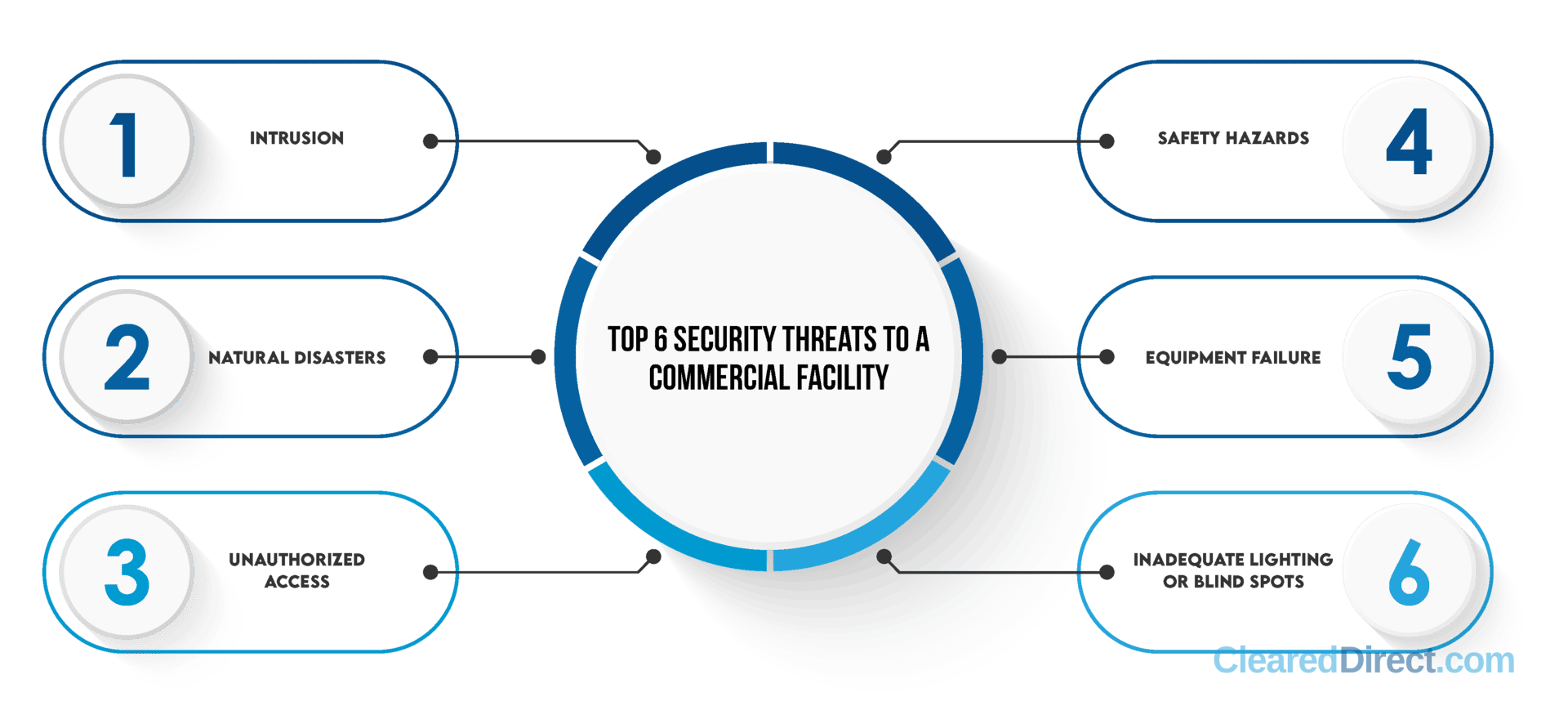
You could be dealing with:
- Unauthorized visitors slipping past access points
- Weather-related damage or power outages
- Gaps in emergency preparedness
- Neglected areas that pose safety hazards to staff
- Equipment failures that interrupt critical systems
And if your facility is tied to high-compliance industries — like aviation, manufacturing, or healthcare — the risks are even more layered. In aviation, for example, even minor oversights can trigger major consequences.
That’s why aviation risk management strategies emphasize constant monitoring, layered protocols, and fallback systems. Those same principles translate well to commercial property management, where downtime, confusion, or safety lapses can cost time and money.
Did you know?
In 2023, the Transportation Security Administration (TSA) intercepted a record 6,737 firearms at airport security checkpoints, with approximately 93% of these firearms loaded. This marked the highest one-year total in TSA’s history, highlighting the increasing challenges in maintaining security at transportation hubs.
Conducting a Comprehensive Risk Assessment
Let’s shift from the “what” to the “how.”
Now that you understand the kinds of threats out there, it’s time to get specific: What risks are your commercial facilities actually exposed to — and how serious are they?
That’s where commercial risk management really begins…
Instead of guessing where problems might show up, a risk assessment gives you a clear, structured way to evaluate your facility — not just for security, but for safety, liability, and business continuity.
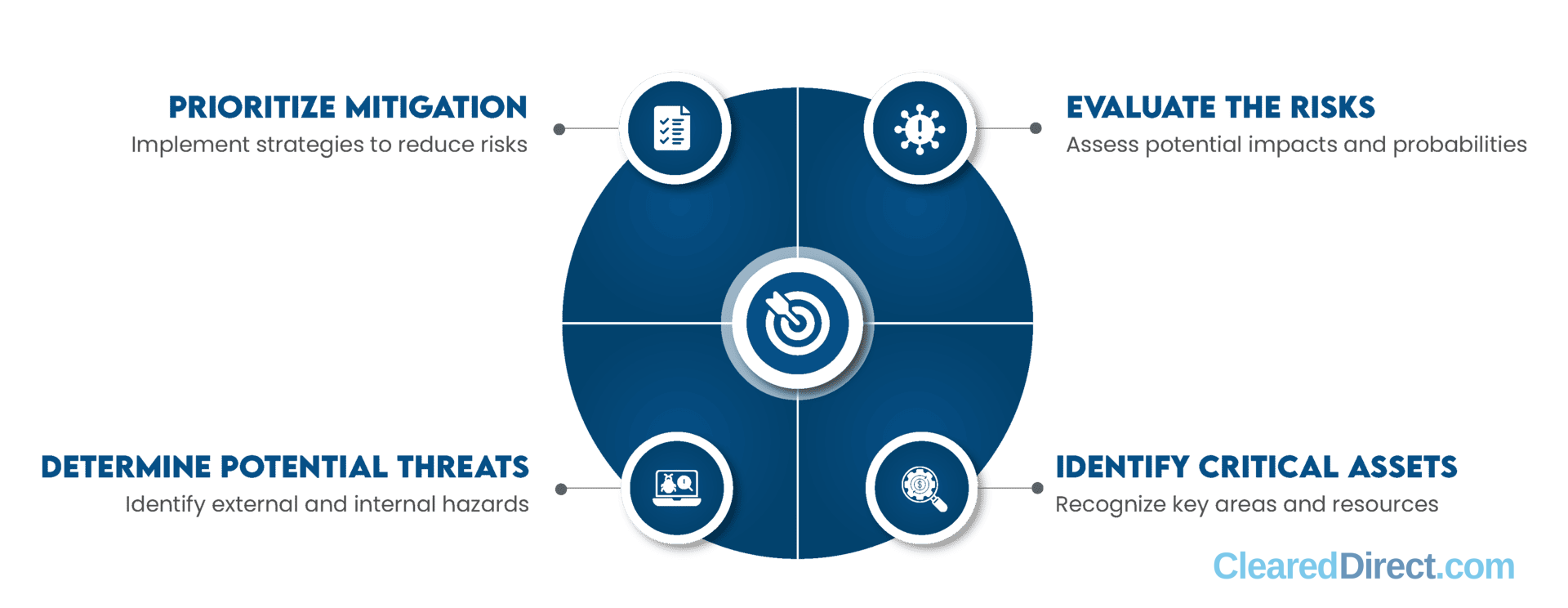
A solid risk assessment involves four main components:
Identify Critical Assets
Start by asking: What are we protecting?
This step is about more than just hardware or walls. Consider people, operations, and infrastructure. Your front office, server room, supply chain touchpoints — every area that keeps your business running needs to be part of the assessment.
Take a walkthrough of your facility and document:
- Who is on-site regularly? Who has access?
- What assets are essential to operations?
- What areas are vulnerable to disruption?
This forms the foundation for every decision that follows.
Determine Potential Threats
Once you know what’s at stake, you need to identify what could go wrong. Not every threat is dramatic — some are subtle and internal.
For example:
- Could a side entrance be left unlocked after hours?
- Could heavy rain flood a basement storage area?
- Could faulty lighting create blind spots near exits?
Look at external threats (weather, crime, trespassing) and internal ones (neglected equipment, human error). The goal isn’t to fear everything — it’s to prepare realistically.
Evaluate the Risks
Now comes the part where you measure risk, not just list it. For each threat, ask:
- How likely is it to happen?
- If it did happen, how bad would it be?
This helps you avoid wasting time and budget on low-priority risks — and focus instead on the ones that could actually shut down operations or put people in danger.
Use a simple framework like a risk matrix to sort everything into low, medium, or high risk. High-impact/high-likelihood risks should get your immediate attention.
Prioritize Mitigation Measures
Once you’ve identified and ranked the risks, it’s time to act.
You don’t need to fix everything overnight. The smart approach is to focus on the highest risk items first — areas where you can make quick improvements that reduce the most exposure.
This might include:
- Reinforcing access controls
- Installing lighting in blind zones
- Drafting a response plan for severe weather
Document what you’re doing and when, then schedule reviews every 6–12 months to update your plan.
Implementing Physical Security Measures
For any commercial facility, security isn’t just about having cameras or guards—it’s about having a well-structured, layered system in place that works together to prevent, detect, and respond to threats. When these systems are aligned with a strong commercial risk management plan, they reduce downtime, safeguard assets, and protect the people on site.
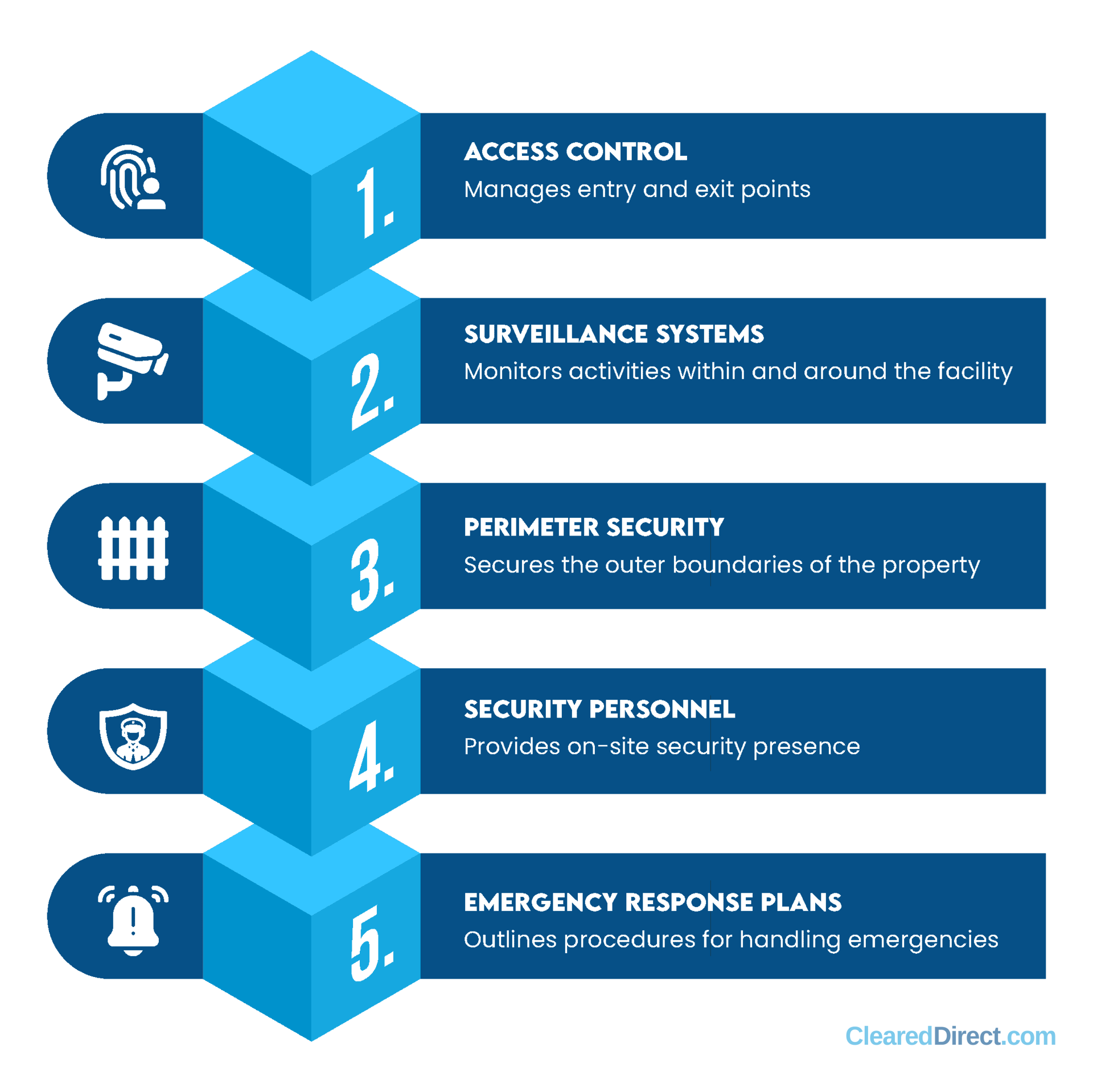
Here’s how the most effective facilities approach physical security:
Access Control Systems
Controlling who enters your building is the foundation of good security. Whether you’re using keycards, biometric scanners, or mobile-based credentials, the goal is simple: let the right people in, and keep everyone else out.
In many commercial facilities, outdated access points remain a huge vulnerability. Doors without proper authentication, unsecured delivery zones, or forgotten staff exits often go unchecked. A secure access system brings order and accountability to every point of entry.
In fact, Allied Market Research highlights that access control is one of the fastest-growing segments in the physical security market, driven by rising demand for smart, integrated systems. Source
Surveillance Systems
Surveillance isn’t just about recording footage after an incident — it’s about proactive oversight. Modern CCTV systems with high-definition video and cloud-based storage allow facility managers to monitor operations in real time and flag suspicious behavior as it happens.
Incorporating strategically placed cameras — particularly in blind zones, entryways, loading docks, and parking areas — plays a vital role in commercial risk management. More importantly, the presence of surveillance alone often deters misconduct.
Perimeter Security
Before anyone even reaches your facility’s front door, there should be visible barriers in place. Fences, bollards, secured gates, and intrusion detection systems all serve to slow down or prevent unauthorized access from the outside.
For commercial facilities with large footprints—like warehouses, airfields, or campuses—securing the perimeter is essential. It’s not just a fence; it’s your first alert system and deterrent wrapped into one.
Security Personnel
Technology is critical, but human response still matters. Trained security officers provide presence, decision-making, and rapid reaction that no automation system can replicate. They also bring the nuance of judgment — identifying subtle threats, diffusing tensions, and coordinating emergency responses.
For many mid- to large-size facilities, having a hybrid model of tech + personnel offers the best coverage. This is especially valuable in high-foot-traffic areas or during night shifts when visibility is limited.
Emergency Response Plans
Even with the best systems, emergencies can still happen. That’s why every commercial risk management plan should include a clear, rehearsed emergency protocol — whether it’s for a fire, power failure, active threat, or natural disaster.
A good emergency response plan outlines:
Who does what
- How communication happens
- Where people should go
- What resources are available (like extinguishers, exits, lockdown zones)
Routine drills and staff training make these plans actionable, not just theoretical.
Developing Emergency Response Plans
You’ve put the locks on the doors, installed the cameras, and trained your team — but what happens when something goes wrong?
Emergencies don’t wait for the perfect conditions. Whether it’s a fire, flood, equipment failure, or even a security breach, your response in the first few minutes can make all the difference. That’s why a well-thought-out emergency plan isn’t just a “nice-to-have” — it’s a core part of any commercial risk management strategy.
Here’s an interesting (and alarming) fact:
Only 45% of small-to-mid-sized businesses have a documented, regularly updated emergency response plan — even though over 60% have experienced disruptions from weather, fire, or security incidents.
Here’s an interesting (and alarming) fact:
Only 45% of small-to-mid-sized businesses have a documented, regularly updated emergency response plan — even though over 60% have experienced disruptions from weather, fire, or security incidents.
Why Plans Fail — and How to Build One That Doesn’t
Most plans fail not because they’re wrong — but because they’re forgotten.
They live in binders no one reads, or they’re too complex to follow under pressure. What you need is a plan that’s simple, clear, and known by your team before an emergency ever happens.
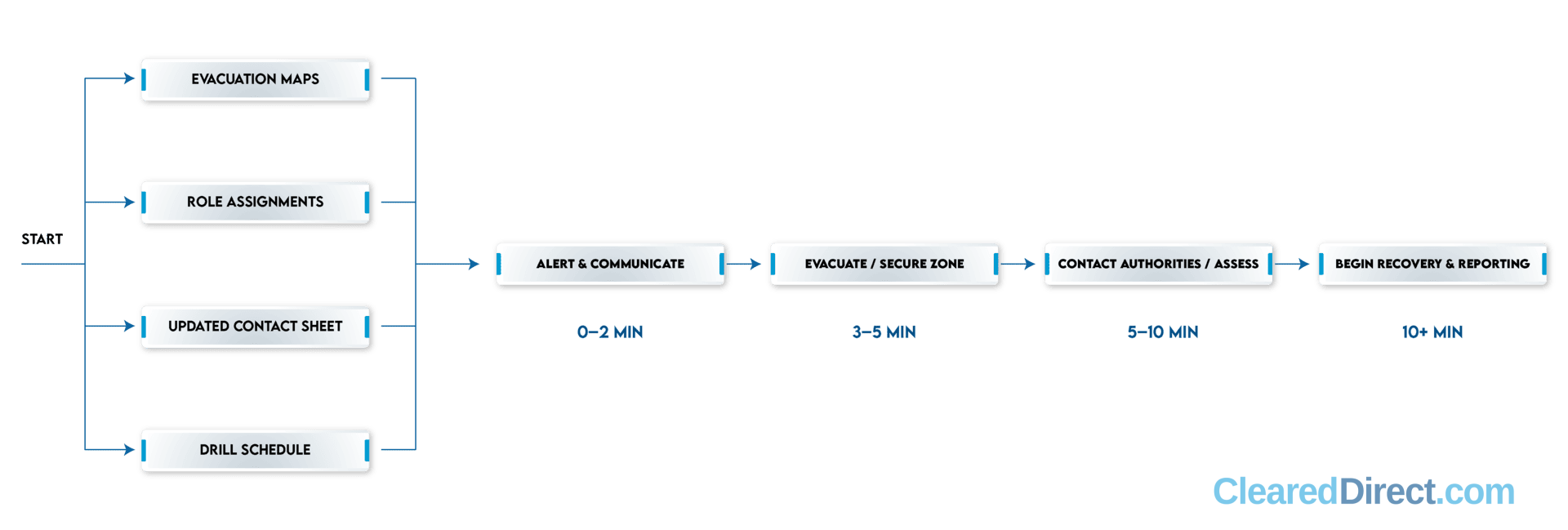
Here’s what a usable emergency plan looks like:
- Clear Roles – Who’s responsible for what Evacuation, communication, power shutoff, etc.
- Accessible Instructions – Think quick-reference guides, not 30-page PDFs.
- Up-to-Date Contacts – Internal leads, external responders, utility vendors.
- Evacuation Maps and Safe Zones – Easy to locate and understand.
- Testing Schedule – If it’s not practiced, it won’t be followed.
Make It Facility-Specific — Not One-Size-Fits-All
An effective plan should reflect how your commercial facility actually operates.
- Is it multi-level or single floor
- Are exits clearly marked and unobstructed?
- Does your team know where to go and who to call first?
An aviation-linked facility, for example, may need to coordinate with local emergency services and aviation authorities — while a retail warehouse might prioritize inventory protection and quick access for responders.
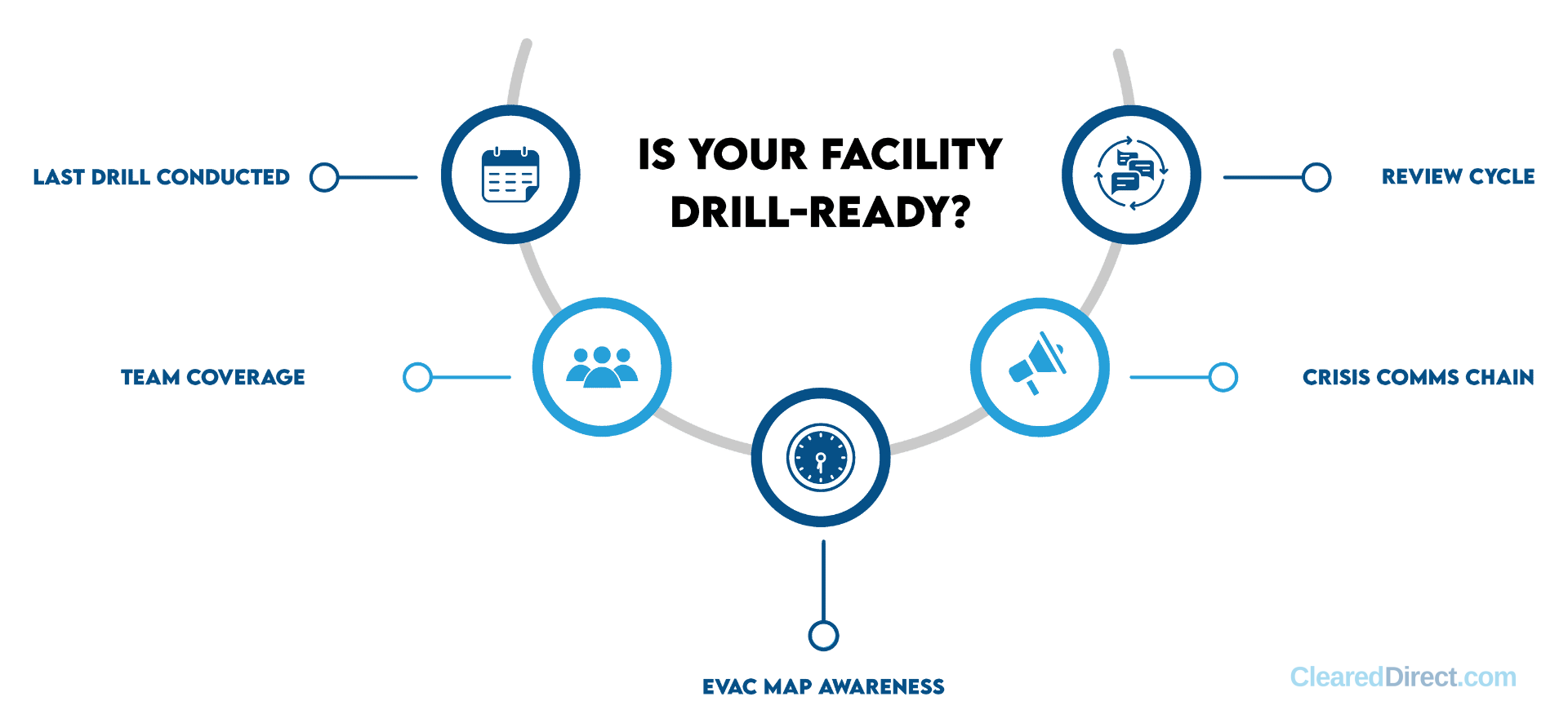
Regular Training and Drills: Keeping Readiness Real
Planning isn’t protection — practice is.
For any commercial facility, drills and training are the only way to know if your response plans actually work. It’s not just about knowing the exits or assigning roles — it’s about testing them under pressure.
Effective commercial risk management requires feedback. Regular training reveals weak spots: confusing instructions, outdated signage, or unaccounted-for risks. Without drills, those issues stay hidden until it’s too late.
Maintaining and Reviewing Your Risk Management Strategy
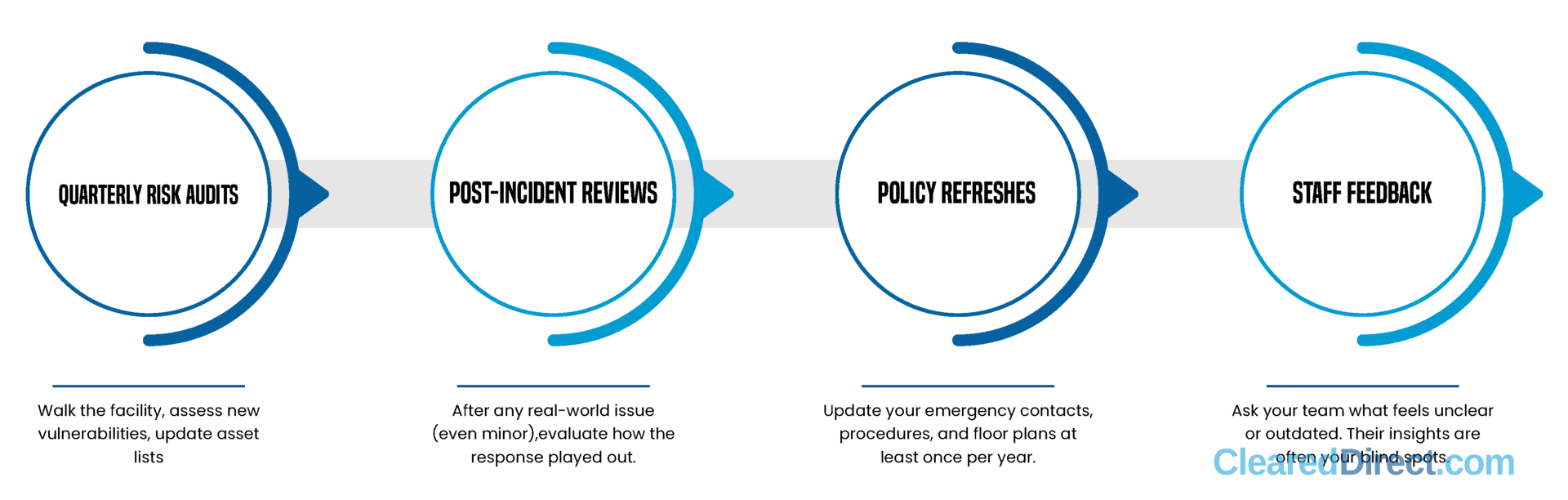
Risk doesn’t stay still — and neither should your plan.
What worked a year ago might not work today. Maybe your commercial facility has grown. Maybe your team has changed. Or maybe new threats have emerged, like supply chain disruption, rising break-in rates, or even extreme weather events.
That’s why one of the most overlooked — and essential — parts of commercial risk management is regular review.
Final Thoughts:
Securing your commercial facility isn’t about perfection — it’s about preparation.
From identifying risks to building emergency plans and keeping your team trained, risk management is a cycle — not a checklist. The more proactive you are, the fewer surprises you’ll face. And when those surprises do come, you’ll be ready to respond — not scramble.
Whether you’re managing a warehouse, terminal, office campus, or industrial site, the goal is the same: protect what matters without slowing down your operations.
If you’re looking for support in evaluating or upgrading your physical security and emergency readiness, we’re here to help.
Feel free to reach out — our team is happy to share insights, walk you through the next steps, or step in when you’re ready.
References:
https://nbaa.org/aircraft-operations/security/best-practices-for-business-aviation-security/
https://www.businessairportinternational.com/features/security-standards-in-business-aviation.html
https://ecam.com/security-blog/best-practices-for-securing-aircraft-storage-facilities
https://www.bjtonline.com/business-jet-news/your-flight-operations-might-not-be-as-secure-as-you-think
https://www.dhs.gov/aviation-security
Tags:

Kevin Milewski
Kevin Milewski is the Chief Operating Officer at ClearedDirect, where he oversees operational strategy, technology implementation, and service delivery for aviation and commercial drone (UAV) projects. With a strong background in aviation services and facility management, Kevin focuses on improving safety, efficiency, and regulatory compliance across complex airport and industrial environments. At ClearedDirect, Kevin leads initiatives integrating drone surveillance, LiDAR imaging, and AI-driven facility inspection systems that help clients achieve higher safety and performance standards. His leadership contributes to the company’s commitment to precision, reliability, and data-driven decision-making in critical infrastructure operations. Kevin regularly contributes insights to ClearedDirect’s knowledge hub, covering UAV surveillance, aviation operations, and facility optimization topics. His work reflects practical industry experience and a dedication to advancing innovation in aviation and technology management. Connect with Kevin on LinkedIn to learn more about his work.
RECENT POSTS


Recent Comments
CATEGORIES
- Aviation Facility Management
- Commercial Cleaning
- Construction
- Digital Mapping & Analytics
- Drone & LiDAR Inspections
- Drone And LiDAR Guides
- Facility Cleaning Resources
- Facility Management Guides
- Facility Management Risk
- Facility Management Technology
- Facility Operations
- Facility Security Management
- Identifying & Eliminating Inefficiencies
- Operations Management Guides
- Process Optimization
- Security Management Guides
- Staffing Augmentation Guides
- Surveillance UAV Drone Guides
- UAV Drone Mapping
- Uncategorized
TAGS
2025 facility trends aerial surveillance aircraft cleaning airline operations airport compliance management airport operational risk management airport personnel airport terminal operations Aviation Operations Aviation Risk Management aviation security risk assessment aviation services AviationStaffing aviation staffing Commercial Cleaning Services Commercial Drone Surveillance Commercial Facility Security Drone Surveying Emergency Response Planning Facility Hygiene Compliance facility maintenance facility management Facility Risk Assessment Facility risk management facility services Green Cleaning for Facilities ground handling services integrated facility management services Operational Efficiency Strategies operations management outsource facility management outsourcing airline services outsourcing airport services passenger experience enhancement Physical Security Best Practices proactive maintenance Scaling janitorial operations seasonal peaks staff augmentation Staffing Augmentation Staffing Challenges Aviation terminal facility security TSA FAA risk mitigation uav infrastructure inspection uav lidar technology
Leave a Comment