
Call Anytime
512-508-8373- ClearedDirect > Blog > Operations Management Guides > The Strategic Guide to Cost Optimization in Operations Management
Blog Details

The Strategic Guide to Cost Optimization in Operations Management
Every business wants to control expenses. But the ones that grow sustainably? They take a smarter approach.
They focus on cost optimization — not as a reaction to budget pressure, but as a long-term strategy to build more efficient operations.
This isn’t about slashing budgets or putting off important investments. It’s about improving how your business runs from the inside out. It means doing more with fewer resources. It means reducing waste without sacrificing quality. And it means creating systems that hold up under pressure without draining your team.
In today’s business environment, operational decisions can’t just be about saving money. They have to support agility, competitiveness, and long-term value.
This guide breaks down what real cost optimization looks like, why it often fails, and how to build an approach that keeps your operations lean, strong, and ready for growth.
Cost Optimization: A Strategy for Sustainable Growth, Not Just Crisis Control
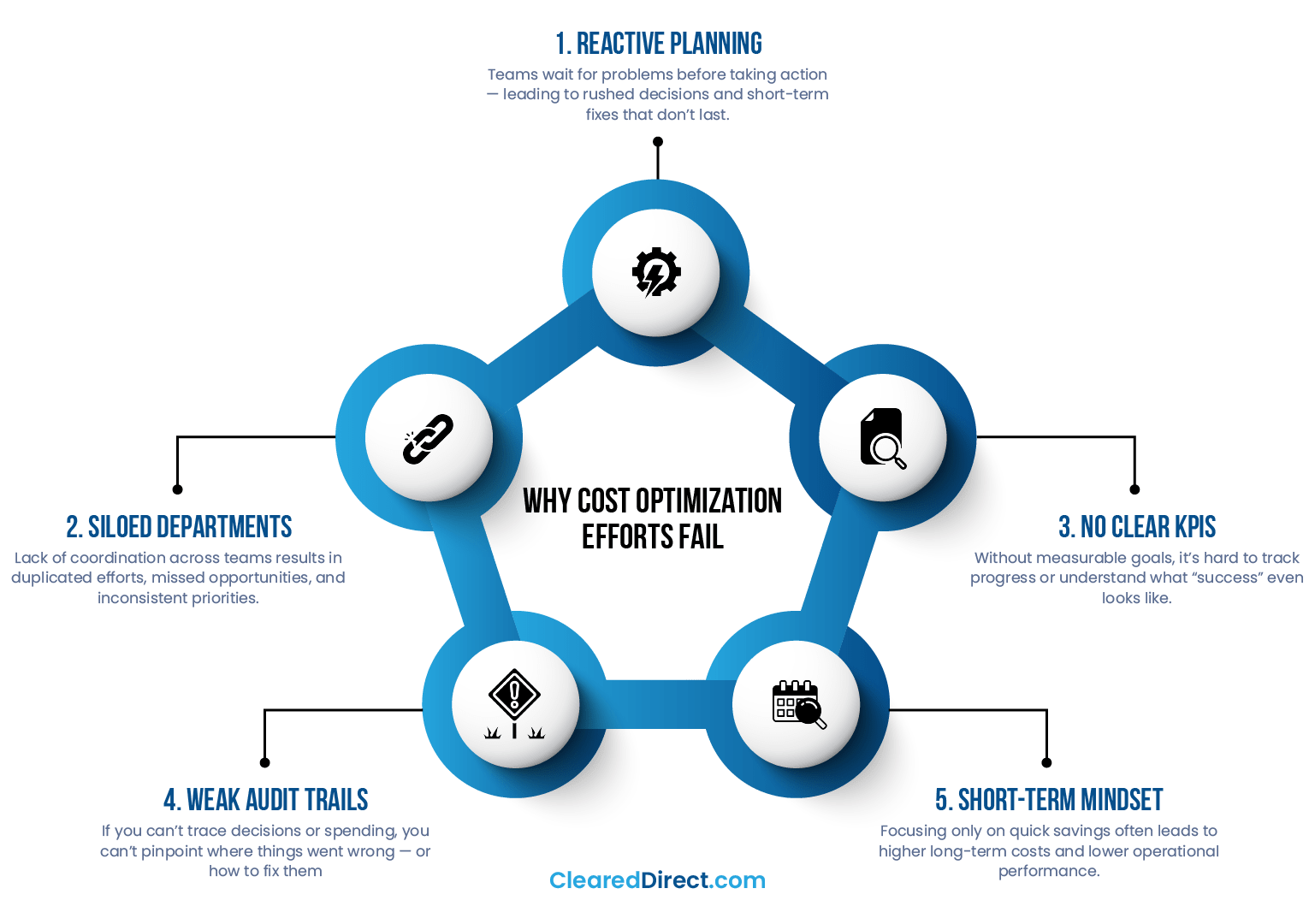
Many businesses wait until there’s pressure — a budget cut, a dip in revenue, or a sudden shift in demand — to think about cost. That’s when quick fixes show up: canceling tools, freezing hiring, or delaying upgrades.
But that’s not a strategy. It’s a reaction.
Cost optimization is different. It’s a long-term approach that helps you build cost effective operations from the ground up. Instead of slashing spending when things get tough, you make smart choices early — so your operations stay lean, productive, and ready to scale.
This might mean redesigning a process to avoid double work. Or shifting resources to the teams that drive the most value. Or tracking the right numbers so you catch waste before it becomes a problem.
It’s not about spending less. It’s about spending better — in a way that supports growth, not just survival.
Cost-Cutting vs. Efficiency: What’s the Real Difference?
Cost-cutting is about reducing expenses. Operational efficiency is about getting more value out of the resources you already have.
It’s a subtle but important difference.
Take two companies facing a dip in revenue. One cuts its support team in half to lower payroll. The result? Slower response times, dropped tickets, and frustrated clients. The other reviews its support workflow, automates routine inquiries, and reassigns specialists to handle only the complex cases. Response times improve — and costs go down without hurting service. In fact, according to McKinsey, companies that apply automation to routine tasks can reduce operational costs by up to 30%.
Or think about software. Cutting costs might mean canceling a subscription. But improving efficiency might mean consolidating three overlapping tools into one, saving money and reducing confusion for your team. Both reduce spend — but only one improves how the business runs.
Understanding Operational Efficiency in Today’s Business Climate
Operational efficiency means getting the most out of your people, processes, and tools. In today’s economy, that’s not a nice-to-have — it’s the baseline.
McKinsey found that distributors who improved their operational efficiency saw nearly 9% annual revenue growth and a 7-point gain in EBITDA margins compared to their peers. That’s not a side benefit; it’s a clear edge.
These organizations didn’t just tighten belts—they redesigned processes to eliminate delays, improve data flow, and keep teams aligned. The result? Smoother operations, fewer surprises, and stronger performance that elevates both cost savings and customer delivery.
5 Proven Strategies to Reduce Costs in Operations Without Compromising Quality
Cutting costs doesn’t have to come at the expense of performance. The most effective companies focus on making their operations stronger and leaner — not just cheaper. These proven strategies to reduce costs in operations are designed to improve output, reduce waste, and drive long-term operational efficiency.
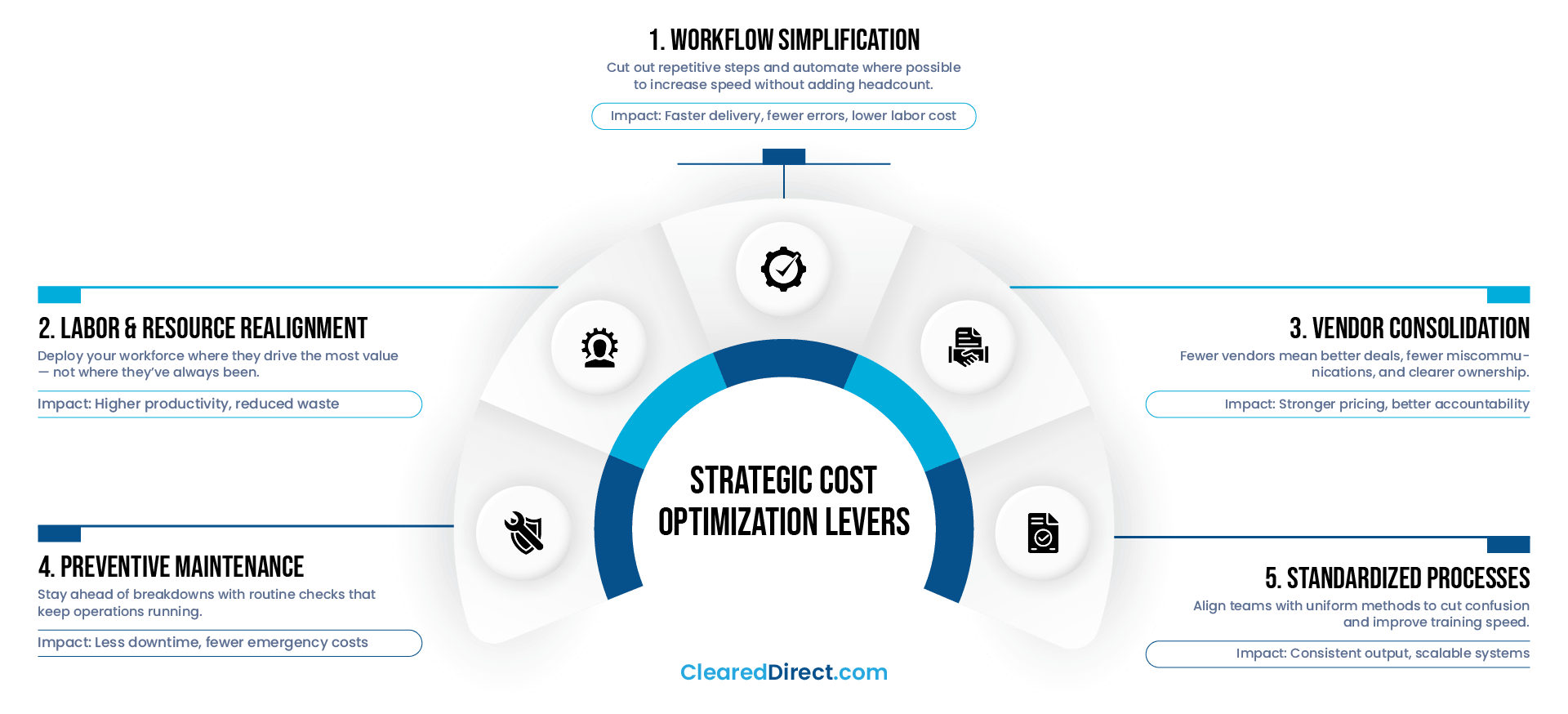
Streamlining workflows
Unnecessary steps, handoffs, and manual approvals can quietly drain hours from your day-to-day operations. Reviewing your workflows end-to-end often reveals simple changes with big impact. Automating routine tasks or reducing back-and-forth between teams speeds up delivery and minimizes rework.
Pro Tip: Map your processes visually — even a simple flowchart can expose where delays and duplications are hiding.
Pro Tip: Map your processes visually — even a simple flowchart can expose where delays and duplications are hiding.
Resource and labor reallocation
Before thinking about layoffs, think about reallocation. Are your skilled employees spending time on tasks that could be automated or delegated? Shifting roles based on skill value — not just job titles — helps improve output without growing headcount.
Vendor consolidation
Managing five suppliers for one job isn’t efficiency — it’s complexity. By reducing the number of vendors you rely on, you simplify communication, lower administrative costs, and gain better negotiating leverage. It also creates more consistency across deliverables and service levels.
Preventive maintenance
If you’re only reacting when something breaks, you’re already behind. Preventive maintenance keeps systems running smoothly and helps avoid downtime, emergency repairs, and missed deadlines. The cost of fixing something early is almost always lower than the cost of waiting too long.
Standardization across processes
When every team uses its own method, mistakes increase and performance is hard to track. Standardizing core processes helps you scale faster, onboard new employees more easily, and maintain consistent quality across departments — even as the business grows.
These aren’t theories. They’re practical steps any operations team can take to reduce costs while protecting — or even improving — performance.
From Audit to Action: How to Identify Operational Cost Gaps
Before you can optimize costs, you need to understand where inefficiencies exist. It’s not always obvious — waste often hides in routine processes, outdated tools, or poorly tracked workflows. That’s why structured operational audits are so important. They help teams pinpoint what’s dragging performance and costing money without adding value.
Done right, this process doesn’t just highlight what to fix — it gives you a roadmap for building more cost effective operations that can scale without excess.
Step 1: Map Your Workflows
Start by laying out how work moves through your team. Who touches each task? Where do delays happen? What steps are repeated or unclear? Mapping your processes makes hidden inefficiencies visible. You can’t improve what you haven’t documented.
Step 2: Track Meaningful Metrics
Once your workflows are mapped, plug in performance data. Look at turnaround times, error rates, bottlenecks, and resource usage. This is where you shift from assumptions to facts — and begin turning vague problems into measurable ones. It’s the foundation of real cost optimization.
Step 3: Run a Gap Analysis
Now compare your current performance to internal goals or best-practice benchmarks. This gap analysis helps you spot where effort isn’t turning into value. According to IBM, organizations that focus on business process management can significantly cut waste and improve delivery timelines by refining how tasks are structured.
Step 4: Act on What You Find
With clear data in hand, it’s time to act. That might mean automating steps, shifting responsibilities, or eliminating low-value approvals. The goal isn’t just cost reduction — it’s building cost effective operations that deliver consistent results with fewer moving parts.
How to Use Operations Management Frameworks to Drive Cost Efficiency
Operations frameworks give structure to improvement. They help teams find and fix problems in a consistent, repeatable way — instead of relying on guesswork. If your goal is better performance at lower cost, these four methods can guide your approach.
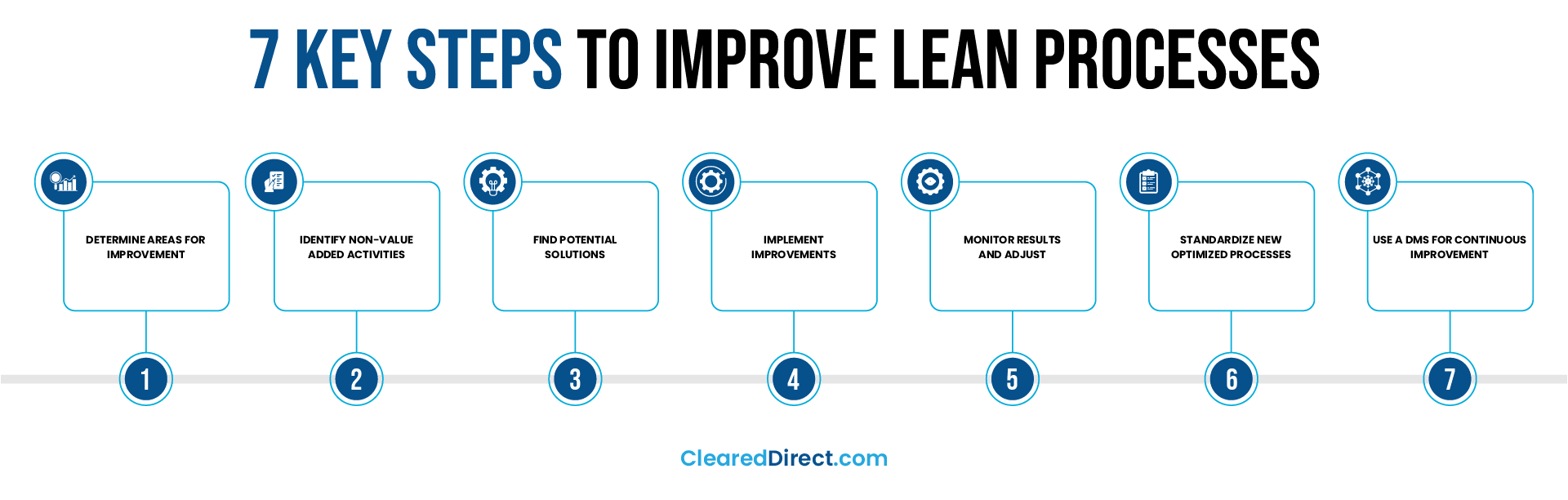
Lean
Lean is about cutting out anything that doesn’t add value. That could be wasted time, extra steps, too much inventory, or tasks no one actually needs. For example, if your team spends hours each week on manual approvals that don’t change the outcome, Lean says — remove them. By clearing out what’s not essential, you get faster, smoother workflows that cost less to run. This is a core part of cost optimization.
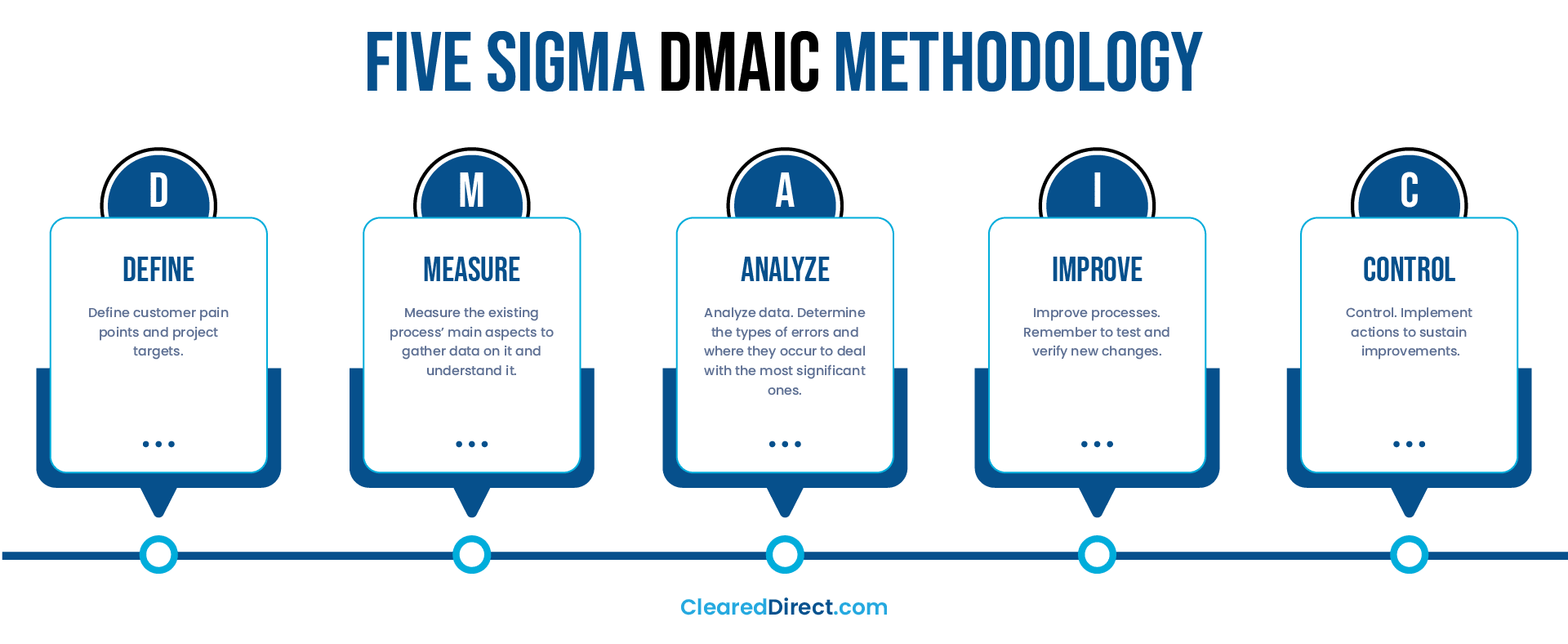
Six Sigma
Six Sigma focuses on doing things right — every time. It uses data to find where errors or mistakes are happening and works to fix the cause, not just the symptom. If a product is returned often because of the same issue, Six Sigma helps you fix that issue for good. This saves time, reduces complaints, and cuts down on wasted work. Over time, fewer errors mean more reliable, cost efficient operations.
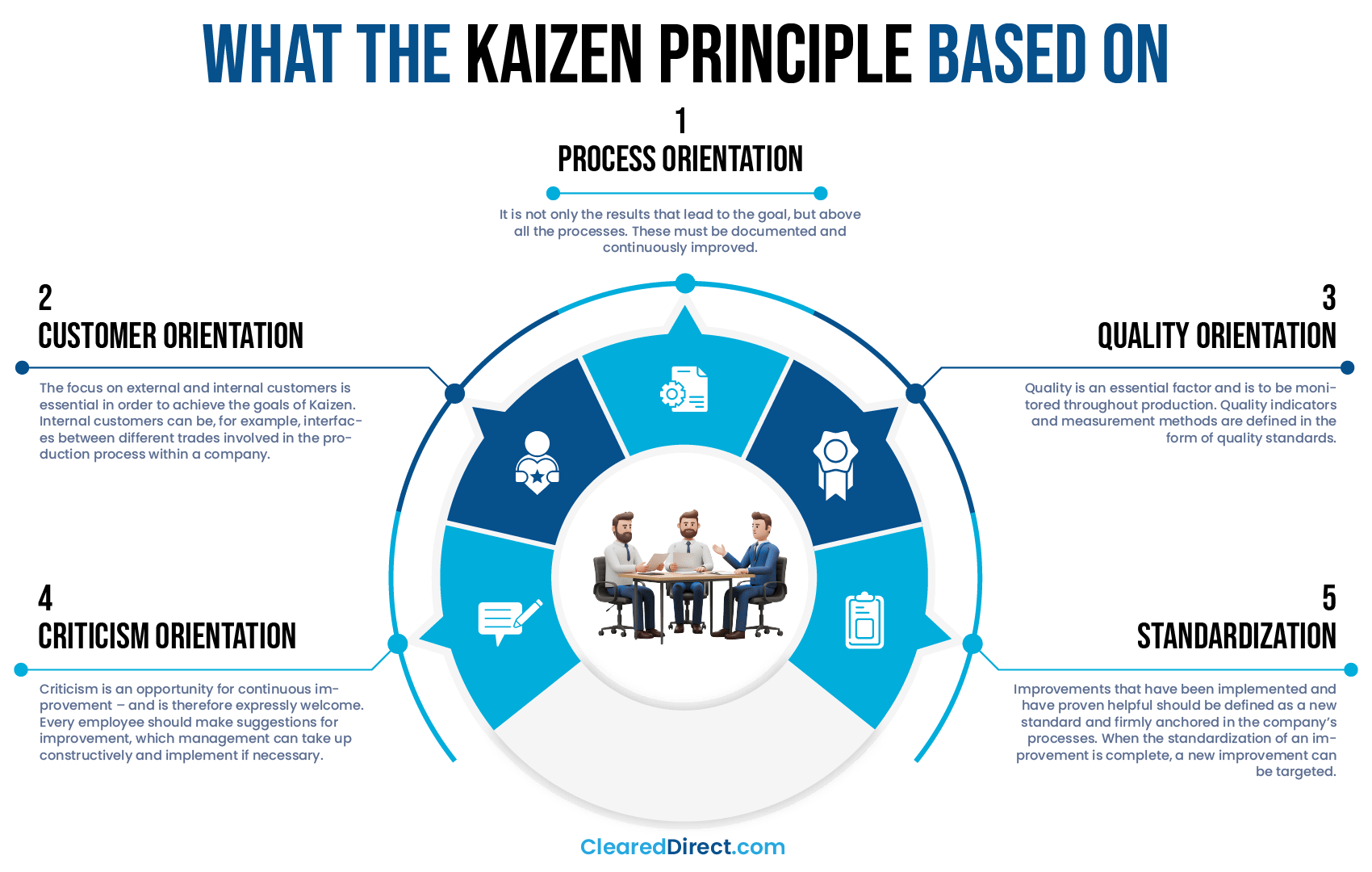
Kaizen
Kaizen is a Japanese word that means “change for the better.” It’s not about big, dramatic changes. It’s about small, everyday improvements. Anyone on the team can suggest better ways to do their work — and those ideas are tested and shared. One small improvement may save just a few minutes, but over time, Kaizen builds a culture of continuous improvement that adds up to real savings and stronger results.
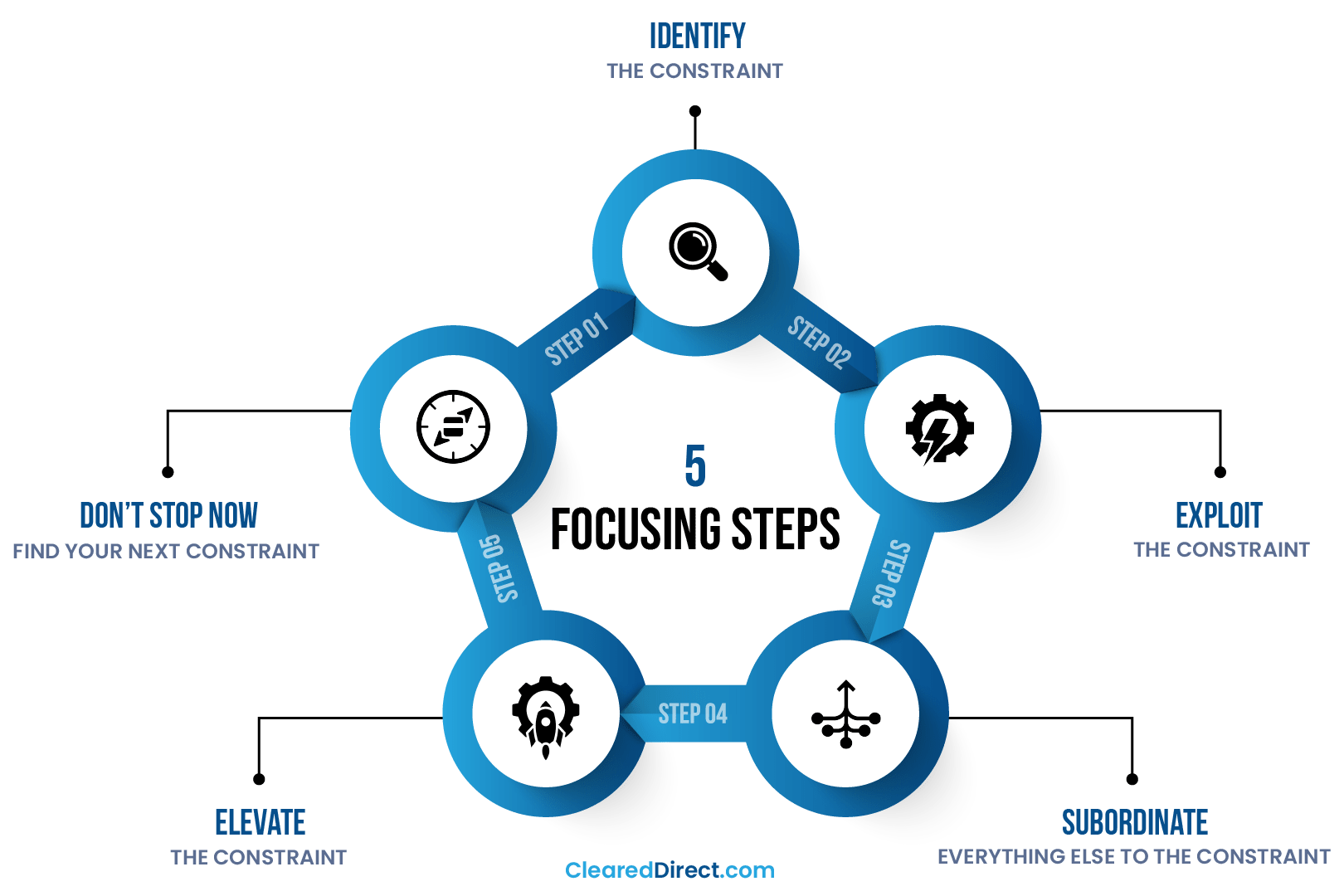
Theory of Constraints (TOC)
TOC says: every process has a weak link — a step that holds everything else back. Maybe it’s a slow machine, a backlog in approvals, or a person stretched too thin. TOC helps you find that one limiting factor and improve it. By focusing on the slowest part, you can speed up the whole system without adding new tools or hiring more people. It’s one of the simplest ways to support cost optimization without increasing your overhead.
Cost-Effective Operations: Balancing Cost, Quality, and Speed
Every operation juggles three things: cost, quality, and speed. This is known as the operational triangle — and finding the right balance is key to running cost effective operations.
If you focus too much on just one side, the others usually suffer.
Cutting costs too hard might slow things down or lower the quality of your output. For example, if you reduce staff to save money, response times might suffer — and customers will notice. You may save on payroll but lose business.
On the other hand, chasing high quality without managing cost can make your operations bloated. Investing in premium tools or extra oversight may improve results — but if the return doesn’t match the spend, the effort becomes unsustainable.
Speed brings its own risks too. Rushing to meet tight deadlines can lead to errors, rework, or burnout. If speed is achieved by skipping key steps or overloading your team, you’ll likely pay for it later.
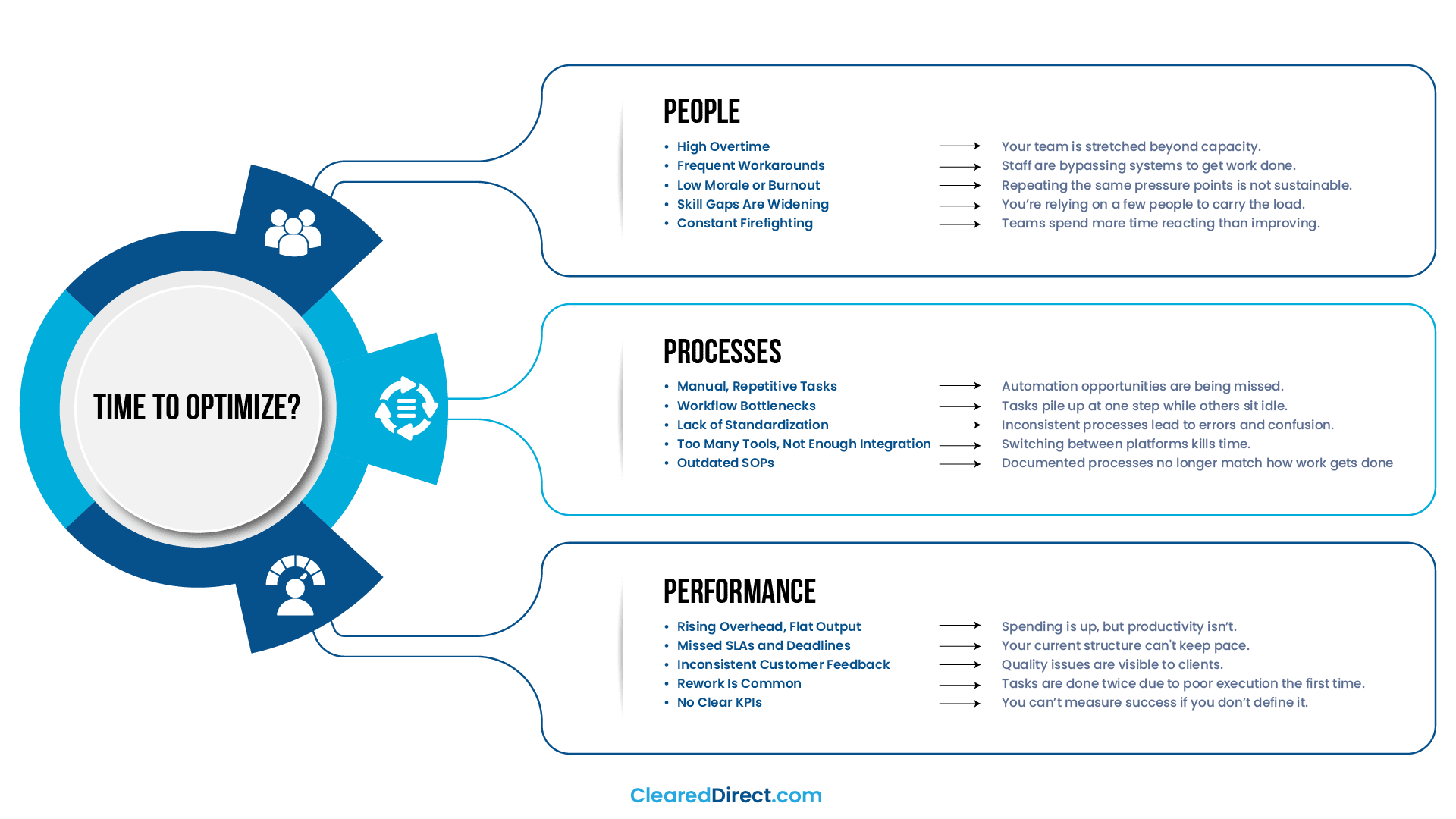
When Is It Time to Rethink Your Operational Cost Structure?
Even the best-run operations need a reset sometimes. If performance issues keep showing up — or costs start rising without clear results — it might be time to review how your operation is structured.
Here are clear signs that your current setup may need a second look:
- Excessive Overtime
If teams are regularly working beyond hours just to keep up, it may be a sign of broken workflows or staffing gaps — not just a busy season.
- Inconsistent Client Satisfaction
When feedback varies widely or complaints keep surfacing, it often reflects internal inefficiencies that affect quality and delivery.
- Missed SLAs or Deadlines
Struggling to meet service level agreements or internal KPIs is a red flag that operational goals are misaligned with actual capacity.
- Frequent Workarounds
If teams are creating their own solutions just to get through the day, it means your systems aren’t supporting how the work really gets done.
- Cost Cuts with No Long-Term Impact
If prior cuts haven’t delivered sustainable savings or improvement, the problem likely runs deeper than budget lines — and requires true cost optimization.
Final Thought
There’s no finish line when it comes to cost optimization. The most efficient operations aren’t built overnight — they evolve through small, intentional steps. A workflow adjustment here. A tool upgrade there. A process rethinking when results start to slip.
What matters most is consistency. Teams that treat cost optimization as part of how they operate — not just something to revisit during budget season — are the ones that stay lean, agile, and prepared for what’s next.
Efficiency doesn’t mean doing everything faster or cheaper. It means aligning your people, tools, and processes to work smarter — and knowing when to reset, realign, or rethink.
We hope you found this guide helpful. If you have questions or want to explore how ClearedDirect can support your cost effective operations goals, or wanna know more about our services we’re just a message away.
Tags:

Kevin Milewski
Kevin Milewski is the Chief Operating Officer at ClearedDirect, where he oversees operational strategy, technology implementation, and service delivery for aviation and commercial drone (UAV) projects. With a strong background in aviation services and facility management, Kevin focuses on improving safety, efficiency, and regulatory compliance across complex airport and industrial environments. At ClearedDirect, Kevin leads initiatives integrating drone surveillance, LiDAR imaging, and AI-driven facility inspection systems that help clients achieve higher safety and performance standards. His leadership contributes to the company’s commitment to precision, reliability, and data-driven decision-making in critical infrastructure operations. Kevin regularly contributes insights to ClearedDirect’s knowledge hub, covering UAV surveillance, aviation operations, and facility optimization topics. His work reflects practical industry experience and a dedication to advancing innovation in aviation and technology management. Connect with Kevin on LinkedIn to learn more about his work.
RECENT POSTS


Recent Comments
CATEGORIES
- Aviation Facility Management
- Commercial Cleaning
- Construction
- Digital Mapping & Analytics
- Drone & LiDAR Inspections
- Drone And LiDAR Guides
- Facility Cleaning Resources
- Facility Management Guides
- Facility Management Risk
- Facility Management Technology
- Facility Operations
- Facility Security Management
- Identifying & Eliminating Inefficiencies
- Operations Management Guides
- Process Optimization
- Security Management Guides
- Staffing Augmentation Guides
- Surveillance UAV Drone Guides
- UAV Drone Mapping
- Uncategorized
TAGS
2025 facility trends aerial surveillance aircraft cleaning airline operations airport compliance management airport operational risk management airport personnel airport terminal operations Aviation Operations Aviation Risk Management aviation security risk assessment aviation services AviationStaffing aviation staffing Commercial Cleaning Services Commercial Drone Surveillance Commercial Facility Security Drone Surveying Emergency Response Planning Facility Hygiene Compliance facility maintenance facility management Facility Risk Assessment Facility risk management facility services Green Cleaning for Facilities ground handling services integrated facility management services Operational Efficiency Strategies operations management outsource facility management outsourcing airline services outsourcing airport services passenger experience enhancement Physical Security Best Practices proactive maintenance Scaling janitorial operations seasonal peaks staff augmentation Staffing Augmentation Staffing Challenges Aviation terminal facility security TSA FAA risk mitigation uav infrastructure inspection uav lidar technology
Leave a Comment