
Call Anytime
512-508-8373- ClearedDirect > Blog > Facility Management Guides > Facility Cleaning Resources > What Is Commercial Cleaning? Full Breakdown of Services from Janitorial to Electrostatic Fogging
Blog Details

What Is Commercial Cleaning? Full Breakdown of Services from Janitorial to Electrostatic Fogging
You don’t always notice a clean facility—but you definitely notice when it’s not. From spotless floors to fresh air and well-kept restrooms, professional cleaning plays a quiet but critical role in how a business looks, feels, and operates.
Commercial cleaning janitorial goes beyond basic tidying. It ensures that shared environments are safe, presentable, and functioning at a high standard. This matters not only for customers and clients, but also for employees who spend hours every day in those spaces. A clean environment helps reduce distractions, limits health risks, and builds trust.
Commercial cleaning refers to professional services that keep commercial spaces—like offices, stores, hospitals, and warehouses—clean, safe, and ready for daily use. These services include basic maintenance such as floor cleaning and trash removal, as well as advanced options like sanitizing, disinfecting, and electrostatic fogging. The goal is to support both the look and function of a business environment.
Understanding what commercial cleaning includes—and how it differs from janitorial or custodial work—can help businesses make smarter decisions about how they maintain their facilities.
Defining Commercial Cleaning
Commercial cleaning is more than just an upgraded version of everyday housekeeping. It’s a service built specifically for commercial environments—busy spaces where many people work, visit, or pass through every day. These places need more than occasional tidying; they require regular upkeep that prioritizes cleanliness, health, and safety.
Unlike residential cleaning, which deals with private spaces, deep cleaning commercial focuses on shared and high-traffic zones such as lobbies, hallways, restrooms, and break rooms. It often involves specialized tools, trained professionals, and strict standards to meet industry-specific hygiene and safety regulations.
Businesses of all sizes—from local clinics to large logistics hubs—depend on these services to stay compliant and create better experiences for both staff and visitors.
Commercial Cleaning vs. Janitorial vs. Custodial: What’s the Difference?
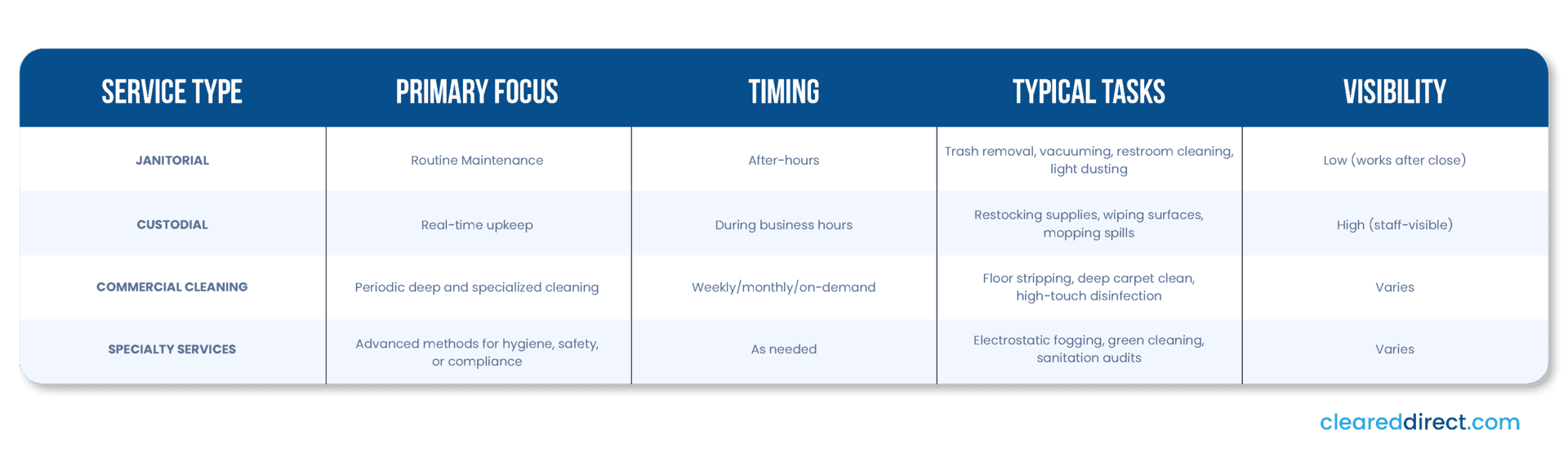
Though often grouped together, commercial cleaning, janitorial, and custodial services have different scopes and responsibilities—and understanding these differences can help you decide what your facility really needs.
Commercial cleaning usually refers to more specialized or deep-clean services. These are scheduled tasks like carpet shampooing, floor stripping and waxing, high-touch surface disinfection, or even electrostatic fogging. They often happen weekly, monthly, or on-demand, performed by trained technicians using advanced equipment.
Janitorial services are more routine and maintenance-focused. This includes tasks like emptying trash cans, cleaning restrooms, dusting, and vacuuming. Janitors typically work after business hours, helping ensure that spaces are clean and ready for the next workday.
Custodial services often overlap with janitorial work, but custodians usually operate during business hours. They manage real-time cleaning needs—like wiping down high-touch surfaces, mopping up spills, or restocking supplies—and are usually visible to employees and guests. In many cases, custodians become a familiar and trusted part of the facility’s daily operations.
While these roles may seem interchangeable, each serves a unique purpose. Many businesses benefit from combining them into a well-rounded cleaning strategy that ensures both day-to-day cleanliness and long-term facility care.
Core Commercial Disinfectant Cleaning Services: What’s Typically Included
Commercial cleaning is designed to meet the unique needs of each business space. A large warehouse doesn’t need the same routine as a small law office, and a retail store has different cleaning priorities than a medical clinic. The right provider understands these differences and adapts services accordingly, creating a plan that fits the space, traffic level, and compliance requirements.
That said, there are a few core services that nearly every commercial cleaning plan includes—essentials that help maintain health, safety, and a professional environment no matter the industry.
Floor Care: Sweeping, mopping, vacuuming, carpet cleaning, and, in some cases, floor stripping and waxing. This applies to all flooring types—carpet, tile, vinyl, and concrete—and is essential for both cleanliness and safety.
Restroom Maintenance: Cleaning and sanitizing toilets, sinks, counters, and floors, along with restocking paper goods, soap, and other supplies. This high-touch area is often serviced daily or even multiple times a day.
Trash Removal: Emptying wastebaskets, replacing liners, and disposing of trash from all common and private areas, including break rooms and meeting spaces.
Dusting and Surface Wiping: Cleaning desks, tables, shelves, and other flat surfaces. Depending on the facility, this can include disinfecting high-touch points like door handles, light switches, and elevator buttons.
Window and Glass Cleaning: This service covers cleaning interior glass surfaces like office partitions and conference room walls, and can also include external windows when offered by the provider. Many commercial cleaning plans incorporate professional commercial window washing to keep both indoor and outdoor glass sparkling and enhance the overall appearance of your facility.
Commercial cleaning disinfectant services are typically offered on a daily, weekly, or monthly schedule, and reputable providers will work with businesses to customize plans based on foot traffic, facility size, and compliance needs. A good provider should also offer flexibility to adapt services as your business grows or your needs shift.
Advanced Services Explained: From Deep Cleaning to Fogging
There are moments when routine cleaning simply doesn’t meet the mark—especially in busy, shared, or specialized environments where hygiene and safety are mission-critical. In these cases, advanced cleaning solutions offer the deeper, more focused approach facilities need.
Deep Cleaning for High-Traffic/High-Touch Zones
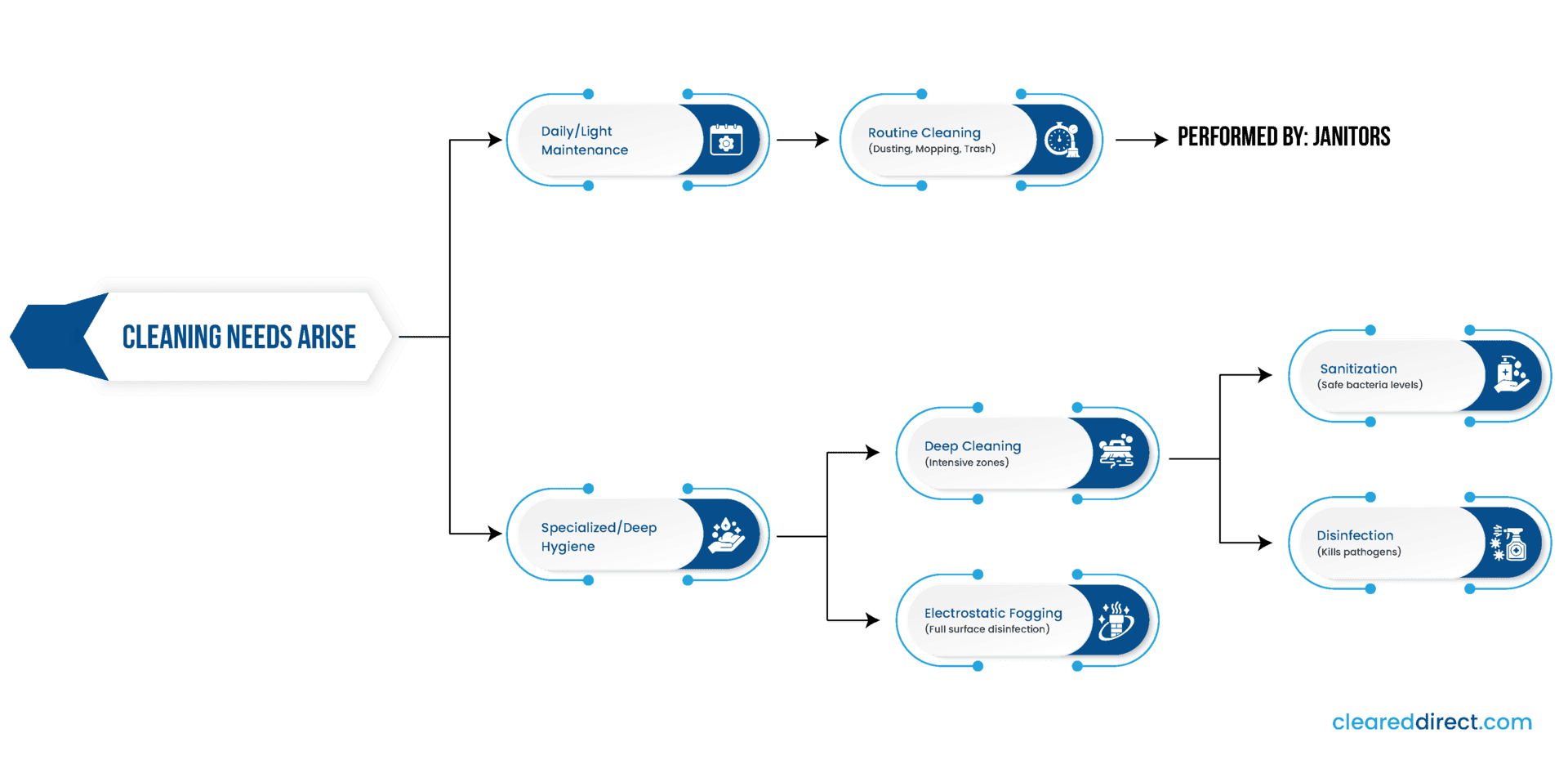
Deep cleaning is like hitting reset on your space. It targets the buildup that accumulates behind the scenes—in corners, grout lines, vents, and under heavy-use equipment. Imagine the entry area of a busy retail store or the break room in a 24/7 logistics hub—spaces that see constant footfall and carry high germ potential. These zones benefit from periodic intensive cleaning to restore surfaces and maintain long-term cleanliness. Depending on usage, many facilities schedule deep cleans monthly, quarterly, or post-event.
3D Electrostatic Fogging: What It Is and Where It Fits
Electrostatic fogging uses electrically charged droplets that wrap around objects and surfaces—covering even hidden areas like the undersides of chairs or the backside of door handles. It’s particularly effective in open-plan offices, fitness centers, schools, and medical environments. The mist clings evenly, dries quickly, and doesn’t require wiping—making it ideal for large spaces needing fast turnaround without disruption.
Sanitization vs. Disinfection: Key Differences
Understanding the distinction is essential: sanitizing reduces bacteria to levels considered safe by public health standards, often used in food service and restrooms. Disinfecting, on the other hand, kills most viruses and pathogens and is essential for healthcare, high-traffic, or post-outbreak cleaning. Smart facilities apply both—tailored to risk zones and occupant needs.
Advanced services like these aren’t just upgrades—they’re strategic tools that protect people, extend asset life, and elevate the day-to-day experience for everyone inside your building.
Green Cleaning: What It Means and Why It Matters
Green cleaning isn’t just a trend—it’s a responsible approach to maintaining facilities with minimal environmental impact. For businesses that care about both hygiene and sustainability, green cleaning practices offer a smart, future-forward alternative to harsh chemicals and wasteful methods.
At its core, green cleaning involves the use of non-toxic, biodegradable products, energy-efficient equipment, and processes that reduce waste and indoor air pollution. It’s about cleaning effectively while being kind to people and the planet.
For example, instead of using ammonia-based window sprays or bleach-heavy disinfectants, green cleaning relies on certified eco-friendly solutions that are just as effective—without the lingering chemical smells or respiratory irritation. High-filtration vacuums, microfiber cloths, and minimal-water floor scrubbers are also part of the toolkit.
According to the U.S. Environmental Protection Agency (EPA), indoor air can be two to five times more polluted than outdoor air, and in some cases up to 100 times. This makes the use of low-emission cleaning products and proper ventilation practices critical in workplaces and public buildings.
Why does it matter?
- It protects indoor air quality, which directly affects employee health and productivity.
- It aligns with corporate social responsibility and ESG goals.
- It reduces long-term wear and tear on surfaces due to gentler products.
- It sends a strong message to staff and visitors that your company values sustainability.
Industries That Rely Heavily on Commercial Cleaning
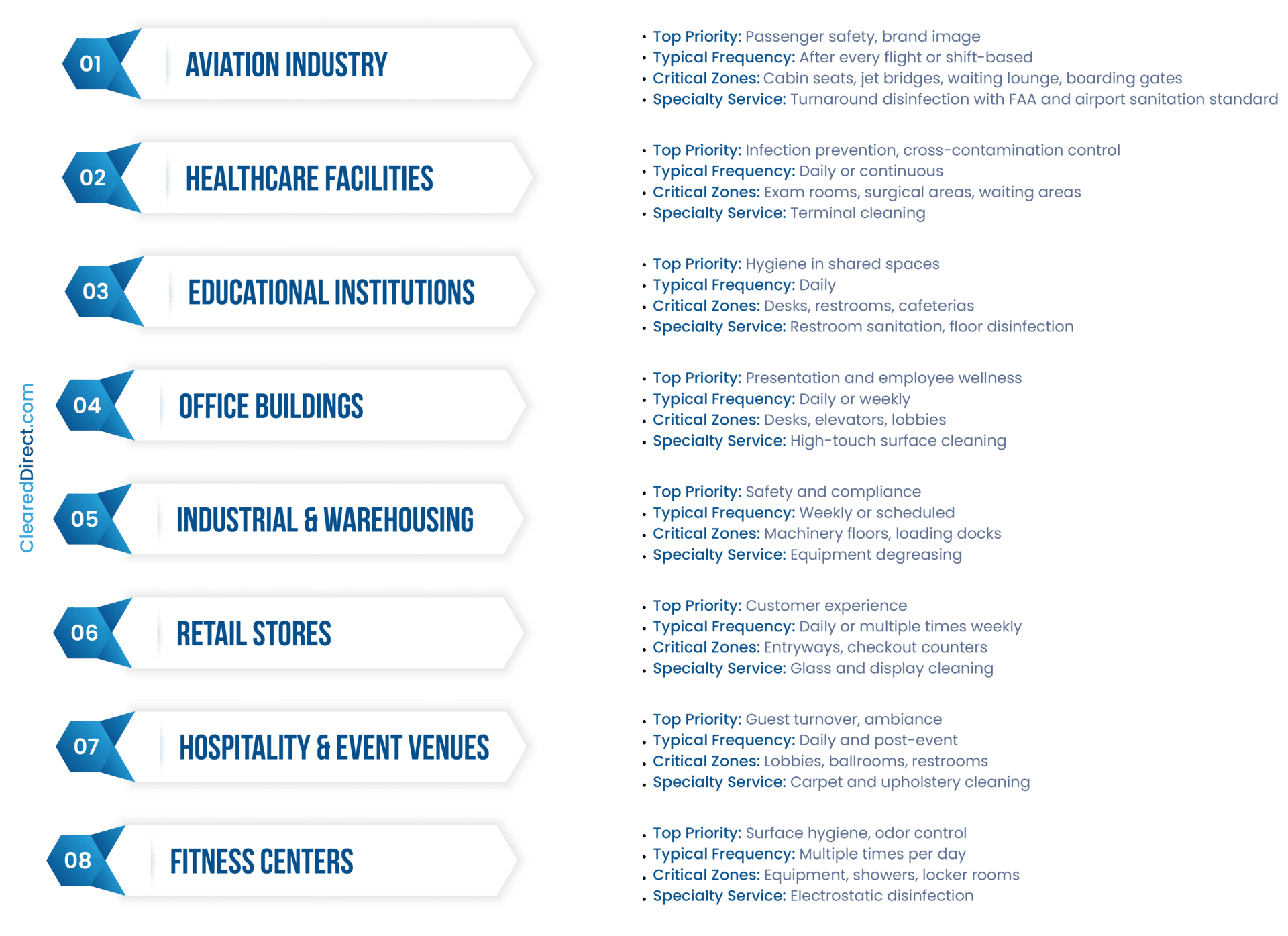
Aviation Industry
From terminals to aircraft cabins, cleanliness plays a key role in passenger experience and safety. Frequent disinfection, trash removal, and surface sanitization help maintain brand reputation and meet strict air travel sanitation standards.
Healthcare Facilities
From hospitals to dental offices, these environments demand strict hygiene protocols. Disinfection, cross-contamination prevention, and compliance with standards like OSHA and CDC are non-negotiable, ensuring safe and sterile conditions for patients and staff.
Educational Institutions
Schools, universities, and daycare centers are high-traffic spaces prone to germs and allergens. Regular cleaning helps reduce absenteeism, supports student wellness, and ensures classrooms, restrooms, and cafeterias remain hygienic for daily learning.
Office Buildings
Shared workspaces require consistent upkeep to manage dust, waste, and high-touch surface hygiene—especially in lobbies, restrooms, and shared desks. Clean environments also support employee productivity and positive client impressions.
Industrial & Warehousing
Facilities handling inventory, equipment, or manufacturing parts often face buildup of dirt, grease, and debris. Cleaning helps with OSHA compliance, operational safety, and extending the life of machinery and workspaces.
Retail Stores
Cleanliness directly impacts customer perception. From display windows to fitting rooms and checkout counters, routine cleaning is vital for foot traffic-driven businesses aiming to maintain a spotless and inviting storefront.
Hospitality & Event Venues
Hotels, conference centers, and venues see a high turnover of guests. These spaces require everything from daily tidying to post-event deep cleaning to maintain guest comfort, brand standards, and health regulations.
Fitness Centers
Sweat, shared equipment, and locker rooms demand specialized disinfection routines to keep users safe and satisfied. Proper cleaning helps control odor, prevents illness, and ensures user confidence in your gym’s cleanliness.
Cleaning Needs by Industry
The Role of Checklists and Quality Control in Commercial Cleaning
When a facility looks spotless every day, it’s not a coincidence—it’s because there’s a process in place. Behind every consistently clean office or building is a well-thought-out cleaning checklist and a reliable quality control system.
Why Having a Standard Checklist Matters
Without a checklist, things can easily be missed. A structured plan helps cleaning teams follow the same steps every time. It keeps things organized, saves time, and ensures nothing is overlooked.
Take a multi-story office, for example. With a checklist, every floor gets the same attention. From door handles to breakroom sinks, each task is clearly outlined and assigned to a specific time—daily, weekly, or monthly.
What You’ll Typically See on a Facility Cleaning Checklist:
- Entrances and Lobbies: Door handles, glass doors, welcome mats
- Desks and Workstations: Tables, chairs, telephones, computer equipment
- Kitchens and Break Areas: Fridges, coffee machines, countertops
- Restrooms: Toilets, sinks, soap dispensers, door locks
- Common Areas and Elevators: Buttons, handrails, floor edges
These checklists don’t just help cleaners—they give peace of mind to managers who know exactly what’s being cleaned and how often.
Keeping Things on Track with Quality Checks
To make sure the work meets expectations, good cleaning companies include inspections. These can be quick walkthroughs, digital logs, or even apps that allow real-time updates. In some places, cleaners scan QR codes at each area to confirm the job was done.
Regular audits also give clients confidence. They can see records of completed tasks and give feedback easily. This builds transparency and helps catch small problems before they become big ones.
Smart systems and clear checklists don’t just keep a building clean—they build trust between cleaning teams and the people they serve.
Common Misconceptions About Commercial Cleaning
A lot of people think commercial cleaning is simple—just some wiping, vacuuming, and trash pickup. But that couldn’t be further from the truth. Let’s break down some of the biggest myths and clear things up.
“It’s just surface-level cleaning.”
Many believe commercial cleaners only focus on visible areas. In reality, professional cleaning teams follow detailed protocols that include high-touch points, air vents, under desks, and more. It’s not just what you see—it’s what you don’t see that matters. For more on the difference between routine and deep commercial cleaning, see this overview by CleanLink.
“Anyone can do it.”
There’s a big difference between DIY cleaning and trained commercial crews. Professionals are trained in equipment use, chemical safety, infection control, and scheduling efficiency. Plus, they know how to handle industry-specific needs—like healthcare sanitation or post-event cleanup.
“It’s too expensive.”
At first glance, commercial cleaning might seem like a cost you could skip. But cutting corners on cleanliness can lead to more sick days, damaged flooring, or pest issues—all of which cost way more in the long run. Professional cleaning helps prevent these problems before they start. As noted in Buildingstars’ breakdown of cleaning myths, strategic outsourcing often reduces overall facility management costs.
Here’s the real value:
- Expert teams clean faster and more thoroughly.
- Proper care extends the life of carpets, tiles, and furniture.
- Consistent cleanliness improves client impressions and
How to Choose the Right Commercial Cleaning Service Partner
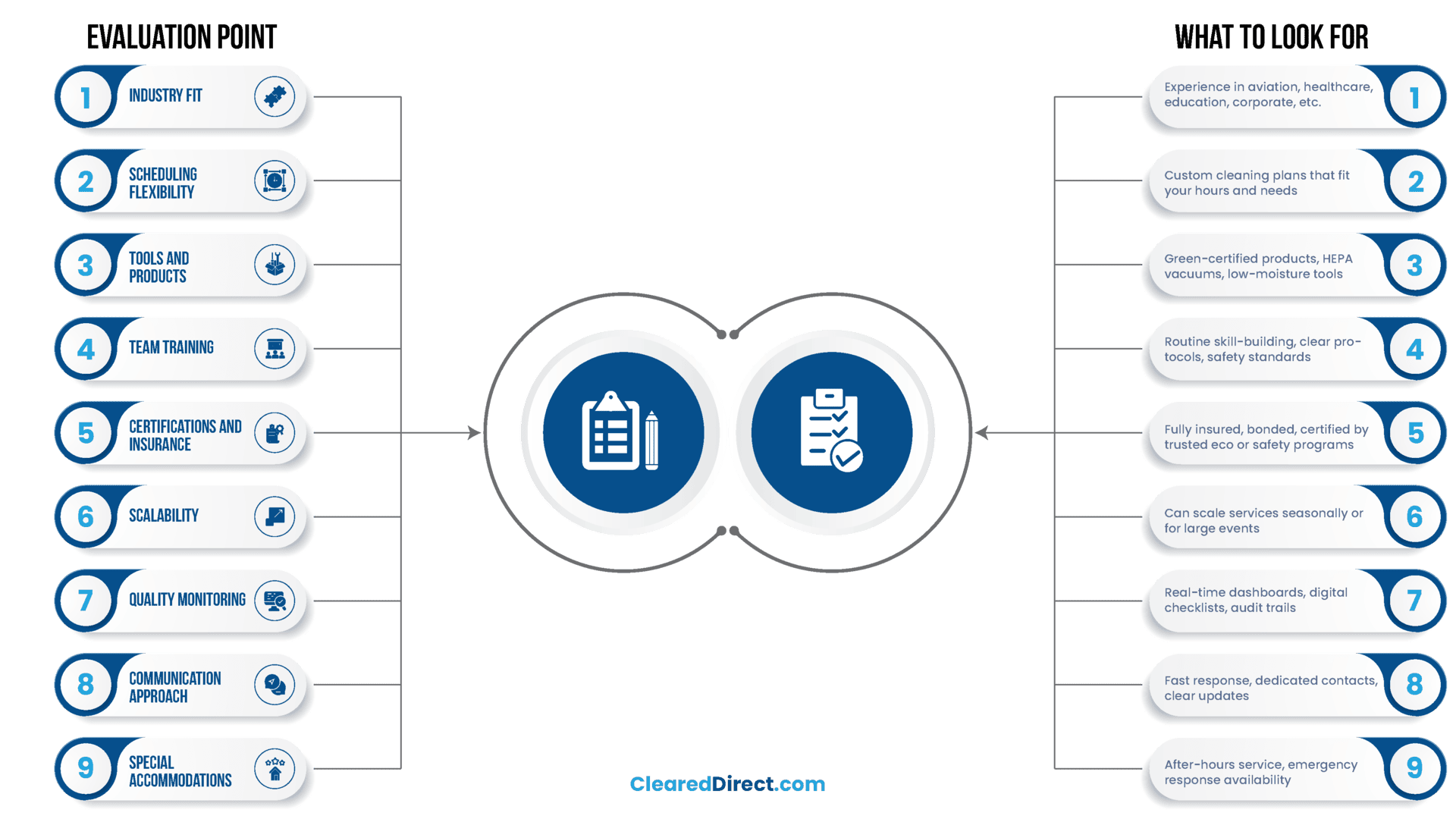
Choosing a cleaning partner isn’t just about who has the lowest rate or who shows up first in your local search. It’s about finding a team that understands your facility’s needs and delivers consistent, measurable results.
Start with the right questions:
- What industries do you specialize in?
- Can you customize a cleaning plan for our facility size and schedule?
- What products and equipment do you use? Are they eco-friendly?
- How do you train your staff?
- Do you have experience with industry regulations like OSHA or HIPAA?
- How do you handle emergency cleanups or last-minute requests?
- Can we review past client references or case studies?
- What does your onboarding process for new clients look like?
- Do you offer quality control audits or performance reports?
- Are your services insured and bonded in case of accidents or damages?
- What communication tools do you use to stay in touch with clients?
These questions reveal not only capabilities but how invested the provider is in meeting your standards.
Credentials that matter:
- Licensed and insured
- Background-checked staff
- Green Seal or EPA Safer Choice-certified products
- Use of HEPA-filter vacuums, microfiber technology, or electrostatic sprayers
- Digital checklists and tracking systems for quality control
Look for scalability and flexibility: You want a team that can scale with your business. That might mean more frequent cleaning during flu season, after a renovation, or before a big event. Flexibility is key for growing companies, multi-location operations, or high-traffic industries like hospitality and education.
A strong and deep commercial cleaning partner should feel like an extension of your team—not just a vendor. Someone who proactively recommends improvements, solves problems before you ask, and helps your workplace shine consistently, no matter the day or demand.
Final Verdict: Making Commercial Cleaning Work for You
By now, you’ve seen that commercial cleaning isn’t just one-size-fits-all—it’s layered, strategic, and built on systems that deliver consistency and value over time.
We’ve walked through what commercial janitorial cleaning really includes—from daily janitorial upkeep to advanced options like electrostatic fogging. We’ve cleared up common misconceptions, explained the impact of green cleaning, and broken down what makes a reliable cleaning partner. And for those managing large, busy, or compliance-heavy facilities, we showed how checklists, audits, and scalable services ensure peace of mind.
Whether you manage a corporate office, a healthcare space, a warehouse, or a school—finding the right cleaning approach can make your operations smoother, your people safer, and your building shine brighter.
We hope you’ve found this guide helpful. If you’re looking for a cleaning partner who understands the real demands of facility care—and can tailor solutions that work with your schedule, budget, and goals—Cleared Direct is here to help.
Have a question? Need quick advice? Or ready to explore your options?
References:
https://www.buildingstars.com/busting-common-myths-about-commercial-cleaning/
https://www.vanguardsv.com/2024/02/ultimate-janitorial-services-checklist-for-complete-facility-cleaning/
http://blog.millfac.com/facilities-cleaning
https://www.cdc.gov/hygiene/about/when-and-how-to-clean-and-disinfect-a-facility.html
Tags:

Kevin Milewski
Kevin Milewski is the Chief Operating Officer at ClearedDirect, where he oversees operational strategy, technology implementation, and service delivery for aviation and commercial drone (UAV) projects. With a strong background in aviation services and facility management, Kevin focuses on improving safety, efficiency, and regulatory compliance across complex airport and industrial environments. At ClearedDirect, Kevin leads initiatives integrating drone surveillance, LiDAR imaging, and AI-driven facility inspection systems that help clients achieve higher safety and performance standards. His leadership contributes to the company’s commitment to precision, reliability, and data-driven decision-making in critical infrastructure operations. Kevin regularly contributes insights to ClearedDirect’s knowledge hub, covering UAV surveillance, aviation operations, and facility optimization topics. His work reflects practical industry experience and a dedication to advancing innovation in aviation and technology management. Connect with Kevin on LinkedIn to learn more about his work.
RECENT POSTS


Recent Comments
CATEGORIES
- Aviation Facility Management
- Commercial Cleaning
- Construction
- Digital Mapping & Analytics
- Drone & LiDAR Inspections
- Drone And LiDAR Guides
- Facility Cleaning Resources
- Facility Management Guides
- Facility Management Risk
- Facility Management Technology
- Facility Operations
- Facility Security Management
- Identifying & Eliminating Inefficiencies
- Operations Management Guides
- Process Optimization
- Security Management Guides
- Staffing Augmentation Guides
- Surveillance UAV Drone Guides
- UAV Drone Mapping
- Uncategorized
TAGS
2025 facility trends aerial surveillance aircraft cleaning airline operations airport compliance management airport operational risk management airport personnel airport terminal operations Aviation Operations Aviation Risk Management aviation security risk assessment aviation services AviationStaffing aviation staffing Commercial Cleaning Services Commercial Drone Surveillance Commercial Facility Security Drone Surveying Emergency Response Planning Facility Hygiene Compliance facility maintenance facility management Facility Risk Assessment Facility risk management facility services Green Cleaning for Facilities ground handling services integrated facility management services Operational Efficiency Strategies operations management outsource facility management outsourcing airline services outsourcing airport services passenger experience enhancement Physical Security Best Practices proactive maintenance Scaling janitorial operations seasonal peaks staff augmentation Staffing Augmentation Staffing Challenges Aviation terminal facility security TSA FAA risk mitigation uav infrastructure inspection uav lidar technology
Leave a Comment